
No products in the cart.
Coca-Cola Carbonated Soft Drinks, Soft Drinks
When Was Coke Invented Tracing The First Recipe
05
Mar
Mar
Dr. John Stith Pemberton created the first Coca-Cola recipe on May 8, 1886, at Jacobs’ Pharmacy in Atlanta, Georgia, transforming his alcoholic French Wine Coca tonic into a non-alcoholic syrup that would become the planet’s most recognizable beverage.
The original formula contained coca leaf extract, kola nut, and a secret blend called “Merchandise 7X” made from essential oils, establishing a foundation that has evolved significantly from Pemberton’s documented recipe to today’s modern formulation.
Table of Contents
Key Takeaways
- Coca-Cola was invented on May 8, 1886, when Dr. John Stith Pemberton first served his syrup mixed with carbonated water at Jacobs’ Pharmacy in Atlanta for five cents per glass.
- The original recipe evolved from Pemberton’s 1885 alcoholic “French Wine Coca” tonic, which was reformulated into a non-alcoholic version due to rising temperance laws in the United States.
- Pemberton’s documented formula included coca leaf extract, kola nut, sugar, citric acid, lime juice, vanilla, and a secret flavor blend called “Merchandise 7X” containing essential oils from orange, lemon, cinnamon, and other botanicals.
- Early Coca-Cola contained small amounts of cocaine from coca leaf extract until the early 1900s, when the company transitioned to decocainized coca leaf extract while maintaining the distinctive flavor profile.
- Modern Coca-Cola differs significantly from the original 1886 recipe, now using high fructose corn syrup instead of cane sugar, phosphoric acid instead of citric acid, and synthetic caffeine rather than natural botanical extracts.
May 8, 1886: The Birth of Coca-Cola at Jacobs’ Pharmacy
I can pinpoint the exact moment when history changed: May 8, 1886, in Atlanta, Georgia. Dr. John Stith Pemberton walked into Jacobs’ Pharmacy carrying a brass kettle filled with a dark, aromatic syrup that would transform the beverage industry forever. This moment marks when Coca-Cola was invented, setting the stage for what would become the world’s most recognizable drink.
The pharmacy staff mixed Pemberton’s mysterious concoction with carbonated water, creating the first glass of Coca-Cola. Customers paid five cents for each serving at the soda fountain counter. Five cents might seem insignificant today, but in 1886, this price point positioned Coca-Cola as an affordable luxury for most Atlanta residents.
Pemberton didn’t create this drink by accident. His background as a pharmacist and his personal struggles shaped every decision he made. The Civil War veteran had sustained injuries that led to morphine dependence, driving his fascination with stimulants and herbal remedies. This personal experience influenced his approach to creating what he marketed as both a temperance drink and a patent medicine.
The timing couldn’t have been more perfect. Soda fountains in the 1880s weren’t just places to grab a quick drink – they represented health and wellness in American society. Customers viewed carbonated beverages as beneficial tonics rather than simple refreshments. Pemberton capitalized on this perception by positioning his creation as a cure-all for modern ailments.
Marketing Claims That Defined Early Success
Pemberton’s marketing strategy reflected the medical attitudes of his era. He promoted Coca-Cola as an effective treatment for several conditions:
- Headaches and nervous disorders
- Digestive problems and indigestion
- Morphine addiction recovery
- General fatigue and mental exhaustion
These bold claims attracted customers who sought relief from common 19th-century ailments. The original recipe contained coca leaf extract and kola nut, ingredients that delivered mild stimulant effects and seemed to validate Pemberton’s medicinal promises.
Jacobs’ Pharmacy served as the perfect launch pad for this revolutionary beverage. Located in downtown Atlanta, the establishment attracted a steady stream of customers seeking both medical remedies and social refreshment. The pharmacy’s reputation for quality products lent credibility to Pemberton’s new creation.
The success at Jacobs’ Pharmacy validated Pemberton’s vision, though he couldn’t have predicted the global phenomenon his invention would become. That first day of sales – May 8, 1886 – represents more than just a business transaction. It marks the beginning of Coca-Cola’s journey from local Atlanta curiosity to international icon.
Coca-Cola’s global expansion began with these humble origins at a single pharmacy counter. Customers who paid their nickels for that first taste of carbonated syrup unwittingly participated in beverage history. The combination of Pemberton’s pharmaceutical background, strategic marketing, and perfect timing created a product that transcended its original medicinal claims.
I find it remarkable that such a simple transaction – mixing syrup with carbonated water – could launch an empire. The five-cent price point, the soda fountain setting, and Pemberton’s medical marketing approach all contributed to Coca-Cola’s immediate appeal. This wasn’t just another drink hitting the market; it was a carefully crafted product that addressed both physical ailments and social desires of 1886 Atlanta.
From Pemberton’s French Wine Coca to the Non-Alcoholic Formula
I find it fascinating that Coca-Cola’s creation actually began with an alcoholic predecessor. John Stith Pemberton first developed French Wine Coca in 1885, a coca-wine tonic that he registered as a medicinal beverage. This original formula combined coca leaf extract with kola nut, alcohol, and various flavorings specifically designed to treat fatigue and nerve disorders.
French Wine Coca followed the popular European trend of coca wines, which were marketed as health tonics throughout the late 19th century. Pemberton’s version positioned itself as both a medical remedy and a refreshing drink, appealing to consumers who sought relief from common ailments of the era.
The Temperance Movement Forces Innovation
Rising temperance laws across the United States fundamentally changed Pemberton’s business strategy. Local alcohol restrictions made selling his wine-based tonic increasingly difficult and legally risky. Rather than abandon his formula entirely, Pemberton made a pivotal decision to reformulate his product for the changing social climate.
He replaced the wine base with a sweetened syrup, maintaining the coca and kola extracts that gave his original tonic its distinctive properties. This reformulation process led directly to Coca-Cola’s invention in 1886, creating a beverage that aligned perfectly with temperance values while preserving the energizing effects customers expected.
The transformation represented more than just ingredient substitution:
- French Wine Coca was alcoholic, medicinal, and similar to other European coca wines.
- Coca-Cola became non-alcoholic, soda fountain-friendly, and ideal for the growing temperance movement.
The name itself tells the story of this evolution. “Coca” derives directly from the coca leaves that remained a key ingredient throughout both formulations. “Cola” comes from the kola nuts that provided natural caffeine and flavor. Pemberton’s business partner Frank Robinson suggested spelling it “Coca-Cola” for marketing appeal, creating the distinctive name that would become globally recognized.
This strategic pivot from an alcoholic tonic to a temperance-friendly beverage demonstrates Pemberton’s ability to adapt his product to social and legal pressures. The reformulation preserved the essential character of his original creation while making it accessible to a much broader market. French Wine Coca served as the crucial stepping stone that led to one of history’s most successful beverage innovations.
The Secret Behind Pemberton’s Original Recipe and Merchandise 7X
Pemberton’s Documented Formula
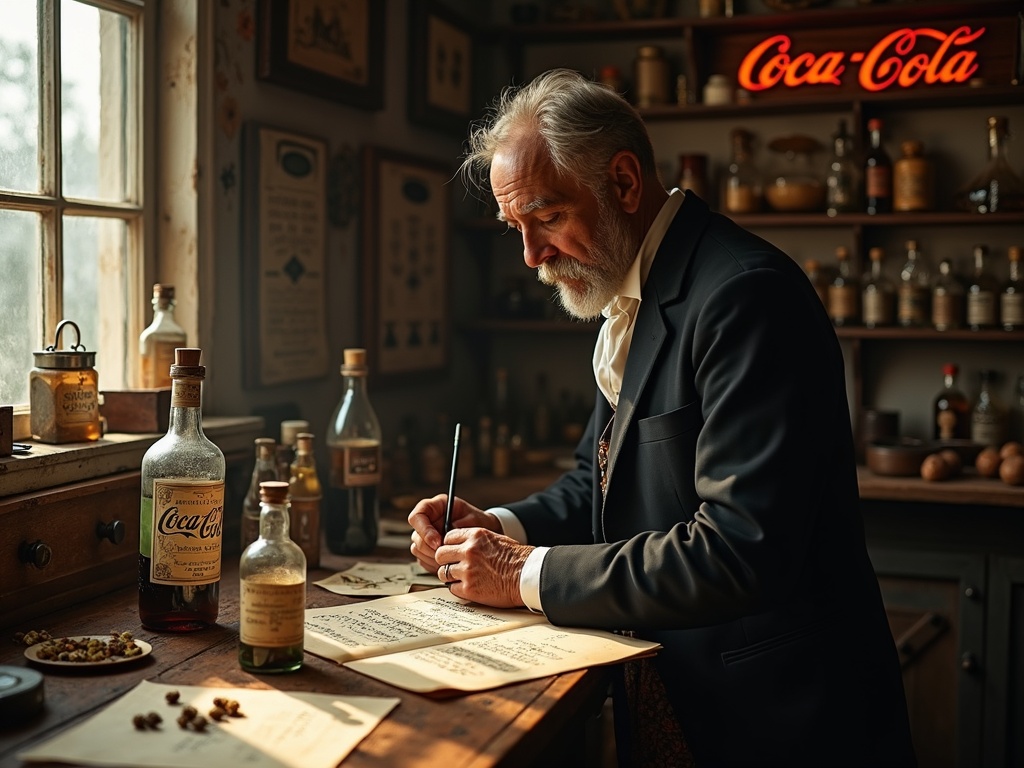
John Pemberton left behind a critical piece of history when he recorded his formula in a personal diary before his death in 1888. Historians believe this documented recipe provided the foundation for the original 1886 syrup that launched Coca-Cola’s invention. The diary entries reveal a systematic approach to creating what would become the world’s most recognizable beverage.
I find the core syrup components particularly fascinating because they demonstrate Pemberton’s background as a pharmacist. His documented ingredients included sugar, water, citric acid, caffeine, lime juice, vanilla, and caramel — each serving a specific purpose in the final flavor profile. The botanical elements tell an even more compelling story about the beverage’s origins.
Pemberton specifically noted the use of fluid extract of coca, measured at approximately 3 drams, alongside kola nut extract for its natural caffeine content. These ingredients weren’t chosen randomly; they reflected the late 19th century’s fascination with botanical medicines and energy-enhancing compounds.
The Mysterious Merchandise 7X
The most intriguing aspect of Pemberton’s formula centers on what he called Merchandise 7X — a signature flavor oil mixture that became the symbolic “secret ingredient” of Coca-Cola. This blend wasn’t used liberally; Pemberton applied it sparingly to achieve the distinctive taste that set his creation apart from other soda fountain drinks.
Merchandise 7X consisted of an alcohol base infused with carefully selected essential oils. The specific combination included oils from:
- Orange
- Lemon
- Cinnamon
- Coriander
- Nutmeg
- Neroli
Each oil contributed unique characteristics that created the complex flavor profile consumers couldn’t replicate at home.
The genius behind Pemberton’s recipe creation lay in his understanding of how these oils would interact with carbonated water and the other syrup components. Neroli, derived from orange blossoms, added a subtle floral note that balanced the citrus oils. Cinnamon and nutmeg provided warmth and depth, while coriander contributed an unexpected spicy element that enhanced the overall complexity.
I believe the alcohol base served multiple purposes beyond simply carrying the essential oils. It acted as a preservative and helped the oils dissolve properly into the syrup mixture. This technical detail showcases Pemberton’s pharmaceutical expertise and his attention to stability and consistency in his formulations.
The mystique surrounding Merchandise 7X grew stronger after Coca-Cola’s initial success. Pemberton shared variations of his formula with several business associates before his death, creating confusion about the “true” original recipe. These shared versions often contained slight modifications to the Merchandise 7X blend, leading to debates among historians about which formula represented Pemberton’s definitive vision.
The secrecy surrounding this flavor concentrate became a marketing tool that persists today. Companies have attempted to reverse-engineer the blend for over a century, but none have successfully replicated the exact taste that made Coca-Cola spread globally.
Modern analysis of Pemberton’s diary reveals his experimental nature. He documented multiple attempts to perfect the Merchandise 7X ratio, adjusting oil concentrations based on taste tests and customer feedback from his pharmacy’s soda fountain. These notes provide insight into his methodical approach to flavor development and his commitment to creating something truly unique in the beverage market.
The legacy of Merchandise 7X extends beyond its role in Coca-Cola’s success. It represents one of the earliest examples of proprietary flavoring in commercial beverages, establishing a template that countless companies would later follow. Pemberton’s decision to keep this blend secret while sharing other aspects of his formula demonstrated remarkable business foresight for a pharmacist-turned-beverage-creator.
The Cocaine Question: What Was Really in Early Coca-Cola?
I can confirm that early Coca-Cola did contain cocaine through coca leaf extract, though the amounts were minimal and consistent with medical practices of the 1880s. When Coke was invented in 1886, Dr. John Pemberton included coca leaves as a key ingredient alongside kola nut extract, following the popular medicinal tonic formulations of his era.
The original recipes involved steeping coca leaves in alcohol to create the extract that gave Coca-Cola part of its distinctive flavor and mild stimulant properties. This wasn’t unusual or controversial at the time – cocaine was legally sold in numerous tonics and nerve remedies throughout the 19th century. Pharmacists and physicians regularly prescribed cocaine-containing products for everything from headaches to fatigue.
The Transition to Decocainized Extract
By the early 1900s, public attitudes toward cocaine began shifting as its addictive properties became better understood. Coca-Cola responded by removing the active cocaine from their formula while maintaining the coca leaf component for its flavor contribution. The company adopted decocainized coca leaf extract, which preserved the taste profile without the psychoactive effects.
This change represented a significant reformulation that maintained the brand’s signature taste while addressing growing health concerns. The coca extract remained in the formula specifically for its unique flavor characteristics, not for any stimulant properties. The transition happened gradually, with complete removal of active cocaine occurring in the early 1900s.
The timeline reveals how Coke’s creation reflected its historical context. In 1886, Pemberton’s original formula included coca extract as a standard medicinal ingredient. Within two decades, changing social attitudes and emerging medical knowledge prompted the removal of cocaine, establishing the decocainized version that continues today.
Understanding this history helps explain why early Coca-Cola marketing emphasized its medicinal benefits and energy-boosting properties. The cocaine content, while present, was never the primary selling point but rather one component in a complex formula designed to deliver both refreshment and perceived health benefits according to 1880s standards.
How Asa Candler Turned the Formula Into a Corporate Secret
Candler’s Strategic Acquisition and Company Formation
I’ve discovered that Coke’s founding took a dramatic turn after John Pemberton’s health declined. Pemberton sold portions of his rights to different buyers, creating a complex web of ownership. Atlanta businessman Asa Griggs Candler recognized the potential and systematically acquired key interests by 1888, then consolidated them under his control.
Candler’s business acumen transformed the struggling medicinal drink into a commercial powerhouse. In 1891, he founded The Coca-Cola Company and immediately tightened control over every aspect of production. By 1892, Candler had become the sole owner, positioning himself to make critical decisions about the formula’s future.
The Birth of Formula Secrecy
Candler made a strategic decision that would define Coca-Cola for generations: he protected the formula as a closely guarded trade secret. I find it fascinating that he refined the taste and standardized production while simultaneously limiting access to the original recipe. Company history reveals that the formula remained unwritten and was passed verbally among only a few trusted executives.
This secretive approach created an aura of mystery around Coke’s recipe that persists today. Candler understood that protecting the formula wasn’t just about maintaining quality—it was about creating competitive advantage and brand mystique.
The secrecy tradition continued even after ownership changed hands. In 1919, Ernest Woodruff purchased the company from Candler, but the formula’s protected status remained unchanged. Each new leadership generation maintained the same commitment to keeping the recipe confidential.
Today, Coca-Cola stores the formula in a secure vault at the World of Coca-Cola museum in Atlanta. This physical manifestation of secrecy serves both practical and marketing purposes, reinforcing the idea that Coke’s invention created something truly unique and irreplaceable.
Candler’s decision to shroud the formula in secrecy transformed what could have been just another beverage recipe into a corporate legend. His approach established precedents that continue to influence how the company operates, proving that sometimes the most valuable business strategy involves carefully controlling what information you share with the world.
When Was Coke Invented? Original Recipe vs Modern Coca-Cola
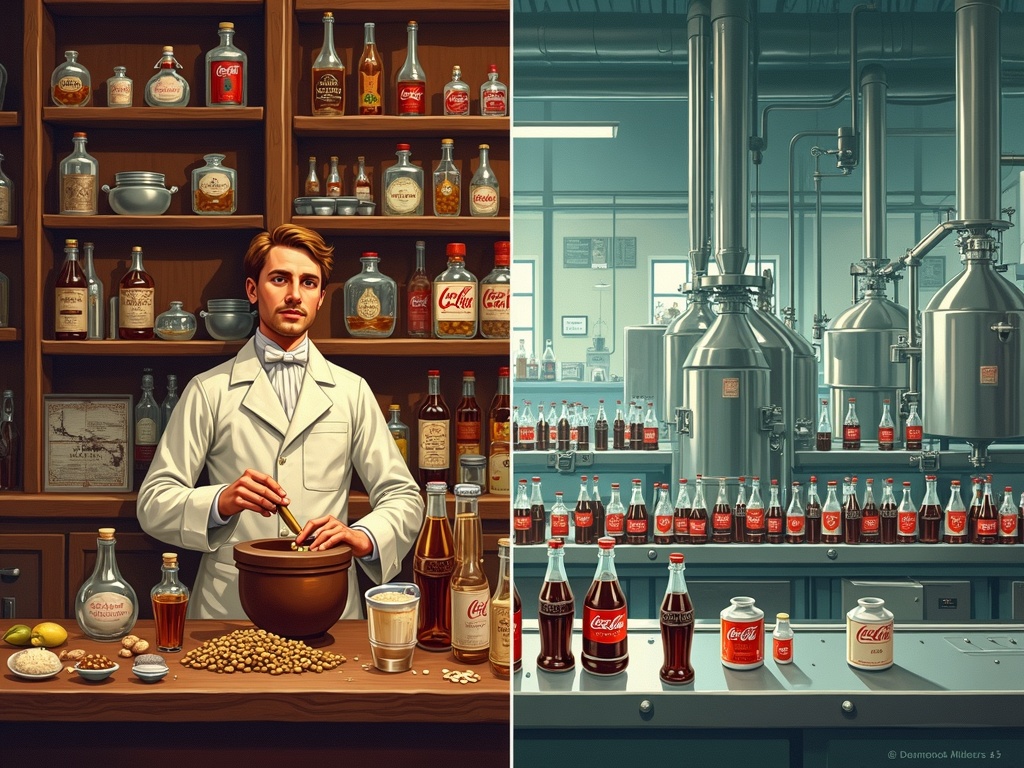
I can trace Coca-Cola’s invention back to 1886, but the formula you taste today bears little resemblance to that original concoction. The modern beverage has undergone dramatic transformations that reflect changing tastes, regulations, and manufacturing capabilities across more than a century of production.
Modern Coca-Cola Ingredients
Today’s Coca-Cola contains six primary components that form the foundation of its distinctive taste:
- Carbonated water serves as the base liquid
- High fructose corn syrup provides sweetness in most U.S. markets (sugar in other regions)
- Caramel color gives the beverage its signature brown appearance
- Phosphoric acid delivers the sharp, tangy bite
- Natural flavors create the complex taste profile
- Caffeine adds the mild stimulant effect
These ingredients represent significant departures from the original recipe that pharmacist John Stith Pemberton developed in Atlanta. Manufacturing efficiency and regulatory compliance have driven many of these changes, fundamentally altering the beverage’s character.
The sweetening agent presents perhaps the most controversial modification. Early Coca-Cola relied on cane sugar for its sweetness, while modern American versions predominantly use high fructose corn syrup. This switch occurred gradually during the 1970s and 1980s as corn syrup became more economical. Mexican Coca-Cola still uses cane sugar, which many enthusiasts claim produces a cleaner, less cloying sweetness than the corn syrup variant.
Acidification methods have also evolved substantially. Pemberton’s original formula incorporated citric acid and lime juice to provide tartness, giving the drink a brighter, more fruit-forward profile. Contemporary Coca-Cola uses phosphoric acid instead, which creates a sharper, more aggressive bite that cuts through the intense sweetness. This change affects both flavor perception and shelf stability.
The botanical components reveal the most dramatic transformation. Early Coca-Cola contained actual extracts from coca leaves and kola nuts, which provided both flavor and mild stimulation. Modern formulations substitute synthetic caffeine and carefully crafted natural flavors to approximate these effects without using the original botanical sources. Federal regulations essentially mandated this shift, particularly regarding coca leaf extracts.
Flavoring complexity has shifted from explicit transparency to proprietary secrecy. The 1886 formula featured a documented “7X” oil blend that combined specific essential oils in precise ratios. Modern Coca-Cola uses a closely guarded natural flavor mixture that the company describes only in general terms. This change reflects both competitive protection and evolving flavor science capabilities.
Dedicated hobbyists and food historians have attempted to recreate Pemberton’s original formula using period-appropriate ingredients and techniques. These experiments typically substitute coca leaf tea or decocainized coca extract for the original coca component, while sourcing authentic kola nuts and essential oils matching 1886 specifications. However, exact replication remains impossible due to regulatory restrictions on certain ingredients and the loss of specific supplier relationships that existed during Pemberton’s era.
The journey from 1886 to today illustrates how commercial beverages adapt to changing markets, regulations, and consumer preferences. While purists may lament these modifications, they’ve enabled Coca-Cola to maintain consistent availability and taste across global markets. The modern formula represents a carefully engineered compromise between historical inspiration and contemporary manufacturing realities, ensuring the brand’s continued relevance more than 135 years after its creation.
Sources:
Coca-Cola Company historical documents
U.S. Library of Congress beverage archives
Emory University Coca-Cola archival collections
Historical analyses of 19th-century medicinal tonics
Pemberton diary recipe reproductions (public domain sources)

