
No products in the cart.
Beverages News, Energy Drinks, Monster Energy Drink
How Much Caffeine Is In A Monster Energy Formula
24
Dec
Dec
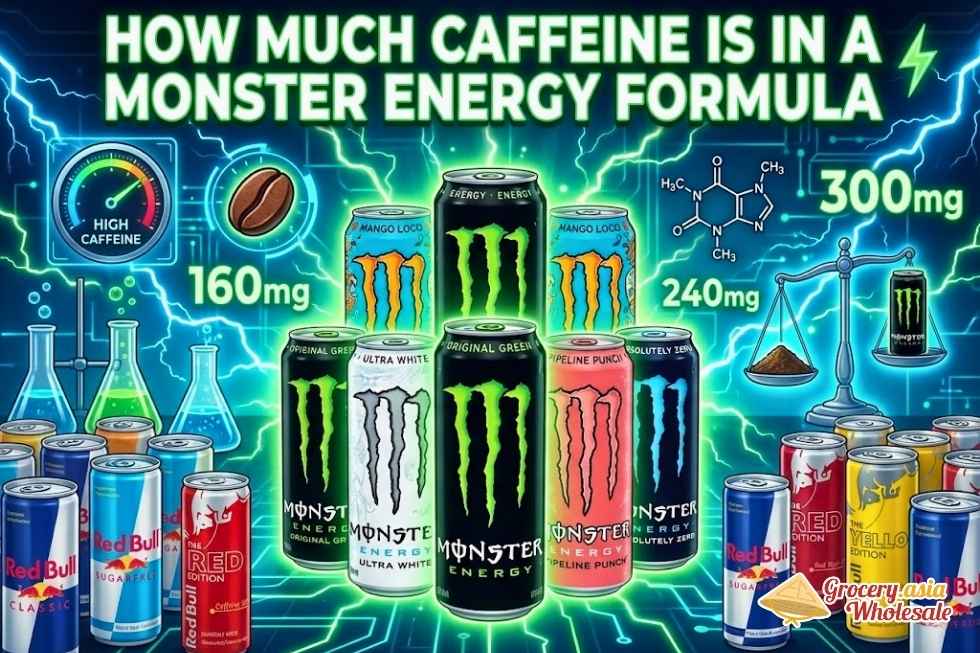
Monster Energy drinks offer a wide range of caffeine contents across their extensive product lineup, catering to different preferences and tolerance levels. One of the most widely consumed variants, the standard 16 fl oz can, contains 160 mg of caffeine—comparable to roughly 1.5 to 2 cups of freshly brewed coffee.
Key Takeaways
- Standard Monster Energy drinks (16 oz) contain 160 mg of caffeine, accounting for 40% of the FDA’s daily recommended caffeine intake of 400 mg for healthy adults.
- Monster’s caffeine content ranges dramatically—starting from 20 mg in Monster Unleaded to a powerful 300 mg in high-performance options like Java Monster 300 and Killer Brew.
- Popular variants such as Monster Zero Sugar, various Ultra flavors, and Pipeline Punch maintain consistent levels around 150-160 mg per can.
- Monster Energy’s caffeine levels align with brands like Rockstar and NOS, surpass Red Bull (which contains 80 mg), and fall just below ultra-caffeinated drinks like Bang Energy (300 mg).
- Always examine labels closely, as some Monster drinks list caffeine per serving rather than per container, and serving sizes can differ based on the specific product line.
Table of Contents
Further Reading
To verify caffeine content or learn more about how Monster stacks up against other brands, visit the official Monster Energy website for detailed product specifications and nutrition labels.
Monster Energy’s Standard Caffeine Content (Quick Answer)
I can tell you that Monster Energy caffeine content varies based on the specific variant you choose. Most standard Monster Energy drinks pack 160 mg of caffeine into their signature 16 fl oz cans. This translates to approximately 10 mg of caffeine per fluid ounce.
When you convert this to metric measurements, you’ll find roughly 33.8 mg of caffeine per 100 mL. This concentration means that drinking one standard Monster Energy can delivers the caffeine equivalent of about 1.5 to 2 cups of freshly brewed coffee.
Which Flavors Follow This Standard
The 160 mg caffeine formula applies consistently across Monster’s core lineup. Original Monster Energy maintains this standard, as does the Zero Sugar variant for those watching their caloric intake. Most traditional flavors in Monster’s main collection follow this same caffeine specification.
You’ll encounter this standard caffeine level whether you pick up the classic green-clawed can or opt for popular flavors like:
- Ultra Red
- Ultra Blue
- Pipeline Punch
Monster has maintained this consistency across their primary product line, making it easier to predict your caffeine intake regardless of flavor preference.
Understanding Your Caffeine Intake
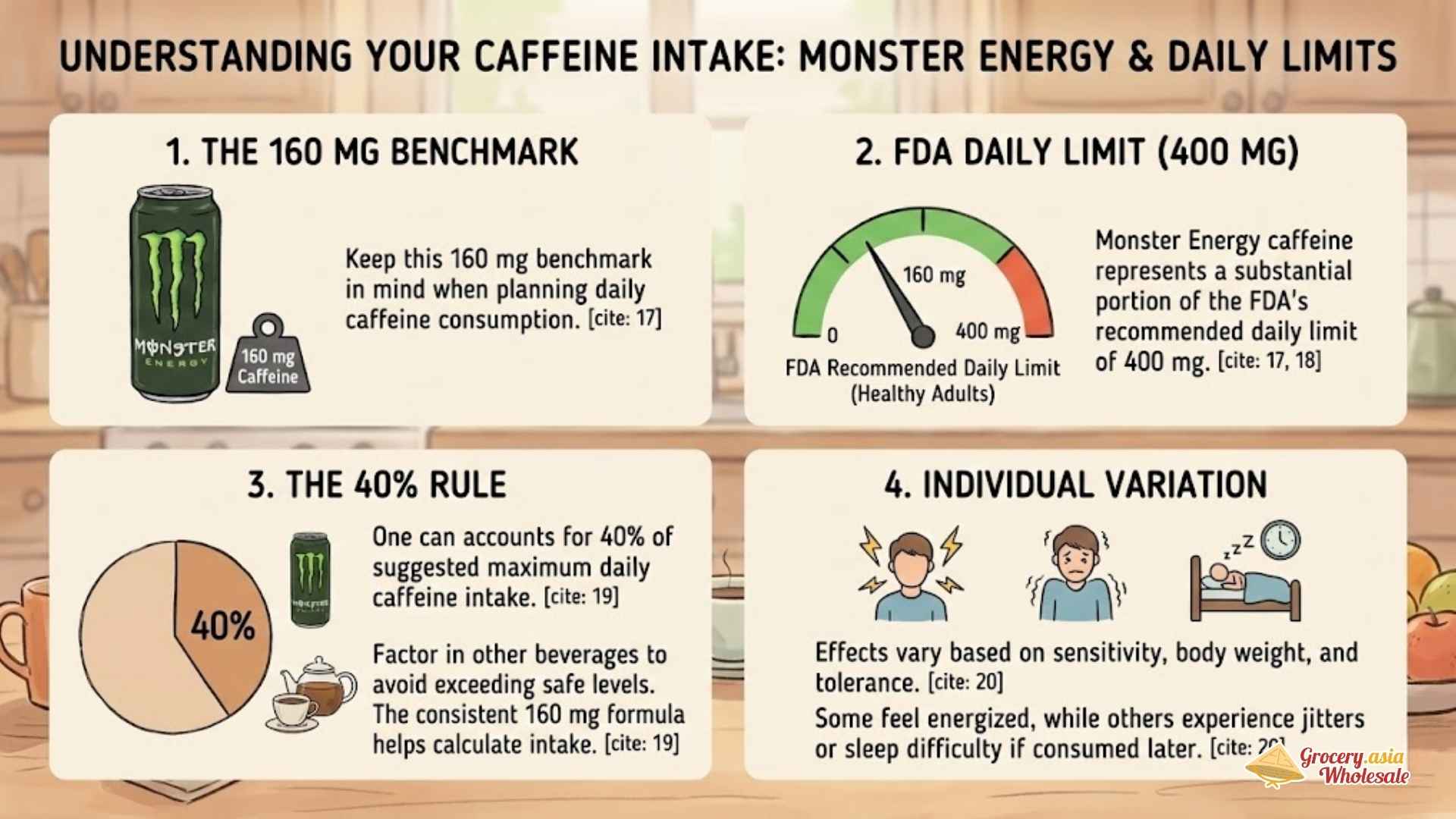
I recommend keeping this 160 mg benchmark in mind when planning your daily caffeine consumption. Monster Energy can caffeine represents a substantial portion of the FDA’s recommended daily limit of 400 mg for healthy adults.
This means one can accounts for 40% of your suggested maximum daily caffeine intake. If you regularly drink coffee, tea, or other caffeinated beverages, factor in Monster’s contribution to avoid exceeding safe consumption levels. The consistent 160 mg formula across standard varieties helps you calculate your total daily intake more accurately.
Remember that Monster Energy drink effects can vary based on individual caffeine sensitivity, body weight, and tolerance levels. Some people feel energized for hours after consuming 160 mg of caffeine, while others might experience jitters or difficulty sleeping if consumed later in the day.
The Full Monster Energy Caffeine Range (60 mg to 300 mg)
Monster’s extensive product lineup includes more than 50 variants distributed across global markets, each delivering dramatically different caffeine levels. Understanding this wide spectrum helps you make informed choices based on your specific energy needs and caffeine tolerance.
Low to High Caffeine Options Across Monster’s Portfolio
Monster’s caffeine content spans an impressive range from minimal stimulation to maximum energy boost:
- Monster Dragon Tea contains approximately 60 mg of caffeine per 23 oz can, offering a gentler energy lift
- Monster Unleaded delivers under 20 mg per can, providing minimal stimulation for caffeine-sensitive consumers
- Standard 16 oz Monster Energy cans contain 140–160 mg of caffeine, representing the brand’s core energy formula
- Java Monster 300 packs 300 mg of caffeine into a 15 oz container, delivering maximum stimulation
- Monster Killer Brew also reaches 300 mg per 15 oz can, matching the highest caffeine levels in Monster’s range
This variation means caffeine in Monster energy drinks isn’t standardized across products. Different formulations target distinct consumer preferences, from those wanting mild energy enhancement to individuals requiring intense stimulation for demanding activities.
The standard Monster Energy drinks most consumers recognize fall into the middle range of this spectrum. These classic formulations provide consistent energy without reaching the extreme levels found in specialty variants. However, Monster’s innovation continues expanding both ends of this range, introducing lower-caffeine options for mainstream appeal and higher-caffeine products for dedicated energy drink enthusiasts.
Product naming conventions help identify caffeine levels, though exact amounts require label verification. Java-branded products typically contain higher caffeine concentrations, while tea-based variants generally offer more moderate stimulation. Unleaded products clearly indicate reduced or eliminated caffeine content.
Can size significantly impacts total caffeine consumption even within similar product lines. Monster energy can caffeine calculations must account for both concentration and volume. A 15 oz can with 300 mg caffeine delivers 20 mg per ounce, while a 23 oz can with 60 mg caffeine provides approximately 2.6 mg per ounce.
Regional availability affects which variants consumers can access. Some high-caffeine formulations remain limited to specific markets due to regulatory restrictions, while others enjoy global distribution. European markets often feature different caffeine limits compared to North American offerings, influencing local product lineups.
Monster’s diversification strategy intentionally creates options for various consumption occasions and user preferences. Morning coffee alternatives might favor Java Monster products, while afternoon energy boosts could benefit from standard formulations. Caffeine per serving becomes crucial when timing consumption around workouts, study sessions, or social activities.
Label reading remains essential despite brand familiarity. Monster continuously reformulates products and introduces new variants, potentially changing caffeine content without obvious packaging modifications. Additionally, international versions of seemingly identical products may contain different caffeine levels to comply with local regulations.
The dramatic range from 20 mg to 300 mg per container means Monster products can either complement or completely replace coffee consumption depending on selection. This flexibility positions Monster as both an occasional energy boost and a primary caffeine source for dedicated users.
Smart consumption requires matching caffeine intake to individual tolerance levels and daily requirements. Monster energy drink effects vary significantly based on the specific product chosen and personal caffeine sensitivity. Starting with lower-caffeine variants allows gradual tolerance assessment before progressing to more potent formulations.
Always verify exact product names and can sizes when purchasing Monster products. Similar packaging across the range can lead to unintended caffeine consumption if you assume all Monster drinks deliver identical stimulation levels.
Caffeine Levels in Popular Monster Energy Varieties
I’ve analyzed the caffeine content across Monster Energy’s extensive product line to provide you with accurate measurements for each variety. The caffeine levels vary significantly depending on the specific product and can size, so understanding these differences helps you make informed choices about your energy drink consumption.
Caffeine Content by Monster Energy Product
Different Monster Energy varieties contain varying amounts of caffeine based on their formulation and intended market. Here’s what I found for each popular variety:
- Monster Energy Original (16 oz): 160 mg caffeine per can
- Monster Zero Sugar and Ultra varieties: 150–160 mg caffeine per 16 oz
- Monster Lo-Carb: Approximately 140 mg per can
- Monster Maxx (12 oz): 200 mg caffeine despite smaller size
- Java Monster standard line: 150–200 mg per 15 oz can
- Java Monster 300 and Killer Brew: 300 mg caffeine for maximum energy
- Monster Rehab Green Tea: Around 155 mg per 15.5 oz
- Monster Hydro: About 150 mg per 20 oz bottle
The caffeine in Monster Energy drinks ranges from 140 mg in the Lo-Carb version up to 300 mg in the Java Monster 300 line. I notice that some products pack more caffeine into smaller containers, like the Monster Maxx, which delivers 200 mg in just 12 ounces.
Pay close attention to serving size information on labels. Some Monster Energy products list caffeine amounts per serving rather than per can, and a serving often represents only half the container. This labeling practice can be misleading if you don’t check the “servings per container” section carefully.
The Monster Energy caffeine content varies based on the specific formula. Original Monster Energy contains 160 mg, while the Zero Sugar and Ultra varieties maintain similar levels at 150–160 mg. Java Monster products typically contain higher caffeine concentrations, with some reaching 300 mg per can.
Monster Hydro stands out as the exception with its larger 20-ounce bottle containing about 150 mg of caffeine, resulting in a lower caffeine concentration per ounce compared to other varieties. This makes it suitable for those who want sustained energy without the intense caffeine hit of more concentrated products.
Understanding these Monster Energy serving sizes and their corresponding caffeine levels allows you to choose products that match your tolerance and energy needs throughout the day.
How Monster Energy Compares to Coffee and Other Energy Drinks
I find it fascinating how Monster Energy positions itself within the caffeine spectrum when compared to other popular beverages. Understanding these comparisons helps you make informed choices about your daily caffeine intake.
Caffeine Content Across Popular Beverages
When examining caffeine levels across different drinks, I notice several distinct categories emerge:
- Brewed coffee (8 oz) contains 65–100 mg of caffeine
- Cold brew (16 oz) delivers 197–213 mg of caffeine
- Red Bull (8.4 oz) provides 80 mg of caffeine
- Rockstar and NOS (16 oz) each contain about 160 mg of caffeine
- Bang Energy (16 oz) packs an intense 300 mg of caffeine
Monster Energy sits comfortably in the mid-to-high caffeine range among these options. Monster’s caffeine content surpasses traditional sodas and Red Bull significantly, yet falls short of extreme performance drinks like Bang Energy.
I observe that Monster’s 160 mg caffeine content per 16 oz can matches Rockstar and NOS exactly. This positioning makes Monster stronger than your average cup of brewed coffee but comparable to a large cold brew serving. The difference becomes more apparent when you consider serving sizes – Monster delivers its caffeine punch in a convenient 16-ounce format.
Coffee drinkers often underestimate how Monster compares to their daily brew. A standard 8-ounce cup of coffee might seem milder, but consuming two cups throughout the morning puts you in Monster Energy territory. Cold brew enthusiasts already exceed Monster’s caffeine levels with their preferred beverage choice.
Red Bull’s lower caffeine content reflects its smaller serving size and different market positioning. At 80 mg per 8.4-ounce can, Red Bull provides about half the caffeine of Monster while offering roughly half the volume. This makes Monster more cost-effective for caffeine seekers.
The extreme end of the energy drink spectrum features products like Bang Energy, which contains nearly double Monster’s caffeine content. These performance-focused drinks target serious athletes and fitness enthusiasts who require maximum stimulation. Monster’s moderate approach appeals to a broader consumer base seeking energy without excessive intensity.
I recommend considering your caffeine tolerance when choosing between these options. Monster’s 160 mg provides substantial energy for most people without crossing into potentially uncomfortable territory. This balance explains Monster’s widespread popularity and global market success.
Your choice between Monster and alternatives depends on your specific needs. Coffee offers familiarity and customization options, while energy drinks provide convenience and additional ingredients like taurine and B-vitamins. Monster bridges this gap effectively by delivering coffee-level caffeine with energy drink convenience.
The timing of consumption also matters when comparing these beverages. Coffee consumption typically concentrates in morning hours, while Monster Energy provides flexibility for afternoon or evening energy needs. Monster’s serving size makes portion control easier than multiple coffee cups throughout the day.
Understanding these comparisons empowers you to rotate between beverages based on your daily requirements. Some days call for the ritual of brewing coffee, while others demand the quick energy boost that Monster provides. Recognizing where Monster fits in the caffeine hierarchy helps you make choices aligned with your energy goals and health considerations.
Daily Caffeine Limits and Safe Consumption
I need to address the critical question of how much caffeine you can safely consume daily, especially when enjoying Monster Energy drinks. The U.S. FDA has established 400 mg of caffeine per day as the safe upper limit for most healthy adults. This guideline helps you understand exactly where Monster Energy fits into your daily routine.
A standard 16 oz Monster Energy can contains 160 mg of caffeine, which represents exactly 40% of your recommended daily limit. When you crack open that familiar green can, you’re consuming nearly half of what experts consider safe for an entire day. This significant portion means you’ll want to monitor your other caffeine sources carefully throughout the day.
Understanding Your Caffeine Math
Calculating your total daily intake becomes essential when you’re a regular Monster consumer. Two standard Monster cans deliver approximately 320 mg of caffeine, pushing you dangerously close to the FDA’s 400 mg threshold. I always recommend keeping track of additional caffeine sources like coffee, tea, chocolate, and other sodas when you’ve already had an energy drink.
High-caffeine Monster varieties present even greater concerns. Products like Monster Energy Ultra or certain limited editions can contain up to 300 mg of caffeine per can. A single serving of these high-caffeine Monster variants approaches your entire daily limit, leaving little room for any other caffeinated beverages.
Certain groups should exercise extreme caution or avoid energy drinks entirely:
- Children and teenagers face heightened risks due to their smaller body size and developing nervous systems.
- Pregnant individuals should eliminate energy drinks from their diet completely, as excess caffeine can affect fetal development.
- People with caffeine sensitivity, heart conditions, or anxiety disorders may experience severe reactions even from smaller amounts.
Excessive caffeine consumption triggers several concerning symptoms that I’ve observed in people who regularly exceed recommended limits. These include:
- Insomnia – persistent sleep disruption and a cycle of increasing caffeine dependence
- Elevated anxiety – spiking stress levels, especially among sensitive individuals
- Heart palpitations – your cardiovascular system may struggle with excessive stimulants
I’ve noticed that many Monster Energy enthusiasts underestimate their total daily caffeine consumption. That morning coffee, afternoon soda, or evening chocolate dessert all contribute to your running total. Understanding Monster’s health impacts requires looking at your complete dietary picture rather than viewing the energy drink in isolation.
Smart consumption strategies help you enjoy Monster Energy while staying within safe limits. I recommend:
- Treating a standard Monster as your primary caffeine source for the day
- Reducing or eliminating coffee, soda, and other caffeinated drinks
- Drinking Monster early in the day to avoid sleep disruption
Individual tolerance varies significantly among consumers. Some people metabolize caffeine faster than others due to genetic factors, regular consumption patterns, and overall health status. Age plays a crucial role as well, with older adults typically requiring longer to process caffeine effectively. Body weight also influences how concentrated caffeine becomes in your system, meaning smaller individuals feel effects more intensely.
Daily Monster consumption requires careful consideration of these personal factors alongside the established safety guidelines. I suggest starting with half a can if you’re new to energy drinks, allowing your body to adjust gradually to the caffeine load.
Monitoring your body’s response becomes crucial for safe consumption. Pay attention to how you feel after drinking Monster – increased heart rate, jitteriness, or difficulty concentrating may signal that you’re approaching your personal limit. These warning signs often appear before you reach the FDA’s 400 mg threshold, indicating that your individual tolerance sits below the general recommendation.
Remember that caffeine content per Monster can remains consistent within product lines, making it easier to track your intake accurately. Building awareness of these numbers empowers you to make informed decisions about energy drink consumption while maintaining your health and well-being.
Understanding Monster Labels and Making Smart Choices
I’ve discovered that Monster energy drink labels provide clear caffeine information, but reading them correctly makes all the difference for your health and safety. The label shows caffeine per serving, which might surprise you since many cans contain multiple servings.
Decoding Label Information
When I examine Monster labels, I always check the total caffeine per container rather than per serving. A standard 16-oz Monster can contains 160mg of caffeine total, but some larger cans pack significantly more. I’ve seen people accidentally consume double their intended caffeine because they only looked at the per-serving amount without checking how many servings were in the container.
Converting your intake into coffee equivalents helps track consumption more effectively. Since an average 8-oz cup of coffee contains about 95mg of caffeine, Monster’s caffeine content equals roughly 1.7 cups of coffee per standard can.
Managing Total Daily Intake
I recommend calculating your complete daily caffeine consumption from all sources. Consider these common caffeine contributors:
- Coffee and espresso drinks throughout the day
- Tea varieties, including black, green, and white teas
- Pre-workout supplements and caffeine pills
- Dark chocolate and chocolate-based products
- Other energy drinks or sodas consumed
Your body processes caffeine differently based on factors like body weight, tolerance, and metabolism. I’ve found that even experienced energy drink users benefit from moderation. The FDA suggests limiting daily caffeine to 400mg for healthy adults, but individual tolerance varies significantly.
Timing matters just as much as quantity. I avoid consuming Monster or other caffeinated beverages within six hours of bedtime since caffeine’s effects can last 6-8 hours. Starting with half a can helps gauge your response, especially if you’re new to energy drinks or haven’t consumed caffeine recently.
Smart consumption involves spacing out caffeine intake throughout the day rather than consuming large amounts at once. I track my intake using smartphone apps or simple notes to prevent accidental overconsumption. Remember that daily Monster consumption affects your caffeine tolerance over time, potentially requiring higher amounts to achieve the same energy boost.
Understanding how Monster’s caffeine content compares to your regular intake helps you make informed decisions about when and how much to consume. I always read labels carefully and consider my complete daily caffeine picture before opening that can.
https://www.youtube.com/watch?v=0Qlv0GL1dG8
For B2B Buyers and Wholesale Importers
I understand that sourcing authentic energy drinks for retail distribution requires reliable partnerships and comprehensive product knowledge. Asia Grocery Company specializes in supplying genuine FMCG beverages, including Monster Energy products, for export markets across multiple regions.
Wholesale Solutions Designed for Your Business
My experience with B2B beverage distribution has shown me that successful importers need several key advantages:
- Mixed-SKU container options to maximize shipping efficiency
- Competitive wholesale pricing structures that support profitable margins
- Global shipping capabilities with proper documentation
- Product authenticity guarantees to protect your brand reputation
- Flexible order quantities to match your market demands
I work directly with established supply chains to ensure you receive authentic Monster Energy products with proper labeling and caffeine content information clearly displayed. This transparency helps you meet local regulatory requirements while building consumer trust in your market.
Asia Grocery Company’s approach focuses on scalability and compliance. I’ve seen too many importers struggle with inconsistent suppliers or products that don’t meet international standards. That’s why I prioritize partnerships with distributors who understand the importance of Monster Energy’s global dominance and maintain strict quality control throughout the supply chain.
Your beverage business deserves a partner who understands both the technical aspects of energy drink distribution and the commercial realities of competitive markets. I provide detailed product specifications, including precise caffeine content per serving, to help you make informed purchasing decisions and educate your retail partners effectively.
Contact Asia Grocery Company today to request wholesale quotes and current product availability. I’ll work with you to develop a supply strategy that matches your market requirements while ensuring consistent product quality and competitive pricing. Let me help you scale your beverage business efficiently and compliantly, with the authentic Monster Energy products your customers expect.

Sources:
Monster Energy official product labels
U.S. FDA – Caffeine Guidance
Caffeine Informer – Monster Energy Caffeine Content
Wikipedia – Monster Energy
Cafely, Lifeboost Coffee, Cliff & Pebble comparisons

