
No products in the cart.
Beverages News, Energy Drinks, Red Bull Energy Drink
What Is Red Bull Energy Drink Made Of? Label Info
02
Feb
Feb
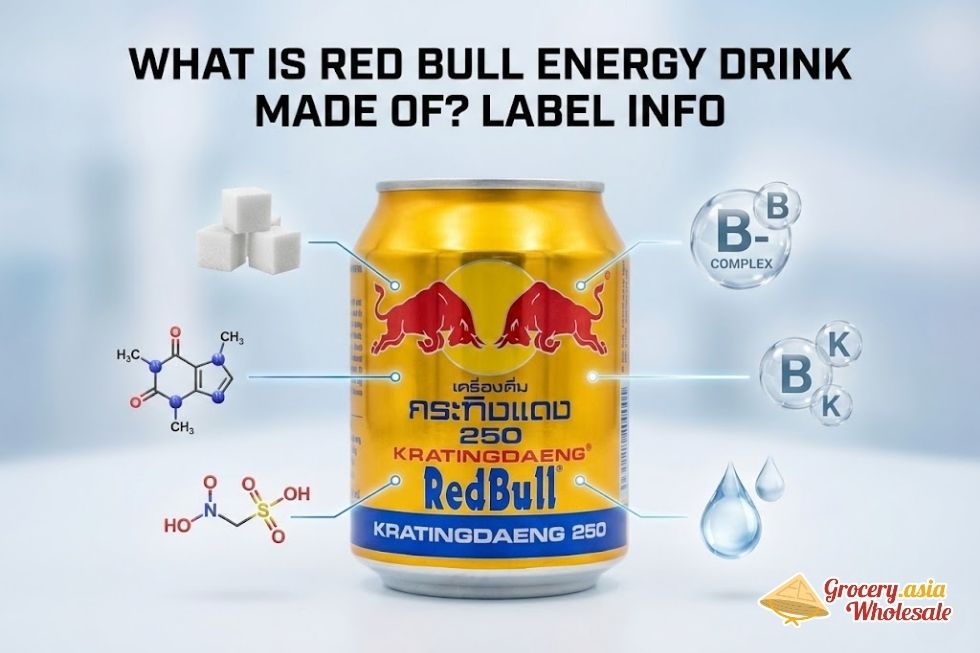
Red Bull energy drink is known for its stimulating effects, thanks to a carefully crafted blend of ingredients designed to enhance performance and alertness. With consistent formulas across various product versions, it delivers energy primarily through caffeine, taurine, and B-vitamins.
Table of Contents
Key Takeaways
- Red Bull contains seven core ingredients: carbonated water, sugars, caffeine (80mg per standard can), taurine (1000mg), B-vitamins (B3, B5, B6, B12), acids, and minerals.
- Caloric and sugar content: A standard 8.4 fl oz can provides 110 calories and 37 grams of sugar, while larger 20 fl oz cans contain 270 calories and 63 grams of sugar.
- Synthetic taurine: The drink uses synthetic taurine manufactured in laboratories, which is chemically identical to the naturally occurring form and is not extracted from animal sources.
- Sugar-free variants: Sugar-free and Zero variants maintain the same caffeine, taurine, and B-vitamin levels as the original but replace sugars with artificial sweeteners like Acesulfame K and Aspartame.
- Regional differences: While the core formula components remain consistent globally, regional variations exist in specific ingredient quantities and labeling due to local food regulations.
To learn more about the ingredients in Red Bull, you can visit their official ingredients page.
What is Red Bull Energy Drink Made Of? (Direct Answer)
Red Bull energy drink contains a specific blend of carbonated water, sugars, caffeine, taurine, B-group vitamins, acids, and minerals. These ingredients are clearly listed on every can label, making it easy to understand exactly what you’re consuming.
Core Ingredients That Power Red Bull
The formula focuses more on stimulation than nutritional value. Here’s what forms the foundation of this popular energy drink:
- Carbonated water serves as the base liquid
- Sugars provide quick energy and sweetness
- Caffeine delivers the primary stimulant effect
- Taurine acts as an amino acid supplement
- B-group vitamins support energy metabolism
- Acids help with flavor and preservation
- Minerals add to the overall formula balance
Variations in Formula Composition
Ingredient amounts can differ depending on the can size and the country where Red Bull is sold. Standard 8.4-ounce cans often contain different concentrations compared to larger sizes. Additionally, regional regulations influence the exact formulation, meaning the Red Bull ingredients may slightly vary between markets.
While the core ingredients remain consistent globally, specific quantities and additional components can shift due to local food safety requirements and consumer preferences. This explains why Red Bull might taste a little different in various countries even though the fundamental recipe is unchanged.
The sugar content is one of the most significant variables among product sizes and geographic markets. Some countries have stricter regulations regarding sugar levels in beverages, which in turn modifies the final composition of the drink.
Understanding these ingredients helps you make informed dietary choices about energy drink consumption. The combination of caffeine and sugars delivers Red Bull’s trademark energy boost, while taurine and B-vitamins support the drink’s overall energy-enhancing function. Each ingredient plays a precise role in creating the unique and recognizable Red Bull experience enjoyed by millions around the world.
Complete Ingredients List and Label Breakdown
I’ll break down exactly what goes into every 8.4 fl oz can of Red Bull, giving you the complete picture of each component. Understanding what Red Bull is made of helps you make informed decisions about your energy drink consumption.
Standard Formula Components
The standard Red Bull formula contains these specific ingredients in a typical 250 ml can:
- Carbonated water – Forms the base liquid
- Sucrose – Primary sweetener providing quick energy
- Glucose – Simple sugar for immediate fuel
- Citric acid – Natural preservative and flavor enhancer
- Taurine – Amino acid supplement (1000mg per can)
- Sodium bicarbonate – pH buffer and fizz enhancer
- Magnesium carbonate – Additional buffering agent
- Caffeine – Stimulant component (80mg per can)
- Niacinamide (vitamin B3) – Energy metabolism support
- Calcium pantothenate (vitamin B5) – Converts food to energy
- Pyridoxine HCl (vitamin B6) – Protein metabolism aid
- Vitamin B12 – Nervous system function support
- Natural and artificial flavors – Taste profile creation
- Colors – Visual appearance enhancement
Regional variations exist in ingredient labeling, with some countries listing sodium bicarbonate as baking soda instead. This difference doesn’t change the actual substance—it’s simply alternative naming conventions based on local regulations.
Buffering salts like sodium bicarbonate and magnesium carbonate serve dual purposes in Red Bull’s formula. They control the drink’s acidity level, preventing it from becoming too tart while maintaining the characteristic taste profile. These compounds also contribute to the carbonation process, creating that distinctive fizzy sensation you experience when drinking.
The ingredient composition remains remarkably consistent across markets, though minor variations occur due to local food regulations and available raw materials. Manufacturers must adapt to different countries’ requirements for ingredient disclosure and naming conventions.
Citric acid does more than just add tartness—it acts as a natural preservative, extending shelf life without requiring harsh chemical additives. This ingredient also enhances the absorption of certain vitamins and minerals present in the formula.
The vitamin B complex in Red Bull works synergistically to support energy production at the cellular level. B3, B5, B6, and B12 each play specific roles in converting nutrients into usable energy, making them essential components beyond just the caffeine content.
Taurine represents one of Red Bull’s signature ingredients, though it’s naturally occurring in many foods. The 1000mg dose provides more than typical dietary intake, supporting various bodily functions including cardiovascular health and exercise performance.
Natural and artificial flavors create Red Bull’s distinctive taste that consumers recognize instantly. The exact flavor compounds remain proprietary, but they’re carefully balanced to complement the functional ingredients without overwhelming the palate.
Colors used in Red Bull vary by region and specific product variant. The classic yellow color comes from approved food dyes that meet safety standards in each market where the product is sold.
Sugar content comes from both sucrose and glucose, providing approximately 27 grams of total sugars per can. This combination delivers immediate energy while maintaining the desired sweetness level.
Manufacturing precision ensures each can contains consistent amounts of every ingredient, meeting both safety requirements and consumer expectations. Quality control measures verify that each batch matches the established formula specifications before reaching store shelves.
Sugar Content: Sucrose and Glucose Explained
Red Bull relies on two primary sugar types to deliver its immediate energy boost: sucrose and glucose. These simple carbohydrates work together to rapidly elevate blood sugar levels, providing the quick burst of energy that users expect from this popular beverage.
A standard 8.4 fl oz can packs approximately 37 grams of added sugar, while the larger 20 fl oz version contains about 63 grams. To put this in perspective, the smaller can alone exceeds the American Heart Association’s recommended daily sugar intake for women (25 grams) and approaches the limit for men (36 grams).
The combination of sucrose and glucose creates a fast-acting energy delivery system. Glucose enters your bloodstream almost immediately after consumption, while sucrose breaks down into glucose and fructose during digestion. This dual-action approach explains why many people experience an almost instant energy surge after drinking Red Bull.
However, this rapid sugar absorption comes with consequences. The quick spike in blood glucose triggers a corresponding insulin response from your pancreas. Once insulin processes this sugar surge, blood glucose levels often drop below baseline levels, creating what’s commonly known as a “sugar crash.” This crash typically occurs 30 to 60 minutes after consumption and can leave you feeling more tired than before.
Impact on Blood Sugar Regulation
Regular consumption of high-sugar energy drinks places significant stress on your body’s glucose regulation system. When you frequently consume large amounts of sugar, your pancreas must work overtime to produce enough insulin to manage blood sugar levels.
This constant demand can lead to several health concerns over time:
- Insulin resistance, where cells become less responsive to insulin
- Increased risk of type 2 diabetes
- Weight gain due to excess calories and fat storage
- Dental problems from prolonged sugar exposure
- Energy level fluctuations throughout the day
I recommend understanding these nutritional facts before making Red Bull a regular part of your routine. If you choose to consume energy drinks, consider timing your intake around physical activity when your body can better utilize the rapid glucose influx for immediate energy needs rather than storing it as fat.
Caffeine and B-Group Vitamin Complex
I find Red Bull’s caffeine content carefully calibrated for different consumption patterns. Each standard 8.4 fl oz can contains 80 mg of caffeine, while larger 20 fl oz cans deliver 189 mg. This caffeine dosage effectively improves alertness and reaction time, making it particularly beneficial for periods requiring sustained mental focus or physical performance.
Caffeine Content and Effects
The caffeine levels in Red Bull align with moderate consumption guidelines, providing enough stimulation without overwhelming most users. I’ve observed that the 80 mg dose in regular cans equals roughly one cup of coffee, making it accessible for those sensitive to caffeine while still delivering noticeable energy enhancement. The larger cans approach the upper limits of recommended daily caffeine intake, so I recommend considering your total daily caffeine consumption from all sources before choosing the larger size.
Essential B-Group Vitamins
Red Bull incorporates four critical B-group vitamins that support energy metabolism and nervous system function. These vitamins work together to help your body convert food into usable energy:
- Niacin (B3) supports cellular energy production and nervous system health
- Pantothenic acid (B5) aids in converting carbohydrates and fats into energy
- Vitamin B6 helps metabolize proteins and supports brain function
- Vitamin B12 assists in red blood cell formation and neurological function
I notice that larger Red Bull cans exceed 200% of the Daily Value for some of these vitamins. While this might seem excessive, these are water-soluble vitamins that your body excretes if unused, reducing the risk of harmful accumulation. However, I recommend being mindful of your overall B-vitamin intake if you consume multiple energy drinks or take vitamin supplements.
The nutrition facts show these vitamins work synergistically with caffeine to enhance the drink’s energizing effects. Unlike synthetic vitamin pills, Red Bull’s B-complex dissolves readily in the liquid medium, potentially improving absorption rates compared to tablet forms.
Understanding both what Red Bull contains and how these components interact helps you make informed decisions about consumption timing and frequency. I’ve found that the vitamin content makes Red Bull more than just a caffeine delivery system – it’s a comprehensive energy support formula that addresses multiple aspects of cellular energy production.
Nutrition Facts Breakdown by Can Size
Red Bull comes in different sizes, and understanding the nutritional differences between these options helps you make informed decisions about your caffeine and sugar intake. I’ll break down the key nutritional facts for the most common can sizes you’ll encounter.
Standard vs. Large Can Comparisons
The 8.4 fl oz can represents the original Red Bull size and contains approximately 110 calories, 37 grams of sugar, and 80 mg of caffeine. This smaller serving provides what many consider the standard energy drink experience without overwhelming your system.
Moving up to the 20 fl oz can dramatically increases these numbers. You’ll consume around 270 calories, 63 grams of sugar, 189 mg of caffeine, and 240 mg of sodium (representing 11% of your daily value). This larger size essentially gives you more than double the stimulants and sugars found in the standard can.
The scaling isn’t perfectly proportional because larger cans sometimes contain slightly different formulations. When you choose bigger sizes, you’re not just getting more of the same – you’re significantly multiplying your exposure to both sugar content and caffeine levels.
I recommend considering your daily limits carefully when selecting can sizes. The FDA suggests adults limit caffeine intake to 400 mg per day, meaning a single large Red Bull can provides nearly half that amount. Similarly, the American Heart Association recommends men limit added sugar to 36 grams daily and women to 25 grams – the standard 8.4 oz can already exceeds these recommendations.
Your choice between can sizes should factor in your tolerance levels, time of consumption, and other caffeinated beverages you might have throughout the day. If you’re sensitive to caffeine or consume multiple energy drinks, the smaller can offers better portion control. However, if you’re using Red Bull as a pre-workout supplement or need sustained energy for longer periods, the larger can might serve your needs better.
Understanding these nutrition facts helps you align your energy drink consumption with your health goals and dietary restrictions. Whether you choose the compact 8.4 oz or the substantial 20 oz option, being aware of what you’re consuming allows you to balance the energizing benefits with responsible intake levels.
Taurine: The Signature 1000 mg Amino Acid
Each Red Bull can delivers exactly 1000 mg of taurine, making it one of the drink’s most distinctive components. This amino acid serves as a cornerstone ingredient that sets Red Bull apart from other beverages in the energy drink category.
What Taurine Actually Does in Your Body
Taurine naturally exists in your body, particularly concentrated in your heart, brain, eyes, and muscles. Your body produces this amino acid on its own, but additional intake through supplements or energy drinks can support various biological functions. The compound plays a crucial role in osmoregulation, which helps maintain proper fluid balance within your cells. This process ensures your cells neither shrivel from dehydration nor burst from excessive water intake.
The amino acid also contributes to cellular balance by supporting membrane stability and helping regulate calcium levels within cells. These functions make taurine important for proper muscle function, including your heart muscle. Research has shown that adequate taurine levels can support cardiovascular health and may help with exercise performance, though individual results vary.
Separating Fact from Fiction About Red Bull’s Taurine
There’s a persistent myth about Red Bull’s ingredients. Many people incorrectly believe that taurine comes from bull testicles or other animal organs because of the name similarity. This assumption is completely false. Red Bull uses synthetic taurine, which means it’s manufactured in laboratories rather than extracted from animals.
The synthetic version is chemically identical to naturally occurring taurine but offers several advantages:
- Manufacturing ensures consistent purity.
- It eliminates the risk of animal-borne pathogens.
- The ingredient is suitable for vegetarians and vegans, though Red Bull is not officially certified vegan due to other components.
The 1000 mg dose in each Red Bull can falls within typical supplementation ranges. Most taurine supplements provide doses between 1–3 grams per day, making Red Bull’s amount moderate compared to dedicated supplements. Athletes and fitness enthusiasts often consume higher amounts, but the standard Red Bull dose provides a meaningful amount for most consumers.
Your body processes this synthetic taurine exactly the same way it handles the naturally occurring kind. Because the molecular structure is identical, your digestive system cannot tell the difference, offering you the same potential benefits regardless of the source.
Understanding Red Bull’s nutrition facts helps you make informed decisions about consumption. The taurine content works alongside other active ingredients such as caffeine and B-vitamins to create the drink’s effect profile. Some research suggests that taurine might help moderate caffeine’s stimulating effects, possibly providing a smoother energy experience than caffeine alone.
It is important to mention that while taurine appears safe for most people at typical doses, individuals with specific health conditions should consult a healthcare provider before regular consumption. Taurine can interact with some medications, and individuals with kidney or liver issues should be especially cautious.
The manufacturing process for synthetic taurine relies on chemical synthesis rather than extraction from animal sources. This method allows for precise control over purity and consistency, and ensures the 1000 mg dose listed on Red Bull’s label is met with high accuracy.
Current research continues exploring taurine’s potential benefits beyond basic cellular functions. Some studies examine its effects on exercise recovery, cognitive function, and metabolic health. However, it’s best to focus on taurine’s well-established roles when evaluating its inclusion in an energy drink.
The standardized 1000 mg amount gives consumers a reliable way to track their daily taurine intake. This consistency helps those who monitor their amino acid levels through various sources, including food, supplements, and drinks.
Formula Variations: Original, Sugarfree, and Editions
Red Bull maintains its core ingredient foundation across all product variations, ensuring that the signature energy boost remains consistent whether you choose the original or any alternative version. The fundamental components – caffeine, taurine, B-vitamins, and Alpine water – stay virtually identical in concentration and quality across the entire product line.
Sugar Substitutions and Caloric Impact
The most significant difference between versions lies in sweetening approaches. While the original Red Bull contains sucrose and glucose, the Sugarfree and Zero variants replace these sugars with artificial sweeteners. These alternatives typically use Acesulfame K, Aspartame, or sucralose to maintain sweetness without calories. This substitution dramatically reduces the caloric content from 110 calories in an 8.4 fl oz original can to virtually zero in sugar-free versions.
Sugar content varies significantly between formulations, with the original containing 27 grams per can while sugar-free options eliminate this entirely. The artificial sweeteners provide the same taste profile without affecting blood sugar levels, making these versions suitable for diabetics or those monitoring carbohydrate intake.
Seasonal and limited Editions introduce additional flavor stabilizers and natural or artificial flavoring agents to create unique taste experiences. These special variants might include tropical fruit flavors, berry combinations, or seasonal tastes like coconut or watermelon. Despite flavor additions, the core nutritional profile remains remarkably similar across all versions.
The caffeine content holds steady at approximately 80mg per 8.4 fl oz can regardless of which formula you select. Taurine maintains its 1000mg concentration across variants, ensuring the amino acid’s potential benefits remain consistent. B-vitamin levels also stay uniform, providing the same potential energy metabolism support whether you drink original, sugar-free, or flavored editions.
Many consumers assume different versions provide varying energy effects, but the primary functional ingredients remain constant. The main variables are taste, caloric content, and specific flavoring agents. This consistency means you can choose based on dietary preferences or flavor desires without compromising the energy drink’s intended effects.
Understanding these variations helps you make informed decisions based on your specific needs. Those watching caloric intake benefit from sugar-free options, while flavor enthusiasts can explore seasonal editions without sacrificing the fundamental energy drink benefits that make Red Bull popular worldwide.
Sources:
Red Bull Official Ingredients and Nutrition
Mayo Clinic – Energy Drinks and Health
Cleveland Clinic – Caffeine and Sugar Effects
FDA – Caffeine Intake Guidance
NIH – Energy Drink Ingredient Studies

