
No products in the cart.
Beverages News, Energy Drinks
How Many Calories In Sting Energy Drink Per Can
05
Jan
Jan
A standard 250ml can of Sting energy drink delivers approximately 188-200 calories, positioning it among the highest-calorie energy drinks available with nearly double the calories found in Red Bull. The caloric content comes almost entirely from added sugar, with each can packing 46-49 grams of sugar that equals roughly 11-12 teaspoons of pure sugar per serving.
Table of Contents
Key Takeaways
- High calorie content: Sting delivers 188-200 calories per 250ml can, significantly more than most popular beverages including Red Bull (117 calories) and Coca-Cola (105 calories).
- Sugar dominates nutrition: Sugar accounts for 95% of total calories, with 46-49 grams per can exceeding daily recommended sugar limits for both men and women.
- Size variations affect intake: Larger 330ml bottles deliver up to 240-250 calories and 58 grams of sugar, while 320ml cans offer slightly lower caloric density.
- Energy crash risk: The high sugar content provides quick energy bursts followed by dramatic crashes within 2-3 hours, often triggering cravings for additional sugar or caffeine.
- Regional differences exist: Calorie content can vary by 20-30 calories per serving between different markets due to local formulations and regulatory requirements.
How Many Calories in Sting Energy Drink? (Direct Answer)
A standard 250 ml can of Sting energy drink contains approximately 188–200 calories. This places Sting in the high-calorie category among energy drinks, making it important to factor these numbers into your daily caloric intake if you’re monitoring your diet.
The caloric content stems almost entirely from added sugar, which functions as the primary energy source in this beverage. When you consume a can of Sting, you’re taking in roughly the same number of calories as a small snack or dessert. This sugar-heavy composition means the calories in Sting energy drink per serving deliver quick energy but lack substantial nutritional value beyond immediate fuel.
Caloric Variations Across Different Sizes
Larger can sizes drive the caloric content even higher, with some exceeding 240 calories per container. Many consumers are unaware that they may be drinking a calorie-dense beverage when opting for these larger servings. While the caloric density remains consistent, the total energy intake increases proportionally with volume.
If you’re interested in a full nutritional profile, the Sting energy drink nutrition info shows that carbohydrates—particularly from sugar—form the bulk of the calorie count. This high sugar concentration is useful for situations requiring rapid energy, but it may be concerning for those managing their weight or blood sugar levels.
Understanding these figures helps you make informed decisions regarding the timing and frequency of your Sting consumption. For example:
- Athletes may benefit from the high-calorie content during intense workouts.
- Office workers or those with sedentary lifestyles might prefer lower-calorie alternatives for an afternoon boost.
The Sting energy drink ingredients list confirms that sugar is the star player in the drink’s energy-providing equation. This makes the beverage effective as a quick pick-me-up but not an ideal choice for sustained nutrition.
Current Sting energy drink trends indicate rising consumer awareness about total caloric intake. As a result, many people are exploring portion control strategies or consuming Sting in conjunction with physical activity.
I recommend enjoying Sting mindfully. Consider it as you would any other high-calorie beverage—consume in moderation and account for its caloric impact on your daily goals.
Calories in Sting Energy Drink by Can Size
Understanding the caloric content of Sting Energy Drink becomes straightforward when you examine each container size individually. Below is a breakdown of the specific calorie counts and sugar content across the most common packaging options available in markets today.
Standard Can and Bottle Sizes
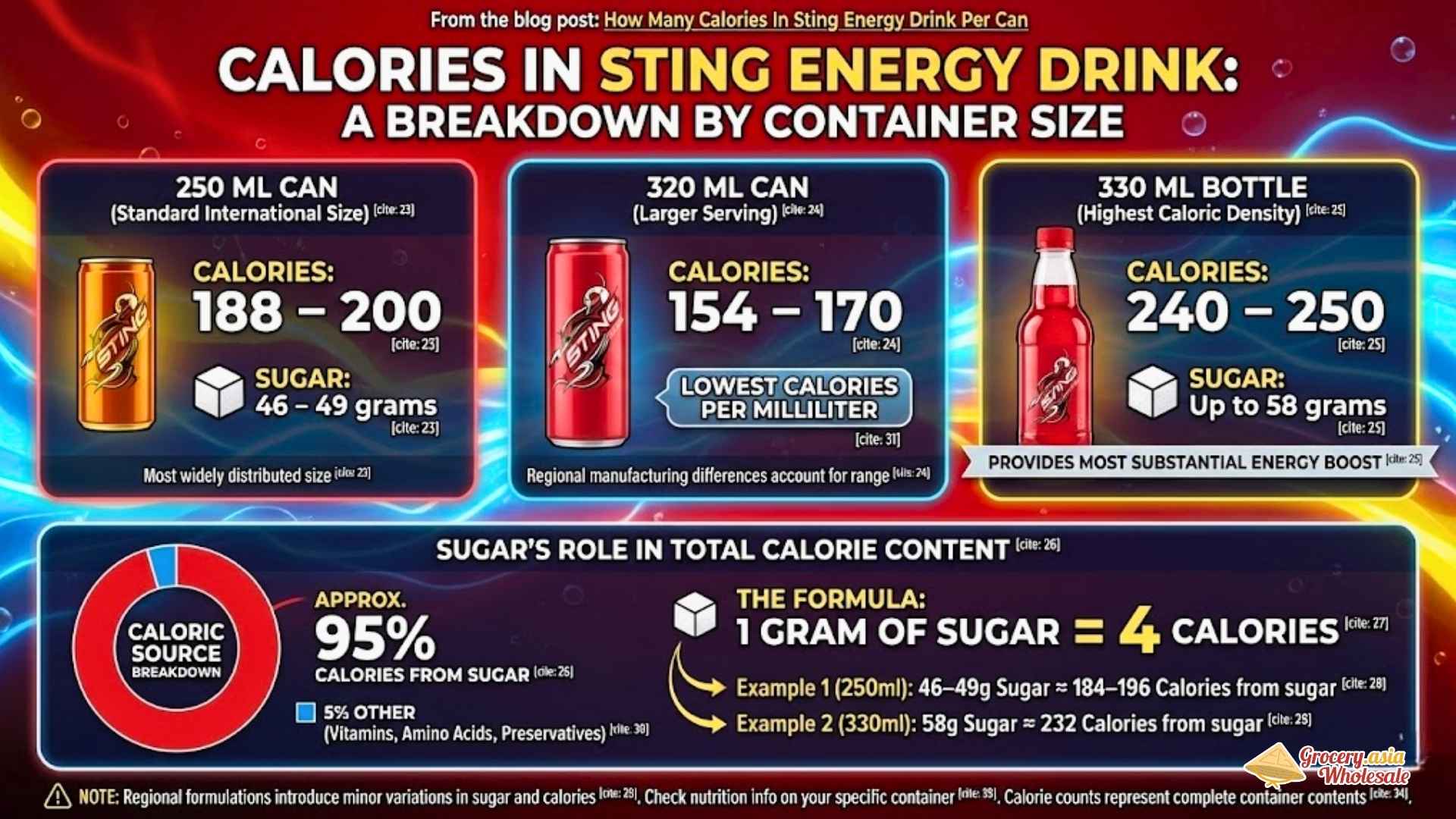
The 250 ml can represents the most widely distributed size across international markets. This compact option delivers between 188 and 200 calories along with 46 to 49 grams of sugar. You’ll find slight variations in these numbers depending on your geographic location and local formulation requirements.
For those preferring a larger serving, the 320 ml can provides approximately 154 to 170 calories. Regional manufacturing differences account for this calorie range, with some markets offering slightly modified formulations to meet local taste preferences and regulatory standards.
The 330 ml bottle contains the highest caloric density among standard sizes, delivering roughly 240 to 250 calories per container. This larger format also packs the most sugar, reaching up to 58 grams per bottle. When you consider calories in Sting energy drink per serving, this bottle size clearly provides the most substantial energy boost.
Sugar’s Role in Total Calorie Content
Sugar dominates the caloric profile of Sting Energy Drink, contributing approximately 95% of the total calories in each container. This high percentage reflects the drink’s formulation strategy, where sweetness plays a central role in both taste and energy delivery.
The mathematical relationship between sugar and calories follows a consistent pattern: one gram of sugar equals four calories. This straightforward calculation allows you to quickly estimate the caloric impact of any Sting Energy Drink size by multiplying the sugar content by four.
For practical perspective:
- The 250 ml can‘s 46–49 grams of sugar translates to roughly 184–196 calories from sugar alone.
- The 330 ml bottle‘s 58 grams of sugar contributes approximately 232 calories, accounting for nearly all of that container’s total caloric content.
I recommend checking the nutrition info on your specific container, as regional formulations can introduce minor variations in both sugar content and total calories. Manufacturers occasionally adjust sweetness levels to accommodate local market preferences while maintaining the drink’s core energy-boosting properties.
The remaining 5% of calories comes from other Sting energy drink ingredients like vitamins, amino acids, and preservatives. These components contribute minimal calories but play important roles in the drink’s functional benefits and shelf stability.
When selecting your preferred size, consider that the caloric density varies between containers:
- The 320 ml can offers the lowest calories per milliliter.
- The 330 ml bottle provides the highest total caloric intake.
This variation stems from different formulation approaches across product lines rather than simple proportional scaling.
These calorie counts align with current Sting energy drink trends toward transparency in nutritional labeling. Consumers increasingly demand clear information about their beverage choices, and understanding these specific numbers helps you make informed decisions about your energy drink consumption.
Remember that these calorie counts represent the complete container contents. If you consume only a portion of any container, you’ll need to calculate proportionally to determine your actual caloric intake. The sugar-to-calorie ratio remains consistent regardless of how much you drink, making these calculations straightforward.
High Sugar Content and Daily Intake Impact
I need to address a concerning reality about Sting energy drinks that many consumers overlook. A standard 250 ml can packs an enormous 46-49 grams of sugar into every serving. To put this into perspective, that’s equivalent to consuming 11-12 teaspoons of pure sugar in a single drink.
How Sting Compares to Daily Sugar Recommendations
The American Heart Association has established clear daily sugar limits for optimal health:
- Women: No more than 25 grams of added sugar per day
- Men: No more than 36 grams of added sugar per day
These recommendations exist because excessive sugar intake directly correlates with serious health problems including obesity, diabetes, and cardiovascular disease.
When examined against these guidelines, a single can of Sting energy drink delivers nearly double the recommended daily sugar intake for women and exceeds the limit for men by approximately 25-35%. This means that drinking just one can of Sting already puts you well beyond safe consumption levels before you’ve eaten any other food or beverages throughout the day.
The Physical Impact of Excess Sugar Consumption
Consuming this level of sugar in one sitting causes both immediate and long-term health consequences. Your body experiences a rapid spike in blood glucose levels, followed by an equally dramatic crash within 2-3 hours. This crash leaves you feeling more fatigued than before consuming the drink, often triggering cravings for additional sugar or caffeine to restore energy levels.
This cycle becomes particularly problematic considering the calories in Sting energy drink come primarily from these simple sugars. Your body converts excess sugar directly into fat storage, leading to weight gain over time. Regular consumption of high-sugar energy drinks like Sting can eventually result in insulin resistance, making it increasingly difficult for your body to process sugar efficiently.
Many people underestimate how quickly sugar accumulates in their daily diet. When you add Sting’s 46-49 grams to sugar from other sources such as:
- Breakfast cereals
- Flavored yogurts
- Even a piece of fruit
Your total intake can easily reach 80-100 grams per day. This level of consumption significantly increases the risk of developing metabolic syndrome and type 2 diabetes.
The energy crash phenomenon deserves special attention because it directly contradicts the main reason most people consume energy drinks. Instead of sustained energy, you experience a brief 30-60 minute boost followed by severe fatigue. This pattern often leads to the consumption of multiple energy drinks throughout the day, compounding the sugar overload and associated health risks.
Understanding the complete nutrition information helps you make informed decisions about when and how often to consume these beverages. If you choose to drink Sting occasionally, I recommend:
- Consuming it earlier in the day
- Avoiding other high-sugar foods or drinks for the remainder of that day
The marketing around energy drinks often emphasizes caffeine content while downplaying sugar levels. However, the sugar component poses the greater long-term health risk for most consumers. While caffeine may provide the immediate stimulating effect, sugar contributes most of the calories and causes the most significant metabolic disruption.
For those monitoring their weight or blood sugar levels, a single Sting energy drink can derail daily nutrition goals. The drink’s ingredient profile shows sugar listed among the first few components, emphasizing its dominance in the formula.
I recommend treating Sting as an occasional indulgence rather than a regular energy source. If sustained energy is your goal, focus on balanced meals including:
- Protein
- Healthy fats
- Complex carbohydrates
These nutrients provide the fuel your body needs throughout the day without causing the dramatic blood sugar fluctuations associated with high-sugar beverages.
How Sting Compares to Other Popular Drinks
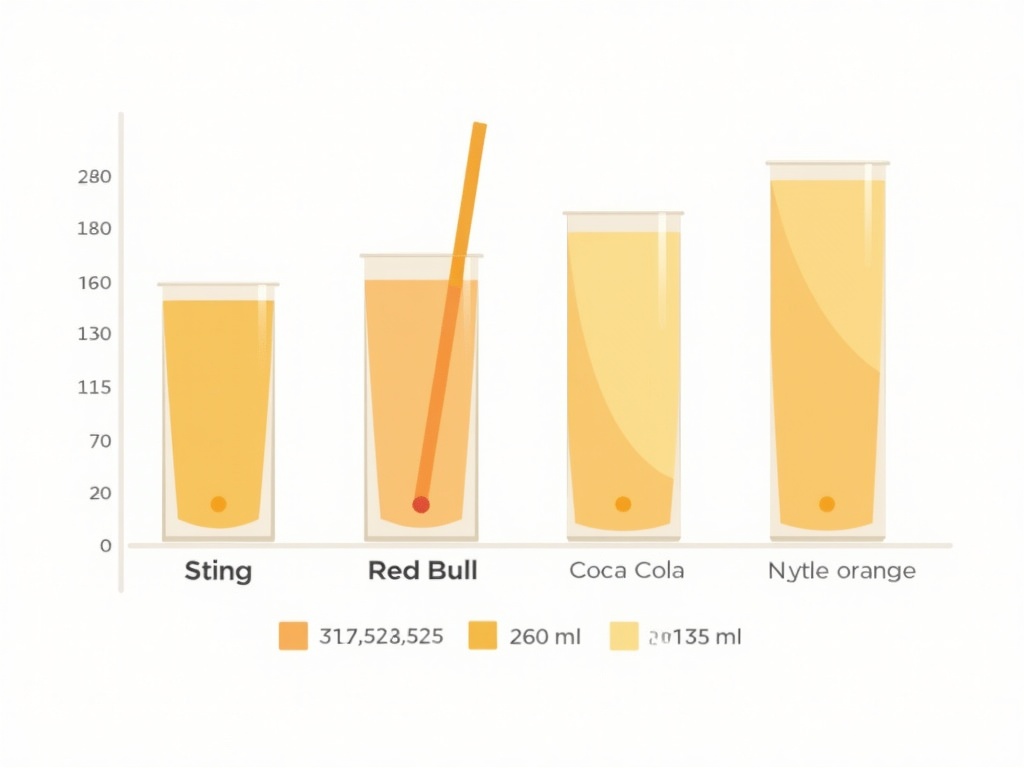
When I examine Sting’s caloric content against other popular beverages, the differences become quite significant. A standard 250ml serving of Sting delivers 188–200 calories, which puts it considerably ahead of many mainstream drinks. Red Bull contains approximately 117 calories per 250ml, while classic Coca-Cola sits at around 105 calories for the same serving size. Even natural orange juice, often considered a healthier alternative, contains roughly 115 calories per 250ml.
Understanding the Calorie Gap
Sting contains about 60% more calories than Red Bull, making it one of the more calorie-dense options in the energy drink market. This substantial difference stems primarily from Sting’s higher sugar concentration, which directly translates to increased caloric density. I’ve found that many consumers don’t realize how dramatically these numbers can vary between energy drink brands.
The elevated calorie count in Sting comes with both advantages and considerations. For athletes or individuals engaged in intense physical activity, these extra calories can provide valuable quick energy. However, for casual consumers or those monitoring their daily caloric intake, this difference becomes particularly important for dietary planning.
What This Means for Calorie-Conscious Consumers
These caloric variations matter significantly for anyone tracking their daily nutritional intake. Consider these key points when making your beverage choice:
- Sting’s 188–200 calories represent roughly 10% of a standard 2000-calorie daily diet
- The additional 70–80 calories compared to Red Bull equals about 20 minutes of moderate walking to burn off
- Consuming one Sting daily adds approximately 68,600–73,000 calories annually compared to choosing Red Bull
- The sugar content driving these calories can impact blood sugar levels more dramatically than lower-calorie alternatives
I recommend examining Sting’s complete nutritional profile alongside these calorie comparisons to make informed decisions. If you’re managing weight or following a specific dietary plan, the 60% calorie increase over Red Bull might influence your choice. Alternatively, if you need sustained energy for demanding physical activities, Sting’s higher caloric density could work in your favor.
The beverage landscape continues evolving, with energy drink trends shifting toward various formulations that balance energy delivery with caloric considerations. Understanding these numerical differences empowers you to select drinks that align with your specific health goals and lifestyle requirements.
Caffeine and Basic Nutrition Profile
I’ll break down exactly what you’re consuming when you crack open a 250ml can of Sting energy drink. Understanding these numbers helps you make informed decisions about incorporating this beverage into your daily routine.
Core Nutritional Breakdown
A standard 250ml serving of Sting delivers between 188-200 calories, with the variation depending on regional formulations and specific product variants. These calories come almost entirely from sugar content, which typically hits around 46 grams per can. This sugar translates directly to the carbohydrate content, also measuring 46 grams.
The drink contains zero protein and zero fat, making it purely a carbohydrate-based energy source. You’ll also find approximately 125 milligrams of sodium per serving, which contributes to the drink’s electrolyte profile.
Caffeine levels vary significantly based on your geographic location and the specific Sting variant you choose. Most markets offer formulations containing 60-80 milligrams of caffeine per 250ml can, though some variants list considerably higher levels. This caffeine content sits in the moderate range compared to other energy drinks, providing enough stimulation for most users without reaching excessive levels.
Beyond the basic macronutrients, Sting’s ingredient profile includes several functional compounds:
- B-vitamins – support energy metabolism
- Taurine – an amino acid that may enhance athletic performance
- Ginseng extract – traditionally used for its potential energy-boosting properties
However, I must point out that despite these additions, Sting offers no sustained nutritional value. The drink functions as a quick energy source rather than a nutritional supplement. The high sugar content provides rapid energy, but this comes with the typical sugar crash that follows once your body processes the glucose.
For comparison purposes, Sting’s caloric density means you’re consuming roughly 75-80 calories per 100ml. This makes it significantly more calorie-dense than most soft drinks but comparable to other energy drinks in its category.
The sodium content, while not excessive, contributes to the drink’s flavor profile and may provide minor electrolyte replacement benefits during physical activity. Combined with the moderate caffeine levels, this creates a balanced energy drink that delivers stimulation without overwhelming most users’ caffeine tolerance.
Understanding these nutritional facts allows you to factor Sting appropriately into your daily caloric intake and caffeine consumption limits.
Health Considerations and Regional Variations
Understanding the Health Impact
I’ve found that Sting’s high calorie density poses significant concerns for regular consumers. Calories in Sting energy drink can quickly add up, potentially contributing to unwanted weight gain when consumed frequently. The concentrated sugar content typically triggers rapid energy spikes, providing that immediate boost many people seek. However, these sugar-induced bursts rarely last long.
Energy crashes frequently follow within hours of consumption. Your body processes the simple sugars rapidly, causing blood glucose levels to plummet and leaving you feeling more fatigued than before. This cycle often leads to reaching for another energy drink, creating a pattern that can impact both your waistline and overall energy stability throughout the day.
Regional Differences and Label Accuracy
I’ve discovered significant variations in Sting energy drink nutrition across different markets. Manufacturers often adjust formulations to meet local regulations, taste preferences, and available ingredients. These changes directly affect calorie content, sometimes varying by 20–30 calories per serving between regions.
Different flavors within the same market also show notable calorie differences. Sting energy drink ingredients can vary substantially between tropical fruit, original, and specialty variants. Some flavors contain additional fruit concentrates or artificial sweeteners that alter the total caloric value.
Always check your local packaging for the most accurate nutritional information. Don’t rely on generic online sources or nutrition data from other countries, as these may not reflect your specific product. Regional manufacturing facilities sometimes use different sweetening agents or adjust concentration levels based on local supply chains and regulatory requirements.
I strongly recommend practicing moderation with any high-calorie energy drink. Consider:
- Limiting consumption to occasional use rather than daily intake.
- Factoring energy drink calories into your daily totals if monitoring caloric intake.
- Alternating with lower-calorie options or diluting servings with ice.
Current energy drink trends show increasing consumer awareness about sugar content, leading some manufacturers to introduce lower-calorie alternatives.
For those who regularly consume energy drinks, I suggest:
- Tracking your consumption patterns.
- Monitoring energy levels after consumption to assess their impact.
- Making informed decisions about their place in your diet.
CTA – For B2B Buyers and Wholesale Importers
I understand the challenges businesses face when sourcing authentic energy drinks for international markets. Asia Grocery Company provides a direct solution for B2B buyers and wholesale importers seeking genuine Sting Energy Drink products for export operations.
Comprehensive Export Services for Global Markets
Asia Grocery Company specializes in bulk order fulfillment with complete regulatory compliance support. I offer several key advantages for wholesale importers:
- Authentic Sting Energy Drink products directly sourced from authorized distributors
- Compliant labeling systems that meet international food safety standards
- Complete documentation packages including certificates of origin, health certificates, and nutritional labeling
- Mixed container capabilities allowing you to combine multiple product lines in single shipments
- Global shipping networks covering major ports worldwide
- Market-specific SKUs adapted for different regional requirements
My wholesale pricing structure accommodates various order volumes, from small test shipments to large-scale distribution orders. Each shipment includes proper documentation for customs clearance and regulatory compliance in your target markets.
The export process includes detailed nutritional information formatting that meets international labeling requirements. I ensure all products maintain their authentic formulation while providing the documentation needed for smooth customs processing.
Mixed container services allow importers to diversify their product offerings efficiently. You can combine Sting Energy Drinks with other authentic Asian beverage products, maximizing shipping efficiency while reducing per-unit transportation costs.
My global shipping network covers major ports across North America, Europe, Africa, and Oceania. Each shipment includes tracking capabilities and insurance options to protect your investment throughout the supply chain.
Market-specific SKUs address regional preferences and regulatory requirements. I work with importers to develop product configurations that align with local market demands while maintaining product authenticity and quality standards.
Contact Asia Grocery Company directly for detailed wholesale pricing information and to discuss your specific market requirements. I provide personalized consultation services to help optimize your import strategy and ensure successful market entry with authentic Sting Energy Drink products.
Sources:
Sting Energy – Nutrition Facts (regional labels)
Wikipedia – Sting Energy
BigBasket – Sting Energy Drink 250 ml
Fig App – Sting Cold Drink Gold
Global Sources – Sting Energy Typical Ingredients
Weee! – Sting Energy Drink listings

