
No products in the cart.
Asiadeli, Asiadeli Rice Paper
Where To Buy Rice Paper Wholesale: Supplier & Export Price Guide
06
Jan
Jan
The global rice paper market is experiencing robust growth, with forecasts projecting an increase from USD 165.77 million in 2025 to a remarkable USD 324.58 million by 2035. This surge is driven by rising health awareness and the growing popularity of international cuisines.
Key Takeaways
- Market Leadership: Vietnam commands over 90% of rice paper supplier listings. Its suppliers boast consistently high response rates of 70–92% on major B2B platforms, solidifying Vietnam as the most dependable sourcing hub.
- Pricing Structure: Wholesale export prices currently range from $1.74 to $3.23 per kilogram. Budget-conscious buyers can find economy versions priced as low as $0.70 per kilogram, while premium options like black sesame rice paper can reach $16.80 per kilogram.
- Supplier Categories: There is a diverse range of suppliers. Large-scale manufacturers typically process high-volume orders with annual revenues between US$ 50–100 million. In contrast, smaller importers benefit from distributors like Asiadeli, who offer flexible minimum order quantities and consolidated shipment services.
- Product Specifications: Innovative premium rice papers now include features such as “No Need Dipping in Water” technology and ultra-thin builds. These are available in both 22cm round and 22cm x 16cm rectangular shapes.
- Strategic Sourcing: Smart importing practices entail performing supplier audits, understanding minimum order requirements (typically 1–5 metric tons), and employing mixed container strategies to enhance container utilization and reduce shipping costs.
Table of Contents
Introduction
As global appetites for Fresh Spring Rolls (Goi Cuon) and Fried Spring Rolls surge, international importers often struggle to decide where to buy rice paper that balances authentic quality with competitive pricing. This analysis breaks down market trends and export costs, positioning Asia Grocery Co., Ltd as your verified partner for genuine products. For a broader understanding of sourcing premium ingredients, we invite you to explore our Vietnamese rice paper ecosystem.
Global Rice Paper Market Overview & Growth
The rice paper market is experiencing remarkable expansion, with projections showing significant growth potential over the next decade. Market analysts predict the global rice paper packaging sector will reach USD 165.77 million in 2025, then surge to USD 324.58 million by 2035, representing a robust compound annual growth rate of 7-10%.
Vietnam stands as the undisputed leader in rice paper production, controlling over 90% of supplier listings across major trading platforms. This dominance is particularly impressive given the country’s consistently high response rates, which range between 70-92% on business-to-business platforms. This reliability makes Vietnam an attractive sourcing destination for importers seeking consistent supply chains.
Regional Market Distribution
Geographic consumption patterns reveal interesting insights about global rice paper demand:
- Eastern Asia commands the largest market share at 53%, driven by traditional culinary practices and growing health consciousness.
- Europe represents a significant secondary market, fueled by increasing interest in Asian cuisine and gluten-free alternatives.
- The United States shows strong growth potential as consumers discover Vietnamese spring rolls and other rice paper applications.
- Emerging markets demonstrate growing appetite for versatile rice paper products, from grilled Vietnamese rice paper to modern fusion dishes.
For businesses looking to import rice paper, understanding the proper classification system proves essential. The HS Code 1905907000 allows importers to accurately calculate duties and taxes, ensuring compliance with international trade regulations. This code covers rice paper used for culinary purposes, which differs from industrial rice paper applications.
The market’s growth trajectory reflects broader consumer trends toward healthier eating habits and international cuisine exploration. Rice paper’s versatility appeals to diverse demographics, from health-conscious consumers seeking low-calorie wrap alternatives to culinary enthusiasts learning how to wrap spring rolls. Creative applications like Vietnamese fried rice paper rolls and integration with rice vermicelli recipes continue expanding market opportunities.
Import volumes correlate strongly with regional Asian population densities and growing mainstream acceptance of Asian ingredients. Distribution networks have adapted to meet this demand, with specialized Asian grocery stores, mainstream supermarkets, and online retailers all expanding rice paper offerings to capture market share in this growing sector.
Leading Wholesale Platforms & Verified Suppliers
I’ve found that Alibaba.com serves as the primary hub for rice paper sourcing, hosting over 727 suppliers with the majority based in Vietnam. These suppliers offer extensive OEM/ODM services, making it an ideal platform for businesses requiring custom packaging or specific product modifications. For a more comprehensive approach to supplier verification, I recommend exploring alternative platforms like go4WorldBusiness and Made-in-China, which feature verified audits and additional quality assurance measures.
Matching Supplier Scale to Your Business Needs
Understanding supplier operational scale proves essential when selecting the right partner for your order volume. Here’s how I categorize suppliers based on their capabilities:
- Large-scale manufacturers typically report revenues of US$ 50-100 million and excel at handling massive orders with consistent quality.
- Mid-tier suppliers with revenues between US$ 2.5-5 million offer greater flexibility for growing businesses and accommodate smaller batch orders.
- Smaller operations provide personalized service but may have limited production capacity.
I’ve observed that Asia Grocery Co., Ltd, also known as Asiadeli, operates differently from traditional suppliers by functioning as a strategic FMCG distributor. This company distinguishes itself by sourcing 100% genuine products directly from reputable manufacturers, ensuring product authenticity throughout the supply chain.
What sets Asiadeli apart is its consolidation service, which allows buyers to combine rice paper orders with complementary items like rice vermicelli, sauces, and coffee in a single container. This approach significantly reduces shipping costs and streamlines logistics for businesses importing multiple Vietnamese food products.
The consolidation advantage becomes particularly valuable when you consider the versatility of rice paper in Vietnamese cuisine. Whether you’re sourcing ingredients for Vietnamese spring rolls, grilled Vietnamese rice paper, or fried rice paper rolls, having access to a comprehensive ingredient supplier simplifies procurement processes.
Business owners looking to optimize their supply chain should contact Asia Grocery Co., Ltd directly for personalized quotes. Their team can assess specific distribution needs and create customized solutions that align with your business model and growth projections. This direct approach often yields better pricing and service terms compared to standard platform transactions.
Current Export Prices & Market Trends (2024-2025)
I’ve observed significant shifts in the global rice paper market throughout 2024, with export prices experiencing a dramatic decline that benefits both retailers and consumers. Current wholesale export prices range from $1.74 to $3.23 USD per kilogram, representing a substantial drop of over 40% compared to 2023 levels.
Price Variations by Quality and Brand
Standard economy varieties, particularly Nam Dan types and lower-quality domestic specifications, have become remarkably affordable at approximately $0.70 per kilogram. These budget-friendly options make rice paper accessible for large-scale food service operations and cost-conscious consumers looking to create Vietnamese spring rolls at home.
Popular Luong Son brand varieties typically average around $2.60 per kilogram, positioning them in the premium segment while still maintaining competitive pricing. For specialty applications, niche products command significantly higher prices — black sesame rice paper exported to the US market can reach up to $16.80 per kilogram due to their unique ingredients and limited production volumes.
Volume Impact on Pricing
High-volume orders create substantial price advantages that savvy buyers can leverage. Large shipments of 1,320 ADMT (Air Dried Metric Tons) significantly reduce the final price per kilogram compared to smaller orders. This pricing structure favors distributors and large retailers who can commit to substantial quantities.
Order size becomes particularly important when sourcing specialty items like grilled Vietnamese rice paper or premium varieties used for Vietnamese fried rice paper rolls. I recommend negotiating volume discounts when planning large purchases or coordinating group buys with other businesses.
Market conditions remain volatile, with prices subject to change based on minimum order quantities and prevailing economic factors. Currency fluctuations, shipping costs, and seasonal demand patterns all influence final pricing. Suppliers often adjust their rates quarterly, making it essential to lock in favorable terms when market conditions align with your purchasing needs.
The current price environment creates opportunities for businesses to experiment with different rice paper varieties without significant financial risk. Whether you’re perfecting techniques for how to wrap spring rolls or developing new menu items featuring rice vermicelli recipes, the reduced costs make it an ideal time to expand your ingredient portfolio and test new supplier relationships.
Rice Paper Product Categories & Specifications
The rice paper market divides into distinct categories that cater to different culinary needs and budgets. Understanding these variations helps you select the right product for your specific cooking requirements and quality expectations.
Standard and Specialty Rice Paper Varieties
Plain or unbranded rice paper wrappers represent the most economical choice at approximately $0.6 per kilogram. These basic wrappers provide reliable performance for everyday cooking applications. Sesame rice paper offers enhanced flavor with subtle nutty notes that complement both savory and sweet fillings. Regional specialties from Tay Ninh and Ha Tinh provinces bring unique characteristics developed through traditional production methods specific to these Vietnamese regions.
Regional varieties showcase distinctive textures and flavors that reflect local ingredients and time-honored techniques. Tay Ninh rice papers often feature a slightly thicker consistency that holds up well to hearty fillings, while Ha Tinh varieties typically offer exceptional flexibility for delicate wrapping applications.
Premium Product Lines and Advanced Features
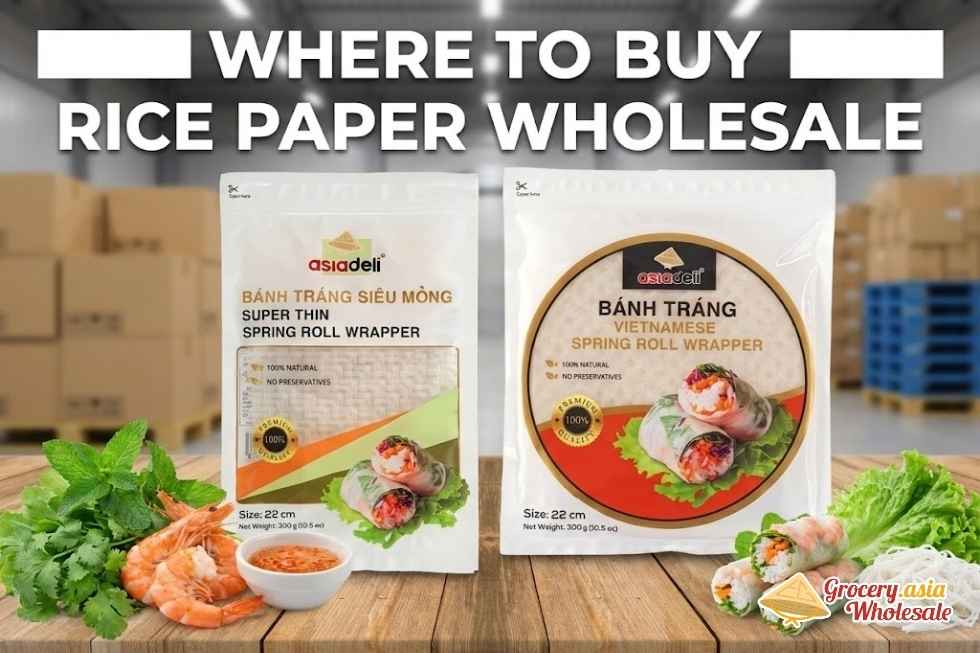
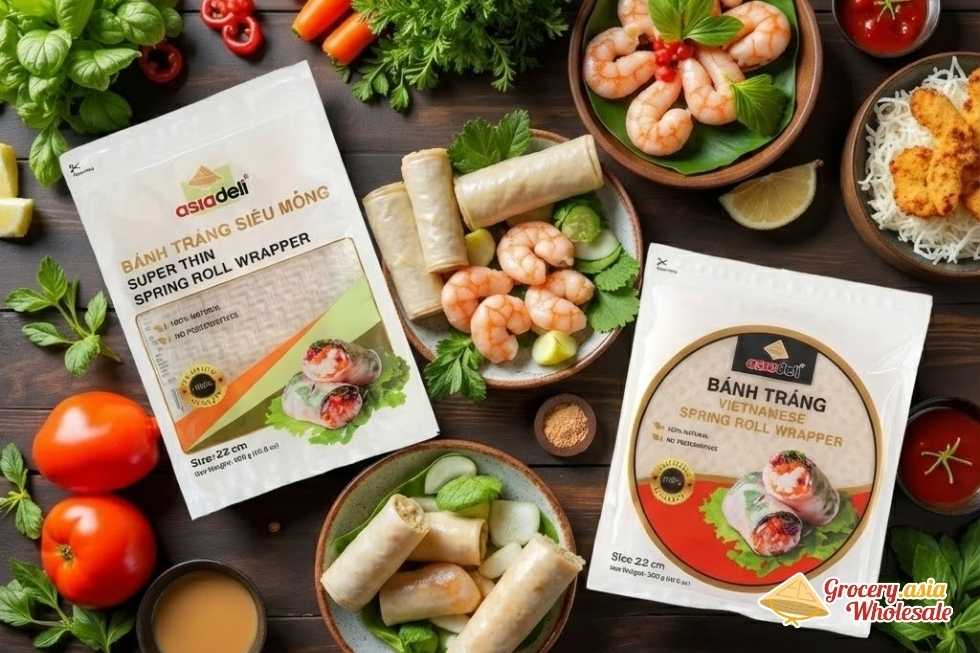
High-end products like the Asiadeli Super Thin Rice Paper target premium international markets with advanced specifications. This premium line features a revolutionary No Need Dipping in Water capability that eliminates the traditional soaking step. This innovation prevents wrapper breakage during preparation and significantly reduces cooking time for consumers.
The advanced processing technique creates wrappers that become pliable with minimal moisture exposure, making them ideal for Vietnamese spring rolls and other delicate preparations. The super-thin construction maintains structural integrity while offering superior transparency that showcases colorful fillings.
Premium rice papers come in two convenient formats:
- Round shape measuring 22cm in diameter for traditional circular wrapping techniques
- Rectangle format at 22cm x 16cm for specialized applications requiring different proportions
- Standard packaging in 300g (10.5 oz) bags suitable for both home and commercial use
The rectangular option proves particularly useful for spring roll wrapping techniques that require specific dimensional ratios. Professional kitchens appreciate the consistent sizing that ensures uniform portion control across multiple servings.
These premium specifications address common preparation challenges faced by both home cooks and restaurants. The no-dip feature eliminates the guesswork involved in achieving proper wrapper moisture levels, while the super-thin construction reduces the risk of double-layering that can create thick, chewy textures in finished dishes.
Quality control measures for premium products typically include:
- Moisture content verification
- Thickness consistency testing
- Flexibility assessments
These standards ensure that each wrapper performs reliably whether used for fresh rolls, grilled rice paper dishes, or fried preparations.
Storage requirements vary between standard and premium categories, with higher-end products often requiring more controlled humidity conditions to maintain their advanced properties. Premium rice papers generally offer extended shelf life when stored properly, making them cost-effective despite higher initial purchase prices.
The investment in premium rice paper pays dividends through reduced preparation time, lower breakage rates, and consistently superior results. Professional establishments particularly benefit from the reliability and time savings that premium products provide during high-volume service periods.
For versatile cooking applications, consider products that work equally well in fresh preparations and heated dishes. Some premium rice papers excel in multiple cooking methods, offering flexibility for diverse menu applications including rice vermicelli recipes that incorporate wrapped elements.
Strategic Sourcing Guide: How to Import Safely
I recommend using specialized platforms like Volza or Tridge to research potential suppliers before committing to any rice paper imports. These platforms provide detailed export history data that helps verify a supplier’s track record and consistency. You can analyze shipping patterns, volume trends, and customer relationships to identify reliable partners who’ve demonstrated stable operations over time.
Audited supplier status becomes crucial when importing food products. Look for suppliers who’ve undergone third-party certifications like BRC, HACCP, or FDA registration. These credentials indicate the factory maintains proper food safety standards and quality control systems. I always cross-reference audit dates to ensure certifications remain current.
Managing Minimum Order Quantities and Shipping Costs
Manufacturing facilities typically impose substantial minimum order quantities (MOQs) ranging from 1–5 tons per shipment. This requirement can strain cash flow and warehouse capacity for smaller businesses. However, distributors like Asiadeli offer more flexible MOQ options that accommodate various business sizes. You’ll find these distributors particularly valuable when testing new products or managing seasonal demand fluctuations.
Consider these practical approaches for managing large orders:
- Partner with other local businesses to share container space and costs
- Mix different rice paper varieties within your order to test market preferences
- Calculate storage costs against volume discounts to determine optimal order sizes
- Schedule deliveries during slower business periods to manage warehouse capacity
Shipping optimization requires strategic thinking about container utilization. I suggest pairing rice paper orders with complementary Asian food products to maximize container efficiency. Premium rice vermicelli works particularly well since it shares similar customer bases and storage requirements.
This mixed container strategy reduces per-unit shipping costs significantly. Rice paper’s lightweight nature means you’ll often have weight capacity remaining in your container. Fill that space with denser products like sauces, condiments, or noodles that your customers also purchase regularly.
Calculate total landed costs including duties, storage, and handling fees before finalizing orders. Many importers focus solely on product costs while overlooking these additional expenses that can impact profitability. I maintain detailed spreadsheets tracking all cost components to compare different suppliers accurately.
Document requirements vary by country, but most regions require certificates of origin, health certificates, and ingredient declarations for rice paper imports. Work with suppliers who understand export documentation requirements for your specific market. Experienced exporters will often handle much of this paperwork, but you’ll need to verify accuracy and completeness.
Payment terms deserve careful consideration when working with new suppliers. I recommend starting with letters of credit or trade insurance for initial orders, then gradually moving to more favorable terms as relationships develop. Many Asian suppliers accept 30% deposits with the balance due before shipment, which balances risk for both parties.
Quality control becomes particularly important given the distance and time involved in international shipping. Request samples of each production batch and establish clear specifications for thickness, color, and packaging requirements. Some suppliers offer pre-shipment inspection services that can prevent costly quality issues.
Temperature and humidity control during shipping affects rice paper quality significantly. Insist on proper container sealing and consider moisture-absorbing packets for longer transit times. I’ve found that establishing clear handling requirements upfront prevents damage claims and customer complaints later.
Building relationships with freight forwarders who specialize in food imports streamlines the process considerably. They understand customs requirements, proper documentation, and can often consolidate shipments with other importers to reduce costs.
Track your shipments using container tracking systems and maintain communication with your freight forwarder throughout transit. This proactive approach allows you to prepare for delays and communicate realistic delivery expectations to customers. Whether you’re planning to use the rice paper for Vietnamese spring rolls or grilled rice paper dishes, proper planning ensures fresh, quality products reach your customers consistently.
Looking for a Reliable Rice Paper Supplier?
I understand how challenging it can be to find consistent, high-quality rice paper that meets your specific needs. After testing countless suppliers and dealing with inconsistent products, I’ve found that Asiadeli stands out as a dependable source for premium rice paper.
Premium Quality from Vietnam
Asiadeli sources their super-thin rice paper directly from Vietnam, ensuring you receive authentic products with the traditional texture and flavor that makes dishes like Vietnamese spring rolls truly exceptional. Their export-quality rice paper maintains strict standards — it’s both gluten-free and Non-GMO certified, which addresses the dietary concerns many of my customers frequently express.
I’ve personally tested their rice paper for various applications, from fresh spring roll wrapping to creative recipes like grilled rice paper and fried rice paper rolls. The consistency in thickness and flexibility makes these sheets incredibly versatile for both traditional and innovative cooking approaches.
Competitive Pricing and Global Shipping
At Asia Grocery Company, we offers competitive wholesale and export prices that make bulk purchasing economical for restaurants, food distributors, and serious home cooks. We have mix container service — you can combine rice paper orders with other Asian ingredients, maximizing shipping efficiency and reducing overall costs.
The fast worldwide shipping ensures your rice paper arrives fresh and ready to use. Whether you’re planning a large catering event or stocking your restaurant kitchen, their reliable delivery schedule helps maintain consistent inventory levels.
Contact Asia Grocery Company for your rice paper needs through multiple convenient channels. Reach them by email at contact@egrocery.asia for immediate responses to pricing inquiries and custom orders. For detailed product specifications and current availability, visit Asiadeli product page.
Their rice paper pairs excellently with rice vermicelli dishes, creating complete meal solutions that showcase authentic Vietnamese flavors and textures.
Sources:
go4WorldBusiness.com
Volza
SupplyLeader.com
Tridge
Made-in-China.com
Freshdi.com
Cognitive Market Research
Alibaba.com
YITO Pack
Towardspackaging.com

