
No products in the cart.
Beverages News, Energy Drinks, Red Bull Energy Drink
Find Out How Much Sugar Is In A Red Bull Energy Drink
29
Dec
Dec
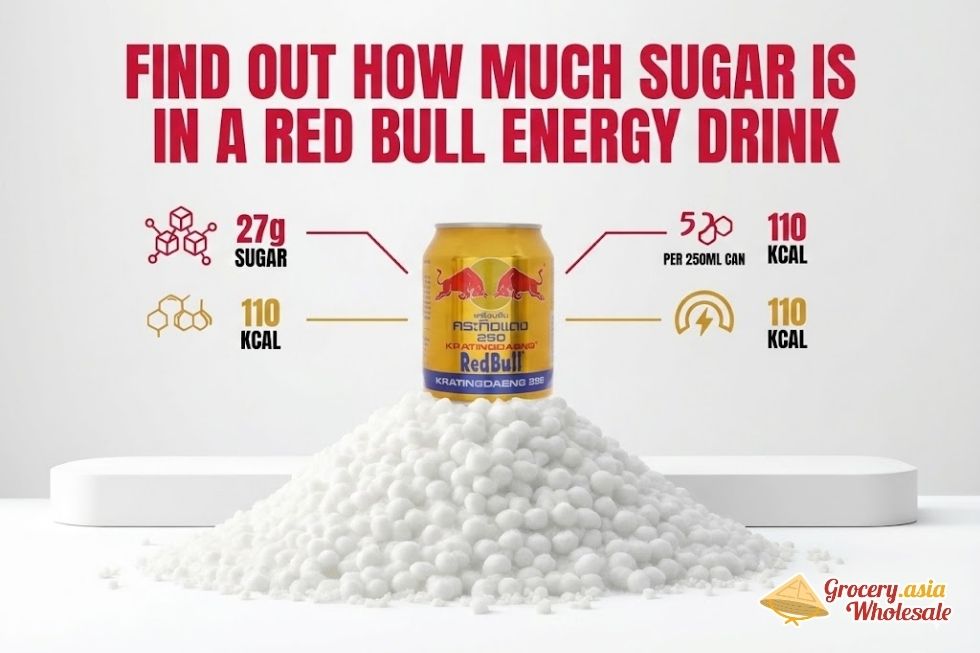
A standard 8.4-ounce Red Bull energy drink contains 27 grams of sugar — about 6.75 teaspoons — which amounts to 75% of the daily recommended sugar intake for men and a staggering 108% for women.
Table of Contents
Key Takeaways
- Red Bull contains 27 grams of sugar per 8.4 fl oz can, equivalent to approximately 6.75 teaspoons.
- Sugar content scales with can size, ranging from 38 grams in 12 oz cans to 63 grams in 20 oz cans.
- One standard Red Bull exceeds the American Heart Association’s daily sugar recommendation for women (25g) and uses up 75% of the limit for men (36g).
- The sugar density in Red Bull (3.21 grams per ounce) is on par with Coca-Cola and other sweetened sodas, contrary to the belief that energy drinks are more sugar-laden.
- Sugar-free options like Red Bull Sugarfree (5 calories) and Red Bull Zero (0 calories) offer the same caffeine and energy benefits without any sugar content.
Understanding the Sugars in Red Bull
Red Bull uses sucrose and glucose — simple carbohydrates that provide rapid energy. Unlike some soft drinks that utilize high-fructose corn syrup, Red Bull’s sugar composition aligns more with traditional sodas, contributing to its similar sugar density. Whether consumed for a quick boost or as a pre-workout supplement, it’s important to stay informed about its sugar implications.
The Sugar Bomb in Your Red Bull: 27 Grams Per Standard Can
I can tell you that sugar content in Red Bull packs quite a punch. Each standard 8.4 fl oz can contains exactly 27 grams of sugar, which translates to about 6.75 teaspoons of the sweet stuff. That’s a substantial amount crammed into such a small container.
Every single gram of carbohydrates in your Red Bull comes directly from sugar – there’s no fiber, no complex carbs, just pure sugary energy. This means you’re getting a concentrated dose of simple carbohydrates that’ll hit your bloodstream fast and hard.
The calorie count reflects this sugar-heavy composition. A standard can delivers 110 calories, with the vast majority coming from those 27 grams of sugar. Simple math tells us that sugar contributes about 108 of those calories, leaving just 2 calories from other Red Bull ingredients like caffeine and B-vitamins.

What Type of Sugar Red Bull Uses
Red Bull takes a different approach compared to many American beverages by using sucrose and glucose instead of high-fructose corn syrup. This combination creates a specific sweetness profile and affects how your body processes the sugar. Sucrose breaks down into equal parts glucose and fructose during digestion, while the added glucose provides immediate energy to your cells.
This sugar blend contributes to Red Bull’s distinctive taste and quick energy delivery. Glucose enters your bloodstream rapidly, giving you that immediate energy boost you’re looking for. Meanwhile, the fructose component gets processed by your liver, providing a slightly delayed but sustained energy release.
Understanding these numbers helps put Red Bull’s sugar content into perspective. The 27 grams represents about:
- 54% of the daily recommended limit for added sugar intake according to American Heart Association guidelines for men
- 108% of the daily limit for women
That’s more than half your daily sugar allowance in one small can.
I’ve found that many people don’t realize how quickly sugar adds up in energy drinks. Red Bull’s 6.75 teaspoons might not sound like much, but imagine spooning that amount of table sugar into your mouth – it’d be overwhelming. The liquid form and additional flavors mask just how sweet this beverage really is.
Comparing Sugar Density
The concentration factor makes Red Bull particularly potent. You’re getting nearly 7 teaspoons of sugar in just 8.4 ounces of liquid. Compare that to a 12-ounce regular Coca-Cola, which contains about 39 grams of sugar – Red Bull delivers 69% of Coke’s sugar content in 30% less volume.
This sugar density serves a purpose beyond just taste. Red Bull’s energy-boosting effects come partly from this rapid sugar delivery system. Your body can quickly convert these simple sugars into usable energy, complementing the caffeine’s stimulant effects.
Health Implications of Red Bull’s Sugar
For those monitoring their sugar intake, Red Bull’s 27 grams represents a significant portion of daily consumption. If you’re diabetic, pre-diabetic, or trying to reduce sugar for health reasons, this amount requires careful consideration within your overall meal planning.
The sucrose and glucose combination also affects satiety differently than other sweeteners. You might find yourself wanting more sweetness shortly after consuming Red Bull, as these simple sugars don’t provide lasting satisfaction like complex carbohydrates or protein would.
I recommend treating Red Bull as what it essentially is – a liquid candy with caffeine. The 27 grams of sugar makes it more of an occasional treat than a regular beverage. If you need daily energy support, consider:
- Alternatives with lower sugar content
- Natural sources of energy like fruit, nuts, or whole grains
- Adequate hydration and regular sleep to reduce reliance on stimulants
Making an informed choice about energy drinks like Red Bull means understanding exactly what you’re putting in your body – and whether it’s helping or hurting your energy levels in the long run.
Exceeding Recommended Limits: How One Can Compares to Daily Guidelines
When I examine Red Bull’s sugar content against established health recommendations, the numbers reveal concerning patterns. The American Heart Association sets clear boundaries for daily added sugar consumption: no more than 36 grams for men and 25 grams for women.
A single 8.4 fl oz Red Bull delivers 27 grams of sugar, which translates to 75% of a man’s entire daily allowance. For women, the situation becomes even more problematic, as one can provides 108% of their recommended maximum intake. This means women exceed their daily sugar limit with just one energy drink.
Understanding the Impact on Daily Nutrition
These guidelines specifically target added sugars rather than naturally occurring sugars found in fruits and vegetables. Red Bull’s ingredients include sucrose and glucose, both classified as added sugars. I find it crucial to recognize that consuming one can leaves minimal room for other sugar sources throughout the day.
Consider these practical implications for your daily diet:
- Morning Red Bull consumption restricts sugar intake for the remainder of the day
- Women must eliminate virtually all other added sugar sources after drinking one can
- Men have only 9 grams of sugar remaining for their daily allowance
- Additional sugar from coffee, snacks, or meals quickly pushes intake beyond healthy limits
The significance becomes clearer when I consider that most people don’t track their daily sugar consumption. Hidden sugars appear in bread, sauces, yogurt, and countless processed foods. Starting the day with 27 grams from an energy drink creates a challenging situation for maintaining healthy sugar levels.
Red Bull’s benefits may include increased alertness and energy, but the sugar content demands careful consideration within your overall nutritional strategy. I recommend viewing this information as part of informed decision-making rather than complete avoidance. Understanding these numbers empowers you to balance energy drink consumption with other dietary choices throughout your day.
Regular consumption patterns amplify these concerns significantly. Daily Red Bull intake means consistently exceeding recommended sugar limits, potentially contributing to long-term health complications. The key lies in awareness and moderation when incorporating energy drinks into your routine.
Sugar Content Increases with Can Size
I’ve noticed that many people don’t realize how dramatically sugar levels rise as Red Bull can sizes increase. The standard 8.4 fl oz can contains 27 grams of sugar, but that’s just the beginning of the story.
How Sugar Content Scales Across Can Sizes
Each larger Red Bull can packs proportionally more sugar into your system. A 12 fl oz can jumps to 38 grams of sugar – that’s 11 grams more than the original size. The 16 fl oz can delivers 51 grams of sugar, while the largest 20 fl oz can hits a staggering 63 grams of sugar.
To put this in perspective, the largest Red Bull contains more than double the sugar found in the standard can. This scaling pattern means you’re not just getting more caffeine and energy when you choose a bigger can – you’re also consuming significantly more sugar with each sip.
Flavored Editions Follow Similar Patterns
Red Bull Editions, which include flavors like tropical, watermelon, and coconut berry, maintain similar sugar levels across their respective can sizes. I find this consistency helpful for those who want to track their sugar intake regardless of flavor preference.
The flavored varieties don’t typically reduce sugar content to accommodate their additional flavoring components. Instead, they maintain the same sugar-to-volume ratio as original Red Bull. This means a 12 fl oz Red Bull Edition will still contain approximately 38 grams of sugar, just like its unflavored counterpart.
Understanding these sugar levels becomes crucial when you consider that the American Heart Association recommends no more than 25 grams of added sugar per day for women and 36 grams for men. Even the smallest Red Bull can exceeds the daily recommendation for women, while larger sizes surpass guidelines for both genders.
I recommend checking the nutrition facts on each can size before purchasing, especially if you’re monitoring your daily sugar consumption. The difference between can sizes can significantly impact your overall dietary goals.
For those who enjoy Red Bull’s energy boost but want to manage sugar intake, consider:
- Splitting larger cans across multiple servings
- Choosing sugar-free alternatives
Red Bull offers zero-calorie versions that eliminate sugar content entirely while maintaining the caffeine and energy benefits many people seek.
Remember that these sugar amounts represent just one beverage choice in your daily diet. Adding a 20 fl oz Red Bull to a meal or snack that already contains sugar can quickly push your daily intake well beyond healthy recommendations.
How Red Bull Stacks Up Against Other Popular Beverages
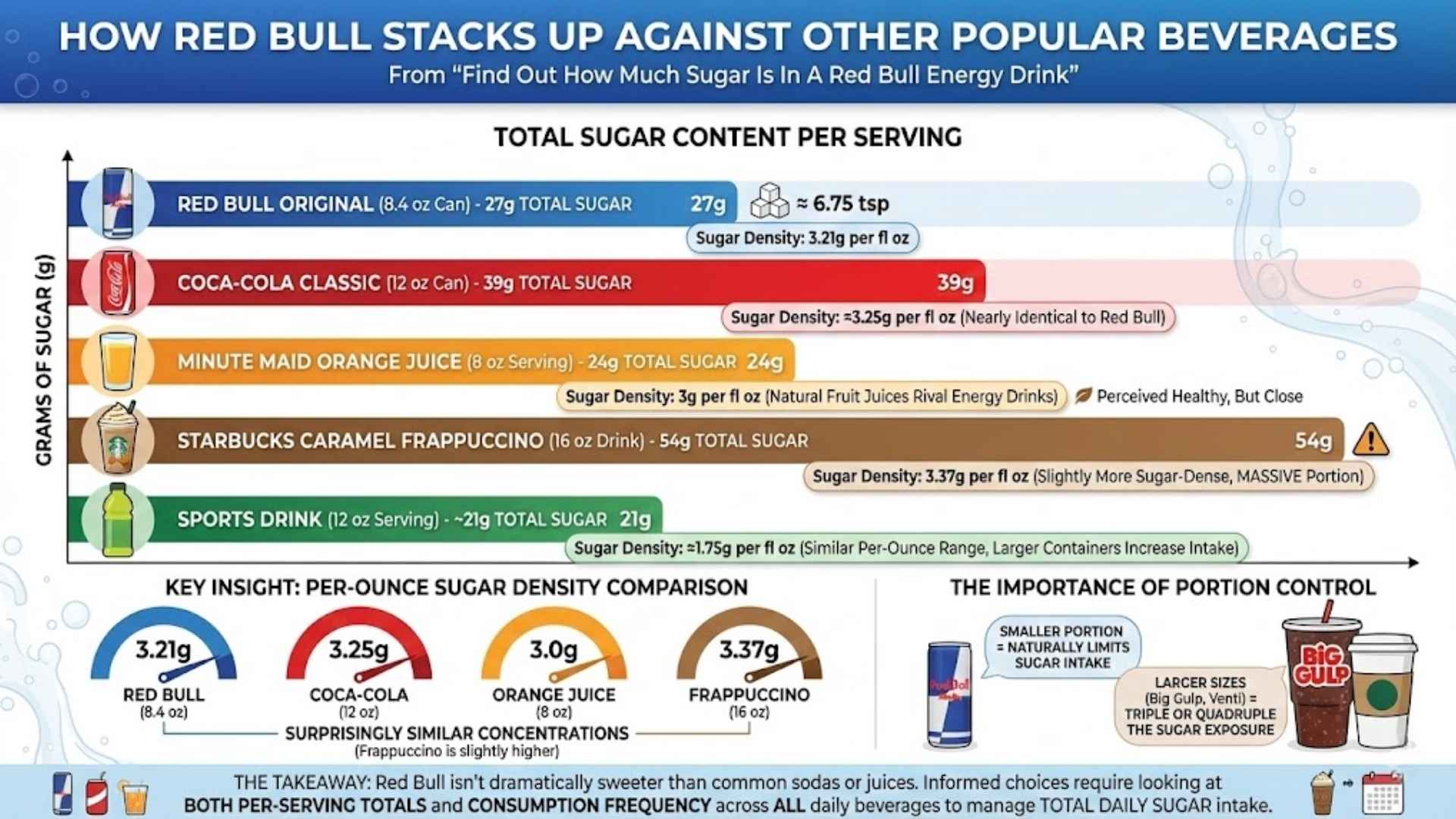
I’ve analyzed Red Bull’s sugar content alongside other common drinks to provide you with a clear comparison. Red Bull Original’s 8.4 fl oz can packs 27 grams of sugar, which translates to approximately 3.21 grams per ounce.
Sugar Content Comparison Across Popular Drinks
The numbers reveal interesting patterns across different beverage categories:
- Coca-Cola Classic (12 fl oz) delivers 39 grams of sugar
- Red Bull Original (8.4 fl oz) contains 27 grams of sugar
- Minute Maid Orange Juice (8 fl oz) carries 24 grams of sugar
- Starbucks Caramel Frappuccino (16 fl oz) holds 54 grams of sugar
Red Bull’s sugar density mirrors that of traditional sodas almost exactly. Coca-Cola contains roughly 3.25 grams of sugar per ounce, making it virtually identical to Red Bull’s concentration. This similarity surprises many consumers who assume energy drinks contain significantly more sugar than soft drinks.
Orange juice presents an unexpected comparison point. Despite its natural fruit origins, an 8-ounce glass of Minute Maid Orange Juice delivers 24 grams of sugar—only 3 grams less than Red Bull’s full can. The difference becomes even smaller when you consider Red Bull’s slightly larger serving size.
Coffee shop beverages demonstrate how quickly sugar content can escalate. A 16-ounce Starbucks Caramel Frappuccino contains twice as much sugar as a Red Bull, highlighting how specialty drinks often exceed energy drinks in total sugar content. Even downsizing this drink to match Red Bull’s 8.4-ounce serving would still yield approximately 28 grams of sugar.
I find it particularly noteworthy that Red Bull’s ingredients include both sucrose and glucose, which your body processes differently than the high fructose corn syrup found in many sodas. This distinction affects how quickly the sugar enters your bloodstream and how your body metabolizes it.
Energy drinks often receive criticism for their sugar content, yet these comparisons show that Red Bull falls within the typical range for sweetened beverages. A 12-ounce soda actually delivers more total sugar than Red Bull’s standard can size. The perception that energy drinks contain excessive sugar often stems from comparing different serving sizes rather than examining the actual concentration.
Sports drinks provide another reference point for sugar content evaluation. Most 12-ounce sports drinks contain 21–34 grams of sugar, placing them in similar territory to Red Bull. However, Red Bull’s benefits extend beyond hydration to include caffeine and B-vitamins for energy enhancement.
The key difference lies not in sugar quantity but in purpose and consumption patterns. Most people drink Red Bull for immediate energy, while they might consume multiple servings of juice or soda throughout the day. Understanding these serving contexts helps you make more informed choices about your daily sugar intake.
Red Bull Sugar-Free offers an alternative that eliminates sugar concerns entirely while maintaining the energy-boosting properties through caffeine and other ingredients. This option allows you to enjoy Red Bull’s functional benefits without contributing to your daily sugar consumption.
Sugar-Free Options: Alternatives for Health-Conscious Consumers
Red Bull recognizes that many consumers want the energy boost without the sugar crash, which led to the development of two compelling alternatives to the original formula. Both options eliminate sugar entirely while maintaining the distinctive taste and functional benefits that define the brand.
Red Bull Sugarfree vs. Red Bull Zero
Red Bull Sugarfree contains zero grams of sugar and delivers just 5 calories per can. I find this option particularly appealing because it uses a combination of Aspartame and Acesulfame K (Ace-K) to create sweetness without compromising flavor. The minimal calorie content makes it an excellent choice for those monitoring their daily intake while still wanting energy drink benefits.
Red Bull Zero takes the sugar-free concept even further. This variant contains absolutely no sugar and zero calories, making it the most diet-friendly option in the lineup. The sweetening system combines Aspartame, Sucralose, and Ace-K to achieve its taste profile. This triple-sweetener approach creates a more rounded flavor experience that closely mimics the original.
Both sugar-free variants maintain the same caffeine content and include all the key functional ingredients found in regular Red Bull. You’ll still get the B-vitamins, taurine, and alpine water that contribute to the drink’s energy-boosting properties. The nutritional composition remains largely intact, with only the sugar and caloric content modified.
These alternatives prove especially valuable for athletes, professionals, and anyone following a low-sugar or ketogenic diet. The absence of sugar means you won’t experience the energy spike and subsequent crash associated with high-sugar beverages. Instead, you get sustained energy from caffeine and B-vitamins without disrupting blood sugar levels.
I recommend trying both variants to determine which sweetener profile suits your taste preferences. Some people prefer the slightly fuller taste of Red Bull Sugarfree, while others gravitate toward the completely calorie-free nature of Red Bull Zero. Understanding sugar content differences helps you make informed choices based on your dietary goals and preferences.
How Much Sugar Is in a Red Bull Energy Drink: Final Answer
A standard 8.4-ounce Red Bull contains 27 grams of sugar, which equals approximately 6.5 teaspoons. This amount places Red Bull firmly in the high-sugar beverage category, containing more sugar than many popular sodas and sweetened drinks.
Sugar Content Across Different Red Bull Sizes
The sugar content varies significantly based on can size. Larger Red Bull cans pack substantially more sugar into each serving:
- 12-ounce cans contain approximately 38 grams of sugar
- 16-ounce cans deliver around 51 grams of sugar
- 20-ounce cans provide roughly 64 grams of sugar
These larger sizes can easily push your daily sugar intake beyond recommended limits with just one drink. I recommend checking the nutrition label carefully, as Red Bull ingredients can vary slightly between different product lines.
The sugar concentration in Red Bull matches or exceeds many traditional soft drinks. For example, a 12-ounce Coca-Cola contains 39 grams of sugar, making it comparable to the larger Red Bull sizes. This similarity means you’re consuming dessert-level sugar amounts with each energy drink.
For those concerned about sugar content in energy drinks, Red Bull offers sugar-free alternatives. These versions use artificial sweeteners like aspartame and acesulfame K to maintain sweetness without the added sugar. The sugar-free options provide the same caffeine boost and energy drink benefits without contributing to daily sugar intake.
Understanding these numbers helps you make informed decisions about energy drink consumption. If you’re monitoring sugar intake for health reasons, consider alternating between regular and sugar-free versions, or limiting consumption to smaller can sizes. The 27 grams in a standard Red Bull represents more than half the American Heart Association’s recommended daily sugar limit for men and nearly the entire limit for women.
Sources:
Red Bull North America – Nutrition Facts
American Heart Association – Added Sugars Guidelines
The Coca-Cola Company – Coca-Cola Nutrition Facts
Starbucks – Caramel Frappuccino Nutrition
USDA FoodData Central

