
No products in the cart.
Beverages News, Energy Drinks, Monster Energy Drink
How Much Caffeine In Monster Energy Drink Per Can
31
Dec
Dec
Monster Energy drinks are a popular choice among energy drink enthusiasts, known for their bold taste and significant caffeine content that gives a quick energy boost to consumers.
Table of Contents
Caffeine Content in Monster Energy Drinks
Each standard 16 fl oz can of Monster Energy contains 160 mg of caffeine. This amount makes up 40% of the FDA’s recommended daily limit of 400 mg for healthy adults. Here’s a closer look at how caffeine levels shift among Monster’s different drink lines:
- Original Monster Energy (green can): 160 mg of caffeine per 16 fl oz, or 10 mg per fluid ounce
- Ultra Series: Contains approximately 140 mg of caffeine
- Java Monster: Offers between 188–200 mg of caffeine per can, the highest in Monster’s lineup
Caffeine Comparison With Other Brands
The caffeine content in Monster Energy is considered moderate when compared to other popular energy drinks:
- Red Bull: 80 mg of caffeine per can
- Bang Energy: A high 300 mg of caffeine per can
FDA Guidelines and Serving Sizes
According to the FDA, the recommended daily caffeine intake for healthy adults is 400 mg. One 16 fl oz can of Monster Energy contributes 40% of this limit. Although the official serving size for Monster is listed at 8 fl oz (with 80 mg of caffeine), consumption patterns show that most people consume the entire 16 fl oz can in one sitting.
Key Takeaways
- Monster Energy’s original can contains 160 mg of caffeine, equal to 10 mg per fluid ounce.
- Caffeine amounts vary across Monster products, ranging from 140 mg to 200 mg.
- A single can delivers 40% of the FDA’s daily caffeine limit recommendation.
- Monster ranks mid-range in caffeine content compared to competitors like Bang and Red Bull.
- Labelled serving sizes differ from actual consumption trends, as most drink the full 16 fl oz.
Monster Energy’s Original Green Can: 160 mg of Caffeine
The classic Monster Energy drink delivers exactly 160 mg of caffeine in each standard 16 fl oz can. This measurement remains consistent across all green-labeled Monster cans, making it a reliable choice for those tracking their daily caffeine intake. Breaking down the math, this equals precisely 10 mg of caffeine per fluid ounce, which is useful when comparing different energy drinks or calculating partial consumption.
Understanding Monster’s Serving Size vs. Reality
Monster officially lists the serving size as 8 fl oz on their nutrition label, which contains 80 mg of caffeine. However, most people consume the entire 16 fl oz container in one sitting, effectively doubling their Monster Energy caffeine intake to the full 160 mg. This discrepancy between labeled serving size and actual consumption patterns is common across the energy drink industry.
The 8 fl oz serving designation appears to be a regulatory strategy rather than a reflection of typical drinking habits. When calculating your daily caffeine limits, it’s important to always consider the full can’s caffeine content rather than just the technical serving size listed on the package.
How Monster Compares to Other Caffeine Sources
Monster’s 160 mg caffeine content sits in the moderate range when compared to other popular energy sources. Here’s how it stacks up against common alternatives:
- A typical 8 oz cup of coffee contains 95–200 mg of caffeine
- Red Bull (8.4 fl oz) provides 80 mg of caffeine
- Bang Energy (16 fl oz) delivers 300 mg of caffeine
- 5-Hour Energy shots contain 200 mg in just 2 fl oz
- Rockstar Energy (16 fl oz) offers 160 mg, matching Monster exactly
I consider Monster’s caffeine level to be appropriate for most adults looking for sustained energy without the jitters of higher-caffeine beverages. The 160 mg in each can provides noticeable stimulation while remaining well below the FDA’s recommended daily limit of 400 mg for healthy adults.
Coffee drinkers often underestimate how Monster’s caffeine compares to their morning brew. A large coffee from popular chains can contain 300–400 mg of caffeine, which makes Monster’s caffeine content relatively modest. This moderate level allows for additional caffeine intake later in the day without exceeding safe limits.
The 10 mg per fluid ounce ratio also makes Monster Energy easy to dose. Some people drink half a can for 80 mg of caffeine, while others may combine it with coffee for a higher overall intake. Understanding this precise measurement helps you make informed energy drink choices based on your personal caffeine tolerance and daily needs.

Comparing Monster Varieties: Caffeine Levels Across the Product Line
Monster’s caffeine content varies significantly across its diverse product line, with formulations ranging from 140mg to 200mg per serving. Each variety targets different consumer preferences while maintaining Monster’s signature energy boost, making it essential to understand which options deliver the intensity you’re seeking.
Standard Monster Energy Options
Monster Energy Original, along with its Lo-Carb and Zero Sugar variants, contains 160 mg of caffeine per 16 fl oz can. This consistent caffeine level across these three formulations means you’ll receive the same energy boost whether you choose the classic version or opt for reduced calories. Monster Rehab, the brand’s tea and lemonade blend series, matches this caffeine content at 160 mg, though it comes in a slightly smaller 15.5 fl oz can.
Monster MAXX takes concentration seriously, packing 180 mg of caffeine into a more compact 12 fl oz can. This carbonated formula delivers higher caffeine density, making it ideal when you want maximum impact in a smaller serving size. Monster Hydro provides 188 mg of caffeine in its larger 25.4 fl oz bottle, spreading the caffeine across more fluid for sustained hydration alongside energy.
Ultra Series and Coffee-Based Variations
The Monster Ultra line, including Zero Ultra and Ultra Paradise, contains 140 mg of caffeine per 16 fl oz can. These sugar-free options offer slightly less caffeine than standard Monster Energy drinks but maintain strong energy delivery while catering to calorie-conscious consumers.
Java Monster coffee-based flavors consistently rank as the highest-caffeine options in Monster’s lineup. These coffee-energy drink hybrids contain approximately 188-200 mg of caffeine per 15 fl oz can, combining coffee’s natural caffeine with additional energy ingredients. Popular Java Monster varieties like Mean Bean, Loca Moca, and Kona Blend all fall within this elevated caffeine range, making them perfect for coffee lovers who want extra energy beyond traditional coffee.
I’ve noticed that coffee-based Monster drinks typically deliver the strongest caffeine punch across the entire product range. This higher caffeine content reflects the dual nature of these beverages, which blend coffee culture with energy drink intensity. If you’re comparing caffeine content per serving, Java Monster varieties consistently outperform other Monster options.
Understanding these caffeine variations helps you select the right Monster product for your energy needs.
- Standard Monster Energy provides reliable 160mg doses.
- Ultra series offers moderate 140mg levels for calorie watchers.
- Java Monster delivers premium 188-200mg concentrations for maximum energy impact.
- MAXX and Hydro options provide specialized approaches with concentrated or extended-release caffeine delivery respectively.
Monster vs. Other Caffeinated Beverages: How It Compares
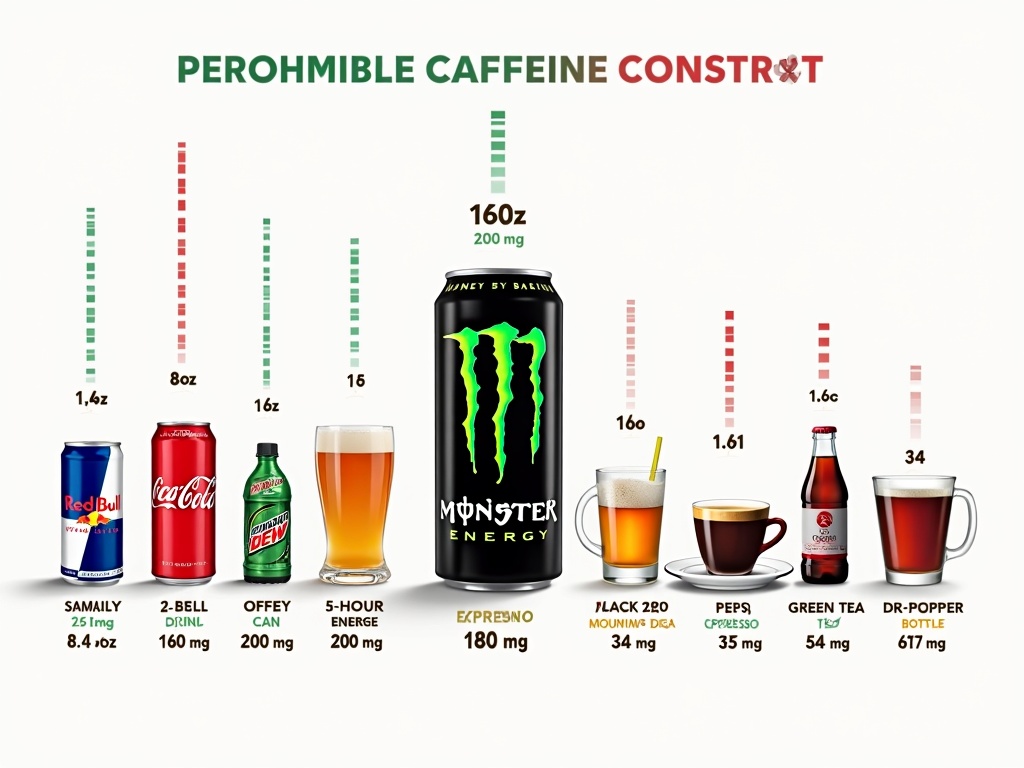
When I examine Monster’s caffeine content against other popular beverages, the differences become quite striking. A standard 16 fl oz Monster energy drink packs 160 mg of caffeine, placing it squarely in the middle range of caffeinated beverages available today.
Energy Drink Comparisons
Monster significantly outpaces its closest competitor in the energy drink market. An 8.4 fl oz Red Bull contains just 80 mg of caffeine, meaning Monster delivers double the caffeine per serving. This difference becomes even more pronounced when you consider serving sizes—Red Bull’s smaller can means you’re getting substantially less caffeine overall.
5-Hour Energy shots present a different story entirely, cramming 200 mg of caffeine into a tiny 2 fl oz bottle. While this creates a higher concentration per ounce, the total caffeine content only exceeds Monster by 40 mg. Bang energy drinks push the envelope further with 300 mg per 16 oz can, making them significantly stronger than Monster.
Coffee Comparisons
Coffee presents the most interesting comparison point for Monster’s caffeine levels. A typical 16 oz cup of brewed coffee contains between 180-200 mg of caffeine, putting it slightly above Monster’s 160 mg content. However, coffee’s caffeine levels vary dramatically based on brewing method, bean type, and preparation strength.
Starbucks Grande coffee (16 oz) delivers approximately 310 mg of caffeine—nearly double what you’ll find in Monster. Even a standard 8 oz cup of home-brewed coffee provides around 95 mg of caffeine, which means Monster’s caffeine content equals roughly 1.7 cups of regular coffee.
A single shot of espresso contains about 64 mg of caffeine, so Monster’s 160 mg equals approximately 2.5 espresso shots. This comparison helps put Monster’s strength into perspective for coffee drinkers considering the switch.
Soda Comparisons
Traditional sodas pale in comparison to Monster’s caffeine punch:
- 12 oz Coca-Cola: 34 mg
- 12 oz Mountain Dew: 54 mg
- 12 oz Dr Pepper: 41 mg
- 12 oz Pepsi: 38 mg
These numbers demonstrate why energy drinks like Monster gained popularity among consumers seeking higher caffeine levels than traditional sodas could provide.
Tea-Based Beverage Comparisons
Tea-based beverages occupy the lower end of the caffeine spectrum:
- 8 oz Black tea: 25–50 mg
- 8 oz Green tea: 25–35 mg
- 12 oz Iced tea (commercial): 20–40 mg
Pre-Workout Supplements
Pre-workout supplements often exceed Monster’s caffeine content, with many containing 150–400 mg per serving. However, these products target a specific fitness audience and aren’t consumed as casual beverages like Monster often is.
Understanding Monster’s caffeine levels helps you make informed decisions about your daily caffeine intake. The FDA recommends limiting caffeine consumption to 400 mg per day for healthy adults. Monster’s 160 mg represents 40% of this daily limit, leaving room for other caffeinated beverages or foods throughout the day.
Energy drinks like Monster also contain additional stimulants like taurine, guarana, and B vitamins that can amplify caffeine’s effects. This means Monster’s impact might feel stronger than coffee or soda with equivalent caffeine content. Coffee and tea provide antioxidants and other beneficial compounds that energy drinks typically lack, making them potentially healthier choices despite similar caffeine levels.
How Much Caffeine in Monster Energy Drink: Daily Safety Limits
It’s important to understand how Monster Energy fits into the FDA’s recommended daily caffeine limits. The Food and Drug Administration (FDA) advises that up to 400 mg of caffeine per day is generally safe for most healthy adults without causing adverse effects.
Breaking Down Monster Energy’s Impact on Your Daily Limit
A standard 16 oz Monster Energy contains 160 mg of caffeine, which accounts for exactly 40% of the recommended daily maximum. This allows for easy monitoring of your intake throughout the day.
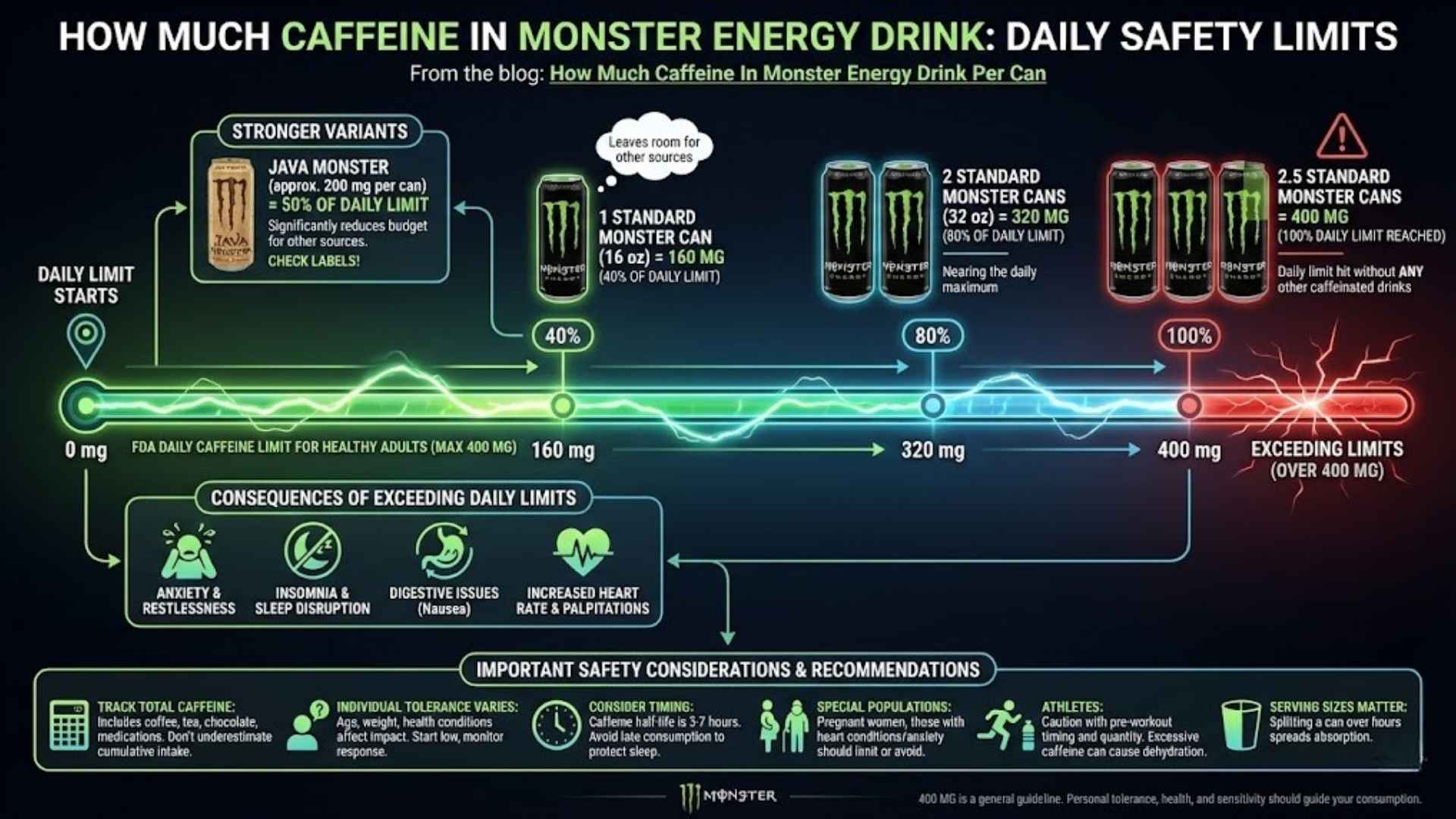
Here’s how Monster Energy consumption stacks up against the 400 mg threshold:
- One 16 oz can = 160 mg (40% of daily limit)
- Two cans = 320 mg (80% of daily limit)
- Two and a half cans = 400 mg (reaches the FDA limit)
Stronger Monster varieties can push these numbers even higher. For example, Java Monster contains approximately 200 mg of caffeine per can, equating to 50% of your daily intake in just one serving. Ultra versions and other specialty flavors may vary slightly from the standard 160 mg.
Exceeding the 400 mg daily limit can lead to multiple adverse side effects:
- Anxiety: Enhanced nervous system stimulation may increase jitteriness and stress.
- Sleep disturbances: High caffeine intake, especially later in the day, can interfere with quality sleep.
- Digestive issues: Stomach problems such as acid reflux and gastrointestinal discomfort are common.
- Increased heart rate: Excessive caffeine often leads to palpitations and a racing heart.
Monitoring your total daily caffeine intake from all sources is crucial—not just from energy drinks. Coffee, tea, chocolate, and certain medications also contribute. For example, combining a morning coffee (95 mg) with one Monster serving (160 mg) totals 255 mg, leaving only 145 mg before hitting your daily limit.
Individual caffeine tolerance varies significantly and can be influenced by factors such as body weight, metabolism, and habitual caffeine consumption. Pregnant women, individuals with heart conditions, and those sensitive to stimulants should consult with a healthcare professional before consuming energy drinks regularly.
Spacing out your Monster consumption throughout the day helps avoid sudden spikes in caffeine levels. It’s advisable to avoid energy drinks within six hours of bedtime to protect sleep quality. Starting with half a can is a sensible way to evaluate how your body reacts before committing to a full serving.
For a visual breakdown and energy drink comparisons, here’s a helpful video:
Sources:
Monster Energy Company (Official Website)
Caffeine Informer: “Caffeine in Monster Energy Drink”
U.S. FDA: “Spilling the Beans: How Much Caffeine Is Too Much?”
Healthline: “How Much Caffeine Is in a Can of Monster?”

