
No products in the cart.
Coffee, Trung Nguyen Coffee
Is Vietnamese Coffee Strong Compared To Others

04
Mar
Mar
Vietnamese coffee delivers a significantly higher caffeine concentration than most Western brewing methods, offering a bold and robust experience for coffee enthusiasts. With 30–35 mg of caffeine per ounce, compared to regular drip coffee’s 8–15 mg per ounce, its strength is rooted in both the use of robusta beans and the traditional phin brewing technique.
Key Takeaways
- Vietnamese coffee contains nearly double the caffeine of regular coffee, offering approximately 66–130 mg of caffeine in a mere 60–120 ml serving.
- Robusta beans are the powerhouse behind the strength, packing 2.5–2.7% caffeine by weight—significantly more than arabica beans, which contain only 1.2–1.5%.
- The traditional brewing method amplifies caffeine content; the phin filter employs a high coffee-to-water ratio of 1:8 or 1:10 and a brewing time of 4–6 minutes for maximum extraction.
- The perceived intensity of Vietnamese coffee goes beyond caffeine with its bold, earthy robusta flavors, small but concentrated servings, and the rich sweetness of condensed milk adding contrast and depth.
- Compared to Western methods, Vietnamese coffee delivers more caffeine per ounce than drip coffee, French press, and pour-over, placing it on par with espresso in caffeine concentration.
To dive deeper into Vietnamese coffee culture and brewing, explore this comprehensive overview of Vietnamese coffee culture.
Table of Contents
Vietnamese Coffee Contains Almost Double the Caffeine of Regular Coffee
I’ve discovered that Vietnamese phin coffee packs a serious caffeine punch, containing between 66–130 mg of caffeine in just 60–120 ml of liquid. This translates to roughly 30–35 mg of caffeine per ounce, making it significantly stronger than most Western brewing methods. When I compare this to standard drip coffee, which averages only 8–15 mg per ounce, the difference becomes striking.
French press coffee delivers about 13–17 mg per ounce, while pour-over methods usually contain 12–20 mg per ounce. These numbers highlight just how concentrated Vietnamese coffee truly is. The strength comes from the unique brewing process and robusta beans typically used in Vietnamese preparations.
Caffeine Concentration Rivals Espresso
On a concentration basis, Vietnamese coffee rivals espresso in terms of caffeine density. Some particularly strong preparations can reach 150–250 mg per serving, depending on the brewing time and bean quality. This intensity explains why Vietnamese coffee has such a devoted following among caffeine enthusiasts.
The high caffeine content stems from several factors that make Vietnamese coffee unique:
- Robusta beans naturally contain higher caffeine levels than arabica
- The slow drip brewing method extracts maximum caffeine from the grounds
- Traditional preparations use a higher coffee-to-water ratio
- Extended contact time between water and coffee grounds increases extraction
I find that this concentrated approach reflects the broader Vietnamese coffee culture, where quality and intensity matter more than quantity. A small cup of Vietnamese coffee delivers the same caffeine hit as a much larger American coffee, making it perfect for those who want maximum effect with minimal volume.
The answer to whether Vietnamese coffee is strong by volume becomes clear when you consider these numbers. With nearly double the caffeine concentration of regular drip coffee, Vietnamese coffee definitely earns its reputation as one of the strongest coffee preparations available. This strength isn’t just about taste – it’s measurable, quantifiable, and consistent across properly prepared servings.
Robusta Beans Make Vietnamese Coffee Nearly Twice as Strong as Arabica
Vietnam stands as the world’s largest producer of Robusta coffee, and this dominance directly impacts the strength of every cup you’ll experience. Traditional Vietnamese coffee relies heavily on Robusta-dominant blends, creating a brew that packs considerably more punch than your typical café offering.
The Caffeine Content Difference
The strength advantage comes down to fundamental differences between coffee bean varieties. Robusta contains about 2.5–2.7% caffeine by weight, while Arabica averages closer to 1.2–1.5%. This means Robusta delivers nearly double the caffeine content of its more commonly consumed counterpart.
These numbers translate into real-world impact when you’re sipping your morning cup. A 250 ml Robusta brew can reach 250–260 mg of caffeine, while the same volume of Arabica often contains just 120–140 mg. For perspective, this puts Vietnamese coffee on par with energy drinks in terms of caffeine concentration.
Beyond Caffeine: The Perception of Strength
Robusta’s bitterness reinforces the perceived strength beyond just caffeine numbers. The naturally harsh, earthy flavors create an intense sensory experience that signals potency to your palate. This bitter profile works particularly well with the sweetened condensed milk traditionally used in Vietnamese coffee culture, creating a balanced yet powerful drink.
I’ve found that many coffee drinkers underestimate this combination until they experience it firsthand. The robust flavor profile doesn’t just deliver higher caffeine – it announces its presence with every sip. Vietnamese coffee makers have mastered the art of harnessing Robusta’s natural intensity while tempering its harsher edges through careful brewing techniques and complementary ingredients.
When you compare Vietnamese coffee quality to international standards, the strength factor becomes a defining characteristic. This isn’t accidentally strong coffee – it’s intentionally crafted to deliver maximum impact. The country’s coffee industry has built its reputation on producing beans that create consistently powerful brews, making Vietnamese coffee a go-to choice for those who need serious caffeine delivery.

The Phin Filter Creates Espresso-Level Concentration in Small Servings
Vietnamese coffee‘s distinctive strength stems from the traditional phin filter—a simple yet effective metal dripper that transforms ordinary coffee grounds into a highly concentrated brew. This brewing method is fascinating because it uses a slow extraction process that takes 4-5 minutes to complete, allowing maximum flavor and caffeine extraction from every ground.
High Coffee-to-Water Ratio Drives Intensity
The phin filter’s design necessitates using a much higher coffee-to-water ratio compared to standard brewing methods. This concentration factor directly contributes to Vietnamese coffee’s strength, creating a beverage that packs considerable punch in each sip. The metal filter’s fine perforations regulate water flow, ensuring optimal contact time between hot water and coffee grounds.
Small Servings Pack Maximum Caffeine Impact
Traditional Vietnamese coffee servings range from just 2–4 ounces, making each cup a concentrated caffeine delivery system. The resulting caffeine density rivals or surpasses espresso on an ounce-for-ounce basis. Though Vietnamese coffee is served in slightly larger quantities than espresso, it still provides more total caffeine per cup. This combination creates both immediate intensity and sustained impact that distinguishes Vietnamese coffee culture from other brewing traditions.
The slow drip process allows coffee oils and soluble compounds to extract thoroughly, creating that signature bold flavor profile. This method produces coffee with remarkable body and complexity, partly due to the Robusta beans typically used in Vietnamese brewing. These beans naturally contain higher caffeine levels than Arabica varieties, further amplifying the final product’s strength.
Compared to standard drip coffee or French press methods, the difference becomes immediately apparent. Typical brewing methods use coffee-to-water ratios around 1:15 or 1:17, while phin brewing often uses ratios closer to 1:8 or 1:10. This mathematical difference translates into tangible strength that you’ll both taste and feel.
The concentrated nature of the brew makes Vietnamese coffee especially suitable for mixing with condensed milk. This is why ca phe sua da (iced coffee with condensed milk) remains so popular. The strong coffee base cuts through the sweet, creamy milk while maintaining its distinctive character. Even when diluted with ice and milk, the coffee’s intensity remains prominent.
I recommend starting with smaller amounts if you’re new to Vietnamese coffee, especially if you’re sensitive to caffeine. The compact serving size might seem modest, but the caffeine content can surprise those accustomed to larger, weaker American-style coffee drinks. Making authentic Vietnamese coffee requires patience, but the reward is a uniquely powerful coffee experience.
The beauty of this brewing method lies in its simplicity and effectiveness. You don’t need expensive equipment or complicated techniques—just a phin filter, quality coffee grounds, and hot water. The filter does most of the work, slowly extracting maximum flavor and caffeine while you wait. This approach creates coffee that’s both stronger and more flavorful than many expensive espresso machines can produce.
For coffee enthusiasts wondering about Vietnamese coffee quality, the phin brewing method showcases the beans’ natural characteristics while maximizing their strength potential. The controlled extraction prevents over-extraction while ensuring complete flavor development, resulting in coffee that’s intense without being bitter or harsh.

Why Vietnamese Coffee Tastes Stronger Than Its Caffeine Numbers Suggest
I’ve discovered that Vietnamese coffee strength extends far beyond caffeine content alone. The intensity you experience comes from multiple factors working together to create an unforgettable sensory experience.
The Bold Foundation of Robusta Beans
Robusta beans form the backbone of Vietnam’s coffee character. These beans contain significantly more bitter compounds than their arabica counterparts. Chlorogenic acids and other phenolic compounds create that distinctive bold, almost harsh flavor profile that hits your palate immediately. I find these natural compounds deliver an intensity that makes your taste buds take notice.
The phin brewing method amplifies this natural boldness through its unique extraction process. Unlike quick brewing methods, the slow drip extraction pulls maximum oils and dissolved solids from the coffee grounds. This process takes 4-6 minutes, allowing hot water to interact thoroughly with the coffee particles. The result? A concentrated liquid with increased body and mouthfeel that coats your tongue.
Condensed milk plays a crucial balancing act in this equation. Rather than diluting the coffee’s intensity, it actually enhances perception by creating contrast. The sweetness tames the harsh edges while allowing the coffee’s inherent strength to shine through. I’ve noticed this combination creates a fuller, more complex flavor experience than either component would deliver alone.
Serving size significantly impacts how we perceive strength. Traditional Vietnamese coffee portions are smaller than typical American servings – usually 2-3 ounces compared to 8-12 ounces. This concentrated serving delivers the full flavor impact without dilution. Your first sip contains all the intensity packed into a small volume, creating an immediate sensation of power.
The brewing temperature and grind size also contribute to this intensity. Vietnamese baristas typically use water slightly below boiling point, which extracts maximum flavor compounds without over-extraction. The medium-fine grind allows optimal contact time during the slow drip process, ensuring every particle contributes to the final strength.
I observe that these elements create a synergistic effect where taste strength and caffeine strength reinforce each other. The bold flavors prepare your brain to expect a powerful caffeine hit, while the actual caffeine content delivers on that promise. This psychological component makes the coffee feel stronger than laboratory measurements might suggest.
The roasting level adds another layer to this complexity. Vietnamese coffee beans undergo a darker roast that breaks down more cellular structure, making caffeine and flavor compounds more accessible during extraction. This roasting style also creates additional bitter compounds through the Maillard reaction, intensifying the overall flavor profile.
Local brewing techniques have evolved to maximize these characteristics. The metal phin filter allows oils to pass through, unlike paper filters that trap these compounds. These oils carry flavor molecules and create that signature mouthfeel that distinguishes Vietnamese coffee from other brewing methods.
Temperature contrast also plays a role in strength perception. Hot coffee served over ice creates thermal shock that intensifies flavor perception. Your taste buds react more strongly to this temperature variation, making the coffee taste more potent than it would at a consistent temperature.
Finally, the cultural context of Vietnamese coffee culture influences how we experience strength. The ritualistic slow brewing creates anticipation, while the small portions encourage mindful consumption. These factors combine to heighten awareness of the coffee’s intensity, making each sip feel more impactful than casual consumption would allow.
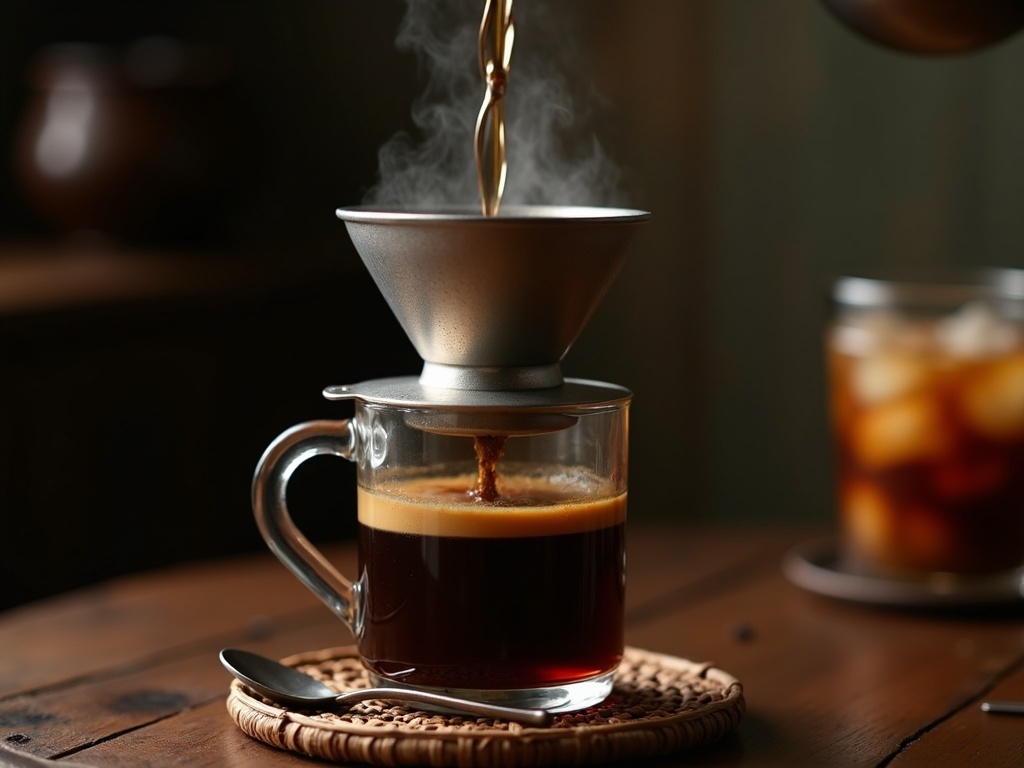
Is Vietnamese Coffee Strong Compared to Western Coffee Styles
I can confidently say that Vietnamese coffee strength outpaces most Western brewing methods in terms of concentration. The slow-drip process through a phin filter creates an intensely concentrated brew that delivers far more punch per ounce than standard drip coffee. This concentration makes each sip remarkably potent compared to the lighter extraction you’d get from automatic drip machines.
Cold brew enthusiasts often boast about their caffeine content, but Vietnamese coffee delivers more caffeine per ounce than even the strongest cold brew concentrates. The extended steeping time and fine grind size extract maximum caffeine from the Robusta beans, creating a concentrated liquid that packs serious punch. French press and pour-over methods, while producing excellent flavor, simply can’t match this level of extraction intensity.
How Vietnamese Coffee Stacks Against Espresso
Espresso represents the closest Western equivalent to Vietnamese coffee in terms of concentration and brewing philosophy. Both methods force hot water through finely ground coffee under controlled conditions, creating intensely concentrated results. However, Vietnamese coffee typically gets consumed in larger volumes than a traditional espresso shot, which changes the total caffeine equation significantly.
I’ve found that total caffeine content in a typical Vietnamese coffee serving falls between espresso and regular drip coffee. A standard 3-4 ounce serving of Vietnamese Robusta coffee contains roughly 80-120mg of caffeine, while an espresso shot delivers about 65mg and an 8-ounce cup of drip coffee provides 95mg. The difference lies in how you consume it – Vietnamese coffee’s smaller volume means you’re getting concentrated caffeine delivery rather than diluted strength.
Concentration defines the true strength here, not cup size. Western coffee drinkers often consume 12–16 ounce servings of relatively weak coffee, while Vietnamese coffee culture emphasizes smaller portions of highly concentrated brew. This fundamental difference in serving philosophy means Vietnamese coffee delivers more immediate impact per sip, even when total caffeine might be comparable to larger Western servings.
The brewing temperature and extraction time also contribute to Vietnamese coffee’s superior strength. Traditional preparation methods use near-boiling water that slowly drips through compressed grounds for 4–6 minutes. This extended contact time extracts more caffeine and flavor compounds than quick Western methods like drip coffee or even French press, which typically steep for only 4 minutes with coarser grounds.
Robusta beans themselves pack roughly double the caffeine content of Arabica beans commonly used in Western coffee. This botanical difference alone gives Vietnamese coffee a significant advantage in the strength department. When you combine high-caffeine beans with concentrated brewing methods, the result naturally exceeds what most Western preparations can achieve.
I’ve noticed that newcomers to Vietnamese coffee often underestimate its potency based on serving size alone. The small portions might look insignificant next to a large American coffee cup, but the concentrated nature delivers caffeine more efficiently. Authentic Vietnamese preparation maximizes extraction from every ground, creating a brew that’s genuinely stronger by volume than almost any Western equivalent.
The strength comparison becomes even more pronounced when you consider that Vietnamese coffee is often served over ice, which doesn’t dilute the concentration as much as you might expect. The ice melts slowly, maintaining much of the original potency while providing cooling relief. This differs significantly from iced versions of Western coffee, which typically get brewed hot and then chilled, often resulting in diluted strength.
Vietnamese coffee’s global reputation for strength isn’t just marketing – it’s backed by measurable differences in concentration and caffeine content. The combination of Robusta beans, precise brewing ratios, and concentrated extraction creates a beverage that consistently delivers more caffeine per ounce than standard Western preparations.

How Brewing Variables Affect Vietnamese Coffee Strength
Vietnamese coffee’s distinctive strength comes from several controllable brewing variables that I can manipulate to achieve the desired intensity. Grind size serves as the primary factor in determining extraction speed, where finer particles create more surface area for water contact. This increased contact leads to higher caffeine extraction and more pronounced bitter compounds, directly contributing to that bold flavor profile Vietnamese coffee is known for.
Brew time plays an equally important role in developing strength and intensity. The traditional phin filter naturally extends contact time between grounds and hot water, sometimes taking 5–10 minutes for a complete drip. This extended extraction period allows maximum caffeine release and develops the deep, concentrated flavors that define authentic Vietnamese coffee preparation.
Key Variables for Strength Control
Coffee-to-water ratios in Vietnamese brewing typically exceed Western standards, creating a more concentrated base. I recommend these essential brewing adjustments:
- Use a 1:8 or 1:10 coffee-to-water ratio instead of the standard 1:15
- Grind beans to a medium-fine consistency for optimal extraction
- Allow 5–8 minutes total brew time with the phin filter
- Choose pure Robusta beans over blended varieties for maximum caffeine content
Pure Robusta beans create significantly stronger results compared to Arabica blends commonly used in Western coffee preparations. Robusta contains nearly double the caffeine of Arabica beans, contributing to Vietnamese coffee’s reputation for intensity. This bean choice, combined with proper brewing variables, produces the characteristic bold flavor that coffee enthusiasts either love or find overwhelming.
These variables work together to allow precise strength control based on individual preferences or market demands. I can reduce grind fineness for milder extraction or decrease brew time for lighter intensity while maintaining the authentic Vietnamese coffee character. Traditional Vietnamese coffee culture emphasizes this flexibility, allowing each drinker to find their perfect balance between strength and enjoyment.
The beauty of Vietnamese brewing lies in this adaptability. Whether preparing coffee for those accustomed to mild Western varieties or creating the full-strength experience that locals prefer, these brewing variables provide complete control over the final product’s intensity without sacrificing authenticity.
Sources:
Mayo Clinic – Caffeine Content in Coffee
USDA – FoodData Central (Coffee Caffeine)
World Coffee Research – Robusta vs Arabica
Nguyen Coffee Supply – Vietnamese Coffee Strength
88 Coffee Company – Is Vietnamese Coffee Strong?
Healthline – Caffeine in Coffee Types

