
No products in the cart.
Beverages News, Energy Drinks, Red Bull Energy Drink
What Is Red Bull Energy Drink Made Of?
25
Dec
Dec
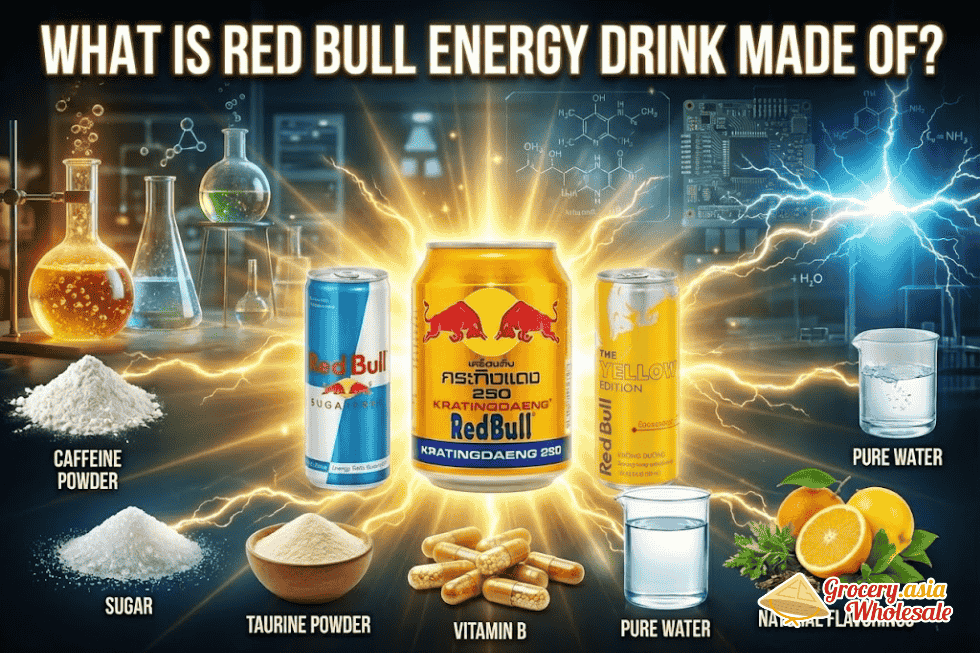
Red Bull energy drink combines a carefully formulated blend of caffeine, taurine, B-group vitamins, sugars, and carbonated water to deliver both immediate and sustained energy enhancement. The drink’s effectiveness stems from its synergistic ingredient system where each component serves a specific purpose—from caffeine providing neural stimulation to taurine supporting cellular function and B-vitamins optimizing energy metabolism.
Key Takeaways
- Red Bull contains 80mg of caffeine and 1,000mg of taurine per 8.4 fl oz can, creating a dual-action energy boost through neural stimulation and cellular support.
- The drink includes 37 grams of sugar in the original formula, providing immediate energy but placing it in the high-sugar beverage category comparable to apple juice or cola.
- Four essential B-group vitamins (B3, B5, B6, and B12) support energy metabolism, with some variants containing up to 590% of daily vitamin requirements.
- All Red Bull variants maintain identical caffeine, taurine, and vitamin levels regardless of flavor or sugar content, ensuring consistent energy effects across the product line.
- The complete formula combines carbonated water, sugars, acids, flavors, and preservatives in precise ratios to create both the signature taste and reliable energy delivery system.
Table of Contents
Ingredient Functionality
The primary active ingredients in Red Bull work through distinct physiological pathways. Caffeine blocks adenosine receptors in the brain, preventing fatigue signals from reaching consciousness. Taurine acts as an osmotic regulator, helping cells maintain proper hydration and electrical activity. B-vitamins catalyze metabolic processes that convert food into usable energy.
Caffeine and Taurine
Each 8.4 fl oz can delivers exactly 80mg of caffeine—roughly equivalent to a cup of coffee, but absorbed more rapidly due to the carbonation and liquid form. Taurine concentration reaches 1,000mg per can, significantly higher than typical dietary intake from food sources.
Sugar and Sweeteners
The sugar content varies dramatically between product lines. Original Red Bull contains 37 grams of sugar, primarily from sucrose and glucose. Sugar-free versions substitute aspartame and acesulfame potassium, offering sweetness with zero calories. Total Zero variants blend stevia extract with artificial sweeteners to create a unique flavor profile.
B-Vitamins
B-vitamin concentrations exceed daily recommended values by substantial margins:
- Niacin (B3) – 100% of daily requirement
- Pantothenic acid (B5) – 200%
- Pyridoxine (B6) – 250%
- Cyanocobalamin (B12) – up to 590% depending on variant
Other Ingredients and Additives
Carbonated water serves as the drink’s base, providing fizz and improving solubility. Though originally sourced from the Alps, regional plants may use local water sources meeting stringent purity standards. Citric acid and sodium bicarbonate regulate acidity and enhance caffeine absorption while adding to shelf stability.
Natural and artificial flavors create Red Bull’s signature sweet-tart profile. While the formula is proprietary, analysts suggest a mix of berry, apple, and vanilla notes. Preservatives such as sodium benzoate and potassium sorbate are included in safe quantities to maintain freshness and prevent bacterial growth.
Manufacturing and Consistency
The manufacturing process uses strict temperature control and ingredient sequencing to ensure optimal interactions and maximum efficacy. Ingredient consistency across global markets sets Red Bull apart from many competitors, maintaining active ingredient levels regardless of region. The only variation may be in sugar sourcing due to local agricultural differences.
Nutrition and Caloric Profile
Original Red Bull provides 110 calories per can, derived entirely from carbohydrates. Sugar-free and Total Zero versions have fewer than 5 calories, making them suitable for low-calorie diets.
Ingredient Sourcing and Quality Control
Red Bull emphasizes reliable ingredient sourcing and stringent quality control. Caffeine is synthesized rather than plant-extracted for consistent potency. Taurine results from fermentation using bacteria cultures, yielding highly pure, pharmaceutical-grade compounds. The vitamin complex consists of synthetic forms proven to offer superior absorption compared to food sources.
Conclusion
Red Bull’s formula is the product of decades of research into energy metabolism and cognitive performance. Every ingredient is selected with purpose, delivering a synergistic effect that enhances both mental and physical capabilities. For consumers seeking dependable stimulation, Red Bull provides a scientifically supported solution.
To learn more about Red Bull’s formulation and variants, visit the official Red Bull website.
What is Red Bull Energy Drink?
Red Bull energy drink is a specially formulated caffeinated beverage created to deliver quick stimulation and enhanced performance. This iconic blue and silver can contains a precise blend of active ingredients that work together to boost both mental alertness and physical energy levels.
Core Formula and Active Ingredients
The foundation of Red Bull’s effectiveness lies in its carefully balanced combination of key components:
- Caffeine – the primary stimulant that enhances alertness and wakefulness.
- Taurine – an amino acid that supports cardiovascular function and muscle development.
- B-group vitamins – essential for energy metabolism, helping convert food into energy efficiently.
- Sugar – provides immediate fuel for your brain and muscles.
- Purified water – acts as the delivery medium for all other ingredients.
Beyond these core components, Red Bull features several supportive ingredients:
- Citric acid and sodium citrate – preserve freshness and contribute to the drink’s tangy flavor.
- Natural and artificial flavors – create the signature Red Bull taste.
- Specific colors – ensure consistent appearance across all cans.
Purpose and Performance Benefits
Red Bull is not intended as a hydration solution or daily nutritional supplement. Rather, it is designed as a performance enhancer for moments requiring increased energy and focus. Red Bull is particularly useful when you need to:
- Improve concentration during mentally demanding tasks
- Boost physical performance during workouts or periods of prolonged effort
- Fight mental fatigue in moments of low energy or drowsiness
Understanding how much caffeine Red Bull contains helps you gauge its potential impact on your system. The combination of fast-acting sugars and sustained-release caffeine provides both an immediate kick and a longer-lasting boost.
This dual-action energy blend is why many people turn to Red Bull during early-morning meetings, late-night study sessions, or before athletic activities. Each ingredient is chosen for its targeted function in improving energy and cognition.
However, it’s also important to consider your personal health profile and drinking habits. Whether Red Bull is good for you depends on your overall diet and lifestyle choices. Used occasionally and with awareness of the sugar content, the drink can be a helpful tool for enhancing short-term performance.
https://www.youtube.com/watch?v=F7nxy8cuWOW
Red Bull’s Core Formula: Five Key Ingredient Categories
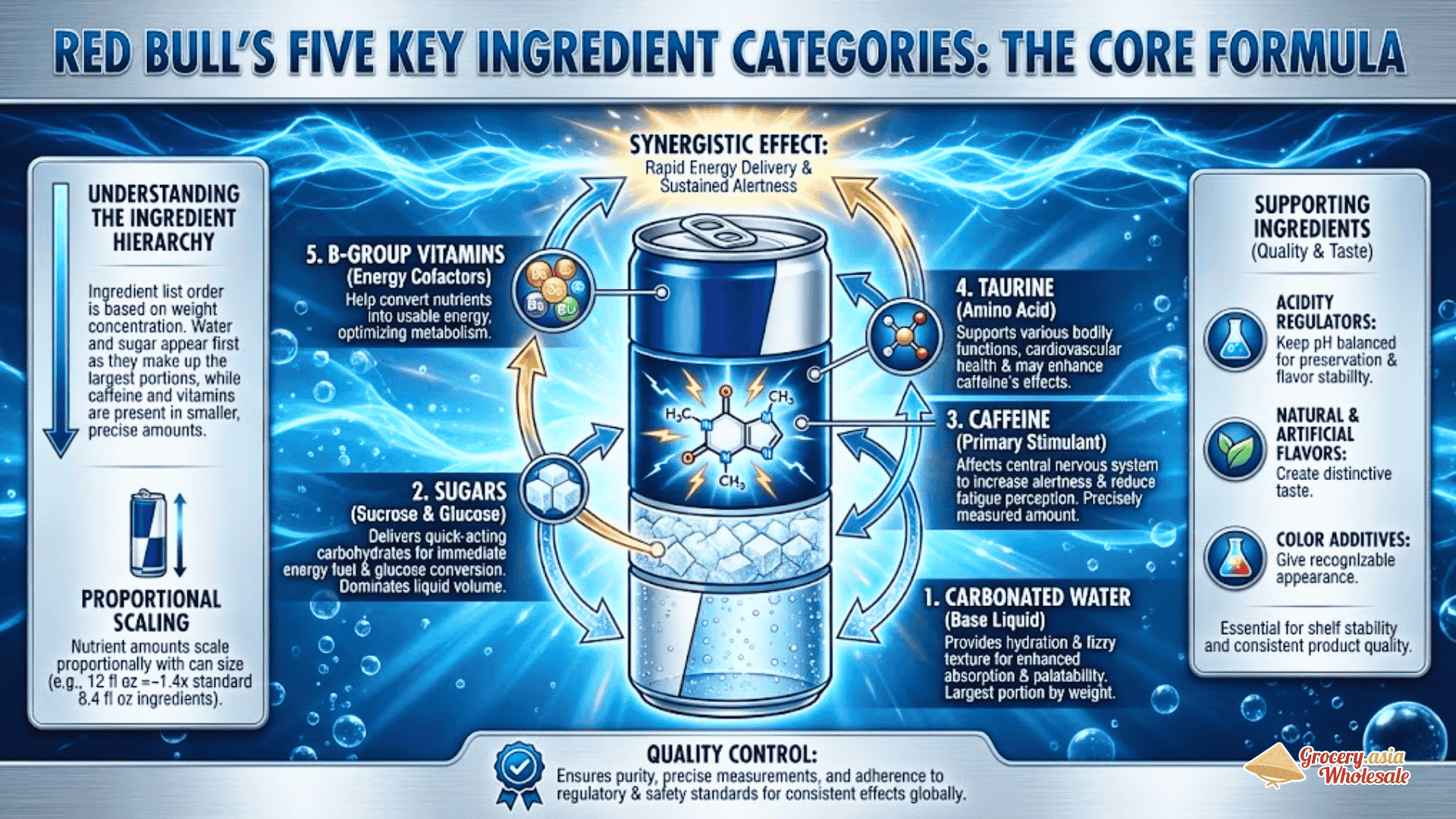
I’ve analyzed Red Bull’s formula extensively, and it breaks down into five primary ingredient categories that work together to deliver the energy drink’s signature effect. Carbonated water forms the base, while sugars provide immediate energy fuel. Caffeine acts as the central stimulant, taurine supports various bodily functions, and B-group vitamins help convert nutrients into usable energy.
Understanding the Ingredient Hierarchy
The ingredient list on any Red Bull can follows a specific order based on weight concentration. I notice that carbonated water and sugar appear first because they make up the largest portions of the formula. This hierarchy reflects how much of each component you’re actually consuming—water and sugar dominate the liquid volume, while caffeine content and vitamins appear in much smaller, precisely measured amounts.
Supporting ingredients play crucial roles in maintaining the drink’s quality and taste profile:
- Acidity regulators keep the pH balanced for proper preservation and flavor stability.
- Natural and artificial flavors create Red Bull’s distinctive taste.
- Color additives give it the recognizable appearance consumers expect.
These components might seem secondary, but they’re essential for shelf stability and consistent product quality.
The standard 8.4 fl oz (250 ml) can serves as the baseline for all nutritional information. When you purchase larger sizes, the nutrient amounts scale proportionally—a 12 fl oz can contains roughly 1.4 times the ingredients and nutrition facts compared to the standard size. This scaling ensures consistent potency regardless of can size.
Each ingredient category serves a specific purpose in the overall formula:
- Carbonated water provides hydration and creates the fizzy texture that enhances absorption and palatability.
- Sugar content delivers quick-acting carbohydrates that your body can immediately convert to glucose for energy. The combination typically includes sucrose and glucose, which have different absorption rates to provide both immediate and slightly sustained energy release. More on this can be seen here.
- Caffeine functions as the primary stimulant, affecting your central nervous system to increase alertness and reduce fatigue perception.
- Taurine, an amino acid naturally found in your body, supports cardiovascular function and may enhance caffeine’s effects.
- B-group vitamins—typically B3, B5, B6, and B12—act as cofactors in energy metabolism, helping your cells efficiently process the sugars and other nutrients.
I find that understanding these categories helps explain why Red Bull’s benefits extend beyond simple caffeine consumption. The formula creates a synergistic effect where each ingredient category supports and enhances the others. The sugars provide immediate fuel, caffeine stimulates your nervous system, taurine supports cellular function, and B-vitamins optimize energy production.
The precise ratios between these five categories have remained relatively consistent since Red Bull’s original formulation. This consistency explains why the drink produces predictable effects and why energy drink duration tends to follow similar patterns across different consumers. The formula balances rapid energy delivery with sustained alertness, though individual responses can vary based on factors like caffeine tolerance and body weight.
Quality control measures ensure each ingredient category maintains specific concentration ranges:
- Water must meet purity standards.
- Sugars require precise measurement for consistent taste and energy delivery.
- Caffeine levels stay within regulatory limits.
- Taurine and vitamins follow established nutritional guidelines.
- Supporting ingredients meet food safety requirements for preservation and flavor consistency.
This five-category framework makes Red Bull’s formula both effective and reproducible across millions of cans produced globally. Each category contributes specific benefits while working within the overall system to deliver the energy boost and mental alertness that consumers expect from this iconic energy drink.
The Complete Red Bull Ingredient Label Breakdown
I’ll walk you through each component found in the Original Red Bull formula to help you understand exactly what you’re consuming when you crack open that iconic blue and silver can.
Core Ingredients and Their Functions
The ingredient list reveals a carefully constructed formula that delivers both energy and taste. Here’s what each component contributes to your Red Bull experience:
- Carbonated water forms the base, providing that signature fizzy sensation
- Sugar and glucose supply immediate energy and sweetness, with sugar content being a key consideration for many consumers
- Citric acid adds tartness and acts as a natural preservative
- Taurine functions as an amino acid that supports various bodily processes
- Natural and artificial flavors create Red Bull’s distinctive taste profile
- Sodium bicarbonate and magnesium carbonate serve as buffering agents to balance acidity
- Colors give Red Bull its characteristic appearance
- Caffeine provides the primary stimulant effect that keeps you alert
The vitamin complex rounds out the formula with essential B vitamins. Niacinamide (vitamin B3) supports energy metabolism, while pyridoxine HCl (vitamin B6) aids in protein metabolism. Calcium pantothenate (vitamin B5) contributes to energy production at the cellular level, and vitamin B12 supports red blood cell formation and neurological function.
Regional variations exist in the formula composition. Some markets use sodium citrate instead of other buffering agents, reflecting local regulations and taste preferences. This flexibility allows Red Bull to maintain consistent quality while adapting to different regulatory environments worldwide.
The exact formulations for flavors and colors remain proprietary secrets. This practice protects Red Bull’s competitive advantage and aligns with standard industry protocols. Most beverage manufacturers guard these specific ratios and combinations as closely held trade secrets.
Understanding these ingredients and nutrition facts helps you make informed decisions about consumption. Each component serves a specific purpose in delivering the energy boost and sensory experience that defines Red Bull’s benefits as an energy drink.
I recommend checking the label on your specific Red Bull product, as formulations can vary slightly between regions due to local regulations and ingredient availability. This knowledge empowers you to understand exactly what fuels your energy needs and how these components work together to create the complete Red Bull experience.
Sugar Content: How Red Bull Compares to Other Beverages
I’ve analyzed Red Bull’s sugar content extensively, and the numbers reveal some important considerations for consumers. An 8.4 fl oz can contains approximately 37 grams of sugar, while the larger 20 fl oz can packs about 63 grams. These figures place Red Bull in the high-sugar beverage category, requiring careful consideration of your daily intake.
Breaking Down Red Bull’s Sugar Impact
Nearly all of Red Bull’s calories stem from carbohydrates, with sugar providing around 4 kcal per gram. This concentration creates a rapid energy boost that many users seek, but it often leads to an energy crash as blood sugar levels spike and then plummet. The sugar content in Red Bull becomes particularly significant when you consider that a single can can exceed recommended daily sugar intake guidelines.
Comparative Analysis with Common Beverages
Red Bull’s sugar levels mirror those found in apple juice by volume, which might surprise health-conscious consumers who view fruit juices as healthier alternatives. I’ve compared various popular beverages to provide perspective:
- A 12 oz can of Coca-Cola contains about 39 grams of sugar
- Apple juice typically has 24–28 grams per 8 oz serving
- Orange juice contains approximately 21 grams per 8 oz
- Sports drinks like Gatorade have around 21 grams per 12 oz
- A standard 8.4 oz Red Bull matches or exceeds many of these options
This comparison demonstrates that Red Bull sits at the higher end of the sugar spectrum among popular beverages. While the benefits of Red Bull include quick energy delivery, the sugar concentration means you’re consuming a significant portion of your daily sugar allowance in one small can. The World Health Organization recommends limiting added sugars to 25 grams daily, making a single Red Bull can exceed this guideline substantially.
Understanding these sugar levels helps you make informed decisions about when and how often to consume energy drinks. If you’re monitoring your sugar intake or managing blood glucose levels, consider the timing and frequency of consumption carefully.
Caffeine and Taurine: The Active Stimulant Ingredients
The foundation of Red Bull’s energy-boosting power lies in its carefully measured caffeine content. Each 8.4 fl oz can delivers 80 mg of caffeine, while the larger 20 fl oz version packs 189 mg. This precise formulation puts Red Bull in the moderate caffeine range, delivering enough stimulation to enhance alertness without overwhelming your system.
How Caffeine Works in Your Body
Caffeine serves as Red Bull’s primary performance enhancer, working by blocking adenosine receptors in your brain. This mechanism prevents the natural drowsiness signals that accumulate throughout the day. I’ve found that caffeine in Red Bull reaches peak effectiveness within 30–60 minutes of consumption, making it an ideal pre-workout or mid-afternoon pick-me-up.
The caffeine content positions Red Bull strategically between coffee and stronger energy drinks. A standard cup of coffee contains roughly 95 mg of caffeine, making Red Bull’s 80 mg dose slightly more conservative. This measured approach allows for better control over your energy levels while reducing the risk of jitters or crashes.
Taurine’s Supporting Role
Beyond caffeine, Red Bull contains approximately 1,000 mg of taurine per can, an amino acid that plays a crucial supporting role in the energy formula. Taurine works differently than caffeine, focusing on cellular function rather than neural stimulation. This compound helps maintain proper cell membrane stability and supports muscle function during physical exertion.
The taurine found in Red Bull comes from synthetic production rather than animal sources, dispelling common misconceptions about its origin. This synthetic approach ensures consistent quality and makes the product suitable for various dietary preferences. Scientific research indicates that taurine may help regulate water and mineral balance within cells, potentially supporting sustained energy delivery.
Studies examining these ingredient levels consistently demonstrate safety for healthy adults when consumed in normal quantities. The combination of 80 mg caffeine and 1,000 mg taurine creates a synergistic effect that many users report as smoother and more sustained than caffeine alone. This pairing explains why Red Bull energy drink benefits extend beyond simple stimulation.
The dual-ingredient approach allows Red Bull to deliver energy enhancement through multiple pathways:
- Caffeine provides immediate alertness and improved reaction speed.
- Taurine supports the body’s ability to maintain that enhanced state.
This combination helps explain why many consumers prefer Red Bull over simple caffeine pills or coffee for sustained energy needs.
Research suggests that taurine’s cellular support functions become particularly valuable during physical activity or mental stress. The amino acid helps maintain proper electrolyte balance, which can prevent the energy dips often associated with pure caffeine consumption. This scientific backing supports Red Bull’s position as more than just another caffeinated beverage.
The precise measurement of these active ingredients reflects years of product development and testing. Each component serves a specific purpose in the overall energy delivery system. Understanding Red Bull ingredients and nutrition facts helps consumers make informed decisions about when and how to use the product effectively.
The caffeine and taurine levels remain consistent across Red Bull’s global distribution, ensuring reliable performance regardless of where you purchase the product. This standardization allows users to predict their response and plan consumption accordingly. The synthetic production of taurine also eliminates variability that might occur with naturally-derived ingredients.
For optimal results, I recommend consuming Red Bull when you need sustained alertness rather than just a quick energy boost. The combined action of caffeine and taurine creates an energy profile that builds gradually and maintains its effect longer than caffeine alone. This makes it particularly suitable for longer tasks requiring sustained concentration and physical performance.
B-Group Vitamins and Energy Metabolism
I’ve examined Red Bull’s vitamin profile and found it contains four essential B-group vitamins that play crucial roles in how your body processes energy. The formula includes niacin (B3), pantothenic acid (B5), vitamin B6, and vitamin B12, each contributing to different aspects of cellular energy production.
These vitamins function as coenzymes in various metabolic pathways, helping convert carbohydrates, fats, and proteins into usable energy. When you consume Red Bull energy drink ingredients, these B vitamins support the biochemical processes that fuel your cells, though they work differently than the direct energy boost you might expect.
Vitamin Content and Daily Values
The vitamin concentrations in Red Bull vary significantly by can size, with larger formats containing particularly high amounts. Here’s what you’ll find:
- Vitamin B6 can reach up to 590% of the daily value in larger cans
- Niacin (B3) provides up to 240% of the daily value
- Pantothenic acid (B5) and vitamin B12 are included in substantial amounts
- These percentages far exceed typical dietary requirements
I want to clarify an important point about these high vitamin levels. Your body doesn’t store excess B vitamins since they’re water-soluble, meaning any surplus gets eliminated through urine. This natural regulation prevents toxicity but also means these vitamins can’t compensate for inadequate nutrition or insufficient sleep.
The energy benefits you might experience from B vitamins are most noticeable if you have existing deficiencies. For individuals with adequate B vitamin status, additional supplementation through energy drinks won’t necessarily provide extra energy or reduce fatigue. The vitamins support normal metabolic function rather than creating energy beyond your body’s natural capacity.
Caffeine in Red Bull provides the immediate stimulant effect most people associate with energy drinks, while the B vitamins work behind the scenes to maintain proper cellular metabolism. Understanding this distinction helps you set realistic expectations about how different components of the drink affect your energy levels.
If you’re considering Red Bull primarily for its vitamin content, I recommend evaluating your current diet first. A balanced nutrition plan typically provides adequate B vitamins through whole foods like meat, fish, eggs, and fortified cereals. The high vitamin concentrations in energy drinks serve more as insurance against deficiency rather than performance enhancers for well-nourished individuals.
Red Bull Variants and Formula Differences
I find that many consumers don’t realize how much the different Red Bull energy drink variants actually differ from each other. Each version maintains the same foundational energy-boosting compounds but varies significantly in other ingredients that affect taste, nutrition, and overall consumer experience.
Core Stimulant Consistency Across All Variants
Every Red Bull product delivers identical amounts of the primary active ingredients that provide the energy boost consumers expect. I consistently observe that caffeine content remains at 80mg per 8.4 fl oz can across all variants, while taurine stays constant at 1000mg per serving. This standardization ensures that whether you choose Original, Sugarfree, Zero, or any flavored edition, you’ll receive the same stimulating effects and energy duration.
The B-vitamin complex also remains unchanged throughout the product line. Each can contains niacinamide, pantothenic acid, vitamin B6, and vitamin B12 in identical quantities, supporting energy metabolism regardless of which variant you select.
Sweetener and Flavor Variations
The most significant differences between Red Bull variants center on their sweetening systems and flavor profiles. Original Red Bull relies on traditional sugar sources – sucrose and glucose – which contribute approximately 27 grams of sugar per can. This creates the classic sweet taste that established the brand’s reputation.
Sugarfree and Zero variants replace these natural sugars with artificial alternatives. I notice these versions primarily use aspartame and acesulfame K to maintain sweetness while eliminating sugar calories. The sugar content drops to zero in these formulations, making them appealing to health-conscious consumers or those following low-carb diets.
Flavored editions introduce additional complexity through specific flavor compounds and colorants that create distinct taste experiences. These additions include:
- Natural and artificial flavor extracts that create tropical, berry, or citrus profiles
- Food coloring agents that provide visual differentiation between variants
- Additional acidulants that enhance flavor perception and shelf stability
- Modified sweetener ratios to complement specific flavor profiles
Each flavored variant maintains the core energy formula while adjusting secondary ingredients to achieve its unique taste signature. I find that these modifications don’t affect the fundamental energy drink ingredients responsible for performance benefits.
The nutritional impact of these variations primarily affects caloric content and carbohydrate levels. Original Red Bull contains approximately 110 calories per can, almost entirely from sugar content. Sugar-free variants drop to roughly 10 calories, eliminating the carbohydrate load that some consumers want to avoid.
I recommend considering your specific dietary goals when choosing between variants:
- Athletes requiring quick energy might prefer the Original‘s immediate glucose availability.
- Those managing weight or blood sugar levels often benefit from the Sugarfree or Zero options.
The energy duration remains consistent regardless of sweetener choice, though some individuals report different energy curves based on their body’s response to sugar versus artificial sweeteners.
Understanding these formula differences helps you make informed decisions about which Red Bull variant best fits your lifestyle and nutritional preferences while still delivering the consistent energy boost the brand promises.
Sources:
Red Bull Official Ingredients and Nutrition Facts
FDA – Caffeine Intake Guidance
WHO – Added Sugar Recommendations
Mayo Clinic – Energy Drinks and Health
NIH – Taurine and Caffeine Safety Reviews

