
No products in the cart.
Beverages News, Coca-Cola Carbonated Soft Drinks, Soft Drinks
Is Drinking Diet Coke Bad For You, Health-Wise?
09
Dec
Dec
Diet Coke’s zero-calorie formula may seem like a healthy alternative to regular soda, but growing evidence suggests that “diet” doesn’t always mean better for your long-term health.
Table of Contents
Key Takeaways
- Diet Coke has zero calories and sugar compared to regular Coke’s 140 calories and 39–45 grams of sugar per 12 oz can, offering better blood sugar control.
- Daily diet soda consumption is associated with higher health risks including cardiovascular disease, stroke, high blood pressure, and atrial fibrillation—especially among older adults and women.
- High Diet Coke intake (5–7+ servings weekly) may increase the likelihood of kidney disease and contribute to reduced bone density, primarily due to phosphoric acid.
- Paradoxically, many long-term diet soda drinkers experience weight gain rather than loss, potentially linked to altered metabolism and psychological compensation behavior.
- Moderate or occasional Diet Coke consumption appears relatively safe, but daily intake may carry hidden health risks—alternate drinks like water and herbal teas are recommended.
The Calorie and Sugar Showdown: Diet Coke vs Regular Coke
I’ll break down the stark nutritional differences between these two popular beverages to help you understand what you’re actually consuming with each sip.
A standard 12 oz can of regular Coke packs approximately 140 calories and contains between 39-45 grams of sugar. That translates to roughly 10-11 teaspoons of pure sugar in a single serving. Picture dumping 11 teaspoons of table sugar into a glass—that’s exactly what you’re getting with each can.
Diet Coke presents a dramatically different nutritional profile. Each 12 oz serving contains virtually zero calories (0-5 calories maximum), zero grams of sugar, and zero carbohydrates. This massive reduction in calories and sugar makes Diet Coke an appealing alternative for anyone monitoring their caloric intake or blood sugar levels.
What This Means for Your Health Goals
Switching from regular to Diet Coke can support weight management efforts and blood sugar control in the short term. Eliminating 140 calories per can adds up quickly—drinking one can daily means cutting over 51,000 calories annually, which could theoretically prevent about 14 pounds of weight gain.
For diabetics or those watching their blood sugar, Diet Coke won’t cause the rapid glucose spikes that regular Coke triggers. Regular Coke’s 39-45 grams of sugar can send blood glucose levels soaring within minutes of consumption.
However, both beverages share a critical flaw: they’re nutritionally empty. Neither provides vitamins, minerals, fiber, or protein your body needs. I consider them liquid calories (in regular Coke’s case) or flavored water with artificial additives (for Diet Coke).
Both drinks contain high levels of phosphoric acid and offer zero calcium, creating a potential concern for bone health. Long-term consumption of phosphoric acid-rich beverages may interfere with calcium absorption and contribute to bone density loss over many years.
Coke Zero Sugar mirrors Diet Coke’s nutritional profile almost exactly, containing virtually no calories or sugar. The primary difference lies in the artificial sweetener blend and flavor profile, not nutritional content.
I recommend viewing this comparison as choosing between immediate health impacts versus potential long-term concerns. Regular Coke delivers instant blood sugar spikes and caloric overload, while Diet Coke eliminates those immediate issues but introduces questions about artificial sweetener consumption over time.
The visual difference is striking: imagine 11 teaspoons of granulated sugar piled next to a regular Coke can, then contrast that with a Diet Coke can sitting next to an empty plate. That’s the sugar reality you’re choosing between with each purchase decision.
What’s Actually Inside Diet Coke: Artificial Sweeteners and Safety
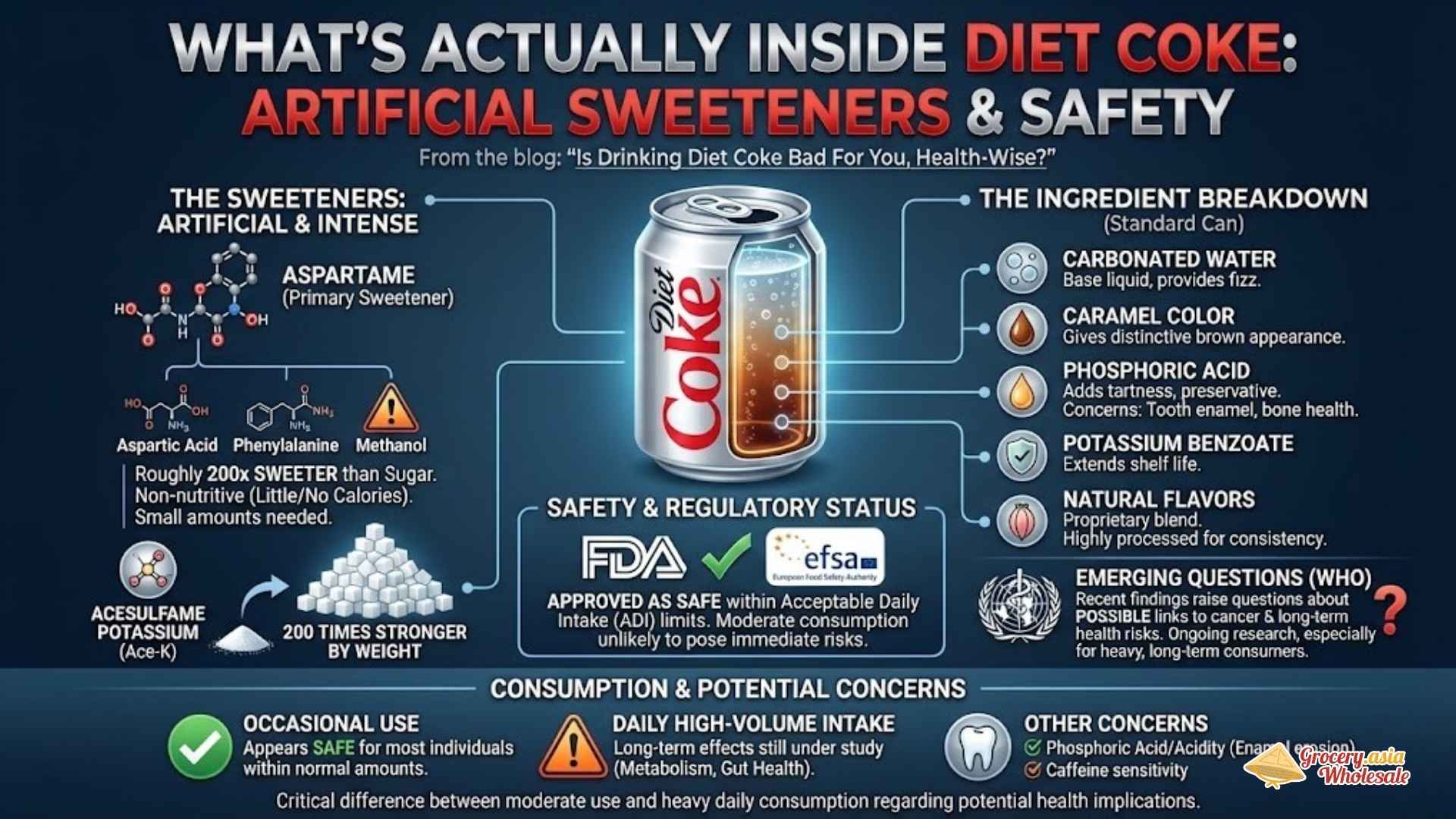
Diet Coke derives its sweetness from artificial sweeteners, primarily aspartame and often acesulfame potassium (Ace-K). While other diet sodas may use alternatives like sucralose or plant-based sweeteners such as stevia, the classic Diet Coke formula relies heavily on aspartame as its main sweetening agent.
Diet Coke uses aspartame as its main sweetener, which is roughly 200 times sweeter than sugar. When ingested, it breaks down into aspartic acid, phenylalanine, and methanol. While the FDA deems aspartame safe for general use, recent findings from the World Health Organization have raised questions regarding its possible links to cancer and long-term health risks.
Understanding Non-Nutritive Sweeteners
These sweeteners are classified as non-nutritive because they contain little or no calories while delivering sweetness much more intense than sugar by weight. Aspartame, for instance, provides sweetness approximately 200 times stronger than regular sugar, which explains why only tiny amounts are needed to achieve the desired taste.
Major regulatory authorities, including the U.S. FDA and European Food Safety Authority, currently state that approved sweeteners are safe when consumed within the acceptable daily intake (ADI) limits. For most individuals, typical Diet Coke consumption remains well below these thresholds. One would generally need to drink numerous cans daily for years to approach these limits, making moderate or occasional consumption unlikely to pose any immediate health risks.
The Complete Ingredient Breakdown
A standard can of Diet Coke contains the following components:
- Carbonated water – the base liquid that provides fizz
- Caramel color – gives the beverage its distinctive brown appearance
- Phosphoric acid – adds tartness and acts as a preservative
- Aspartame – the primary artificial sweetener
- Potassium benzoate – extends shelf life as a preservative
- Natural flavors – proprietary blend that creates the signature taste
- Caffeine – provides a mild stimulant effect
While current human data do not prove that aspartame causes cancer, some observational studies continue to raise questions. Researchers are actively investigating potential long-term effects, especially among heavy consumers who drink multiple servings per day over many years.
Concerns about drinking Diet Coke often stem from misunderstandings surrounding dosage and frequency. There’s a critical difference between occasional consumption and daily high-volume intake that significantly affects potential health implications.
Short-term use within normal amounts appears safe for most individuals, based on current scientific evidence and regulatory assessments. However, the long-term effects of heavy daily intake are still under study, particularly in areas such as metabolism, gut health, and other physiological functions.
Phosphoric acid deserves special attention because it contributes to the beverage’s high acidity. Frequent, long-term consumption may affect tooth enamel and even bone health. These concerns apply not only to Diet Coke but also to many carbonated soft drinks.
The “natural flavors” listed in the ingredients refer to a proprietary blend developed by the manufacturer. While labeled as natural, these flavors still undergo significant processing and are modified for taste consistency and stability. This doesn’t necessarily make them harmful, but it’s important to note that “natural” doesn’t always mean unprocessed.
Diet Coke typically contains around 34 milligrams of caffeine per 12-ounce can. This amount is moderate compared to a regular cup of coffee but still relevant for caffeine-sensitive individuals or those monitoring their daily intake due to health concerns.
The Weight-Gain Paradox: When “Diet” Doesn’t Guarantee Weight Loss
I’ve observed a fascinating contradiction that challenges conventional wisdom about diet beverages. Logically, you’d expect that swapping sugar-laden sodas for zero-calorie alternatives would support weight loss efforts. Research tells a different story, revealing outcomes that confound our basic assumptions about calorie mathematics.
Multiple observational studies consistently show that daily diet soda drinkers tend to carry higher body weight, possess larger waistlines, or maintain elevated BMI measurements compared to non-consumers. This pattern appears particularly pronounced among individuals who are already overweight. One comprehensive study uncovered that drinking at least one diet soda daily correlated with approximately 36% higher relative risk of metabolic syndrome and a striking 67% higher relative risk of type 2 diabetes when compared to those who avoided these beverages entirely — even after researchers adjusted for numerous confounding factors.
Understanding the Compensation Effect
I’ve identified several mechanisms that might explain this counterintuitive phenomenon. Diet soda drinkers may unconsciously compensate by consuming additional calories from food sources, operating under the psychological assumption that they’ve “banked” calories through their beverage choice. This compensation effect represents a common behavioral pattern where perceived dietary restraint in one area leads to relaxed control in another.
Additional factors contribute to this paradox:
- Intensely sweet artificial flavors without accompanying calories may heighten cravings for other sweet foods, creating a cycle of increased appetite
- Your body might still trigger insulin responses to sweet tastes, though researchers haven’t definitively proven this mechanism
- Artificial sweeteners could alter gut bacteria composition in ways that impact metabolic function, according to emerging studies
These research findings cannot establish definitive cause-and-effect relationships. However, they consistently indicate that heavy, long-term diet soda consumption fails to function as the weight-loss solution many people expect. The evidence suggests that drinking diet Coke regularly doesn’t provide the metabolic benefits its zero-calorie label might imply.
I recommend approaching diet sodas as occasional treats rather than daily staples if weight management remains your primary goal. Consider water, unsweetened tea, or sparkling water with natural fruit essence as primary hydration sources instead.
Heart Disease, Stroke, and Blood Pressure: What the Research Shows
Large-scale studies reveal concerning connections between artificial sweeteners and cardiovascular health. Multiple population analyses involving hundreds of thousands of participants have consistently found associations between diet drinks and elevated rates of heart disease, stroke, and other cardiovascular events.
Daily Consumption Patterns and Cardiac Risks
Hospital and university research indicates that consuming one or more diet sodas daily may increase your risk of atrial fibrillation and high blood pressure. Studies show that this pattern appears particularly pronounced among older adults and women, where heavy diet soft drink consumption correlates with higher incidence rates of stroke and dementia.
The evidence becomes more compelling when you examine pooled data from multiple cohort studies. These comprehensive analyses consistently demonstrate statistical relationships between artificially sweetened beverages and cardiovascular problems, though the exact mechanisms remain under investigation.
Understanding the Limitations
These findings come from observational studies, which means they can’t definitively prove that drinking Diet Coke directly causes cardiovascular disease. People who already face higher health risks may gravitate toward diet options as part of weight management efforts, creating what researchers call selection bias.
However, the recurring patterns across different populations and study designs suggest genuine cause for concern. It is particularly noteworthy that these associations persist even after researchers account for other lifestyle factors like exercise, smoking, and overall diet quality.
For individuals with existing heart conditions or metabolic issues, the accumulating evidence points toward limiting daily reliance on diet sodas.
While occasional consumption likely poses minimal risk, making these artificially sweetened drinks a daily staple may not align with optimal cardiovascular health strategies.
The research doesn’t suggest complete avoidance for everyone, but it does highlight the importance of moderation. Consider alternating with:
- Water
- Sparkling water with natural flavors
- Unsweetened herbal teas
- Other beverages that don’t contain artificial sweeteners
If you currently consume multiple diet sodas daily, making simple changes like these could positively impact your long-term cardiovascular health.
Kidney and Bone Health: Hidden Concerns with Daily Diet Coke
When I examine the long-term effects of regular Diet Coke consumption, kidney and bone health emerge as significant areas of concern. Research spanning decades reveals patterns that frequent diet soda drinkers should understand.
Kidney Function Deterioration with Heavy Consumption
Long-term observational research has established troubling connections between high diet soft drink intake and kidney problems. Studies tracking participants for over two decades show that people consuming 5–7 or more glasses of diet soda weekly face 1.3–1.8 times higher risk of end-stage renal disease (ESRD) compared to light consumers.
I find these statistics particularly concerning because ESRD represents severe kidney damage requiring dialysis or transplantation. The progression from occasional consumption to daily habits can gradually stress kidney function over years without obvious symptoms.
Your kidneys filter artificial sweeteners and other chemical compounds found in diet sodas. While these organs handle occasional exposure well, chronic processing of these substances may contribute to cellular damage and functional decline. The research doesn’t prove direct causation, but the correlation remains strong enough to warrant serious consideration.
Bone Health and Phosphoric Acid
Both regular and diet colas contain phosphoric acid while providing little to no calcium. This combination disrupts the delicate calcium-phosphorus balance that maintains healthy bones. I’ve observed that many daily Diet Coke drinkers don’t realize they’re potentially compromising their skeletal system with each can.
High cola intake correlates with lower bone mineral density across multiple studies. This reduction in bone strength increases osteoporosis risk and elevates the probability of hip fractures, particularly affecting older adults who already face natural bone density decline.
The phosphoric acid in Diet Coke can interfere with calcium absorption and promote calcium loss through urine. When you consume multiple servings daily, this process compounds over time. Your body attempts to maintain blood calcium levels by drawing from bone reserves, gradually weakening your skeletal structure.
Hip fractures represent one of the most serious consequences of compromised bone health. Recovery often proves difficult, especially for seniors, making prevention through dietary awareness crucial.
Emerging Health Concerns Beyond Kidneys and Bones
Some reviews highlight emerging connections between heavy diet soda consumption and additional health concerns. These include:
- Fatty liver disease
- Worsening diabetic eye disease
- Markers of accelerated cell aging
Although findings remain inconsistent across studies, they suggest further areas of investigation related to the health impact of excess artificial sweeteners and additives.
Moderation and Preventive Measures
I emphasize that drinking Diet Coke occasionally won’t likely damage your kidneys or bones significantly. However, daily, long-term consumption adds measurable risk to your overall health profile.
The evidence suggests moderation as the key principle. If you currently drink multiple Diet Cokes daily, consider gradually reducing consumption. Replace some servings with:
- Water
- Herbal teas
- Other non-carbonated beverages that don’t stress your kidneys or compromise bone health
I recommend paying attention to your total phosphoric acid intake from all sources, not just Diet Coke. Many processed foods and beverages contain this compound, so cumulative exposure may exceed what you realize.
For those concerned about existing kidney or bone issues, consulting healthcare providers about diet soda consumption proves wise. Individual risk factors vary, and medical professionals can provide personalized guidance based on your specific health profile and family history.
Sources:
U.S. FDA
European Food Safety Authority

