
No products in the cart.
Beverages News, Soft Drinks
Is Pepsi Owned By Coca Cola Or Separate Giants
08
Dec
Dec
PepsiCo and Coca-Cola are often mistakenly believed to be linked, but they are in fact entirely independent, publicly traded corporations with no ownership connections. Their iconic brands and global presence fuel this confusion, yet each maintains distinct leadership, strategies, and investor profiles.
Table of Contents
Key Takeaways
- Complete Independence: PepsiCo trades on the NASDAQ under the ticker PEP, while Coca-Cola is listed separately. Prominent institutional investors such as Vanguard and BlackRock hold shares in both, but these positions are managed independently.
- Different Business Models: While Coca-Cola focuses on beverages, capturing about 48% of the global market, PepsiCo’s wide-ranging portfolio—including snacks and foods—generates higher total revenues of $91.85 billion, compared to Coca-Cola’s $42.5 billion.
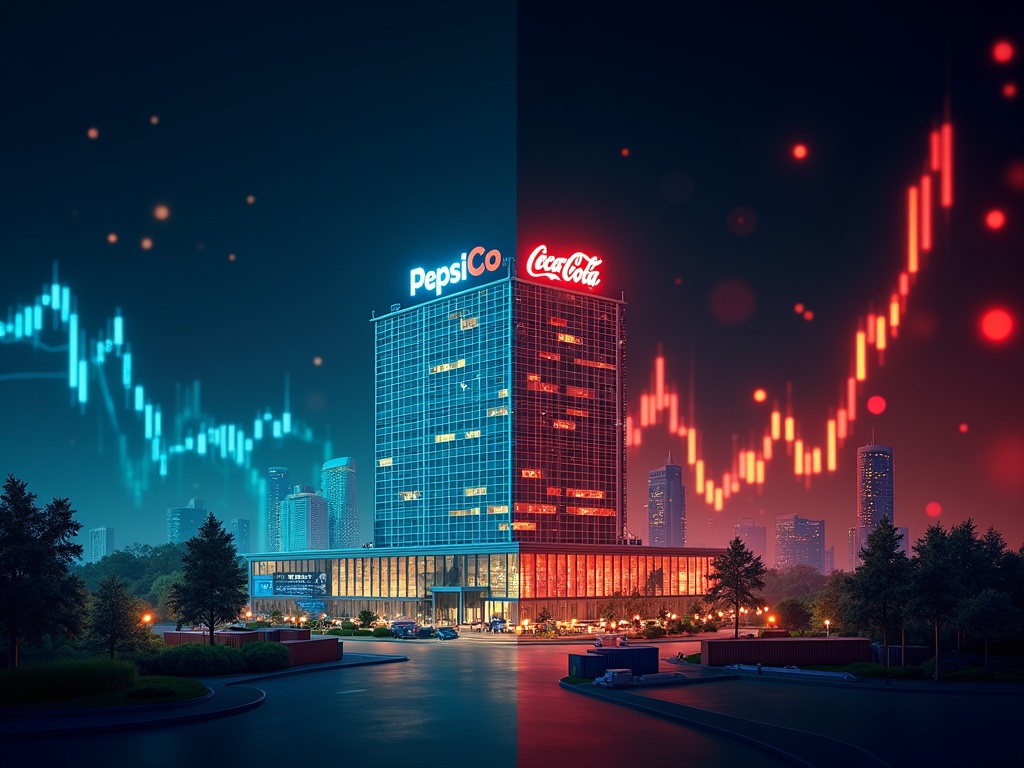
- Contrasting Financial Performance: Coca-Cola boasts a robust net margin of 22.59%, surpassing PepsiCo’s 10.43%. However, PepsiCo experienced an 8% stock increase in recent months, while Coca-Cola’s stock declined by 3.8%.
- Market Dominance Structure: Alongside Keurig Dr Pepper, these three independent giants command 70% of the global soft drink market, utilizing distinct brand portfolios and distribution strategies.
- Consumer Confusion Origins: Misconceptions stem from their similar branding colors, co-location in retail displays, overlapping product lines, and a century-old rivalry that obscures fundamental differences.
Pepsi and Coca-Cola Are Completely Separate Corporate Giants
I can definitively confirm that PepsiCo and Coca-Cola operate as two completely independent, publicly traded corporations with no ownership connection between them. These beverage industry titans maintain separate management structures, board compositions, and shareholder bases while competing directly in global markets.
PepsiCo’s Corporate Structure and Ownership Distribution
PepsiCo trades on NASDAQ under the ticker symbol PEP, functioning as a standalone public company with widely distributed ownership across multiple stakeholder categories. The ownership breakdown reveals:
- 75.33% institutional investors control the majority stake
- 24% retail investors hold individual positions
- 0.64% company insiders maintain equity positions
Major institutional shareholders demonstrate the scale of this corporate giant. The Vanguard Group commands approximately 10% ownership, representing a position valued at more than $20 billion. BlackRock holds roughly 8.5% of outstanding shares, while State Street maintains control of about 4% of the company.
PepsiCo’s financial standing reflects its independence from any single controlling entity. The company operates with a market capitalization of approximately $210 billion, generated $91.85 billion in revenue during 2024, and employs 319,000 people globally. Ramon Laguarta serves as both CEO and Chairman, leading the company’s strategic direction without any influence from Coca-Cola or related entities.
This ownership structure contrasts sharply with private companies or subsidiaries that answer to parent corporations. PepsiCo’s shareholders exercise voting rights independently, make dividend decisions based solely on company performance, and pursue strategic initiatives that often compete directly with Coca-Cola’s business interests.
The misconception about potential shared ownership likely stems from both companies’ prominence in the same industry sectors. However, the competition between Coca-Cola and PepsiCo has intensified over decades precisely because they remain separate entities vying for market share across beverages, snacks, and food categories.
Both corporations maintain distinct product portfolios, marketing strategies, and geographic focus areas. While Coca-Cola concentrates primarily on beverages, PepsiCo operates diversified business segments including Frito-Lay snacks, Quaker foods, and multiple beverage brands. This diversification strategy reflects independent decision-making processes that wouldn’t exist under shared ownership.
Financial analysts track both companies as separate investment opportunities, comparing their performance metrics, growth prospects, and market positioning. Institutional investors like Vanguard and BlackRock often hold positions in both companies simultaneously, treating them as distinct portfolio components rather than related investments.
The regulatory environment also reinforces their independence. Antitrust authorities monitor both companies’ activities separately, and any potential merger or acquisition between them would face significant regulatory scrutiny due to their combined market power in various consumer goods categories.
Pepsi’s ownership history shows consistent independence since its incorporation, with various shareholders gaining and losing positions through normal market trading activities. No single entity has ever controlled enough shares to dictate company policy or merge operations with Coca-Cola.
This separation extends beyond ownership into operational aspects. Each company maintains proprietary formulations, separate supply chains, distinct distribution networks, and independent research and development facilities. Their global legacies developed through separate expansion strategies and market entry decisions.
Understanding this independence helps clarify why both companies can coexist in the same markets while pursuing different strategic directions. PepsiCo’s diversification into snacks and foods, for example, represents an independent corporate strategy that distinguishes it from Coca-Cola’s beverage-focused approach.
Coca-Cola Dominates Market Share While PepsiCo Generates Higher Revenue
I’ll explain how these two industry giants maintain their competitive positions through different business strategies. The competition between Coca-Cola and PepsiCo reveals fascinating dynamics in market share versus overall revenue generation.
Market Share Leadership Belongs to Coca-Cola
Coca-Cola commands the global beverage market with an impressive 48% share, while PepsiCo holds 37%. This dominance becomes even more pronounced in the U.S. market, where Coca-Cola maintains 48% compared to Pepsi’s 24% share. These figures demonstrate Coca-Cola’s superior position in pure beverage sales volume and brand recognition.
The company’s focus on beverages allows it to maintain its status as the world’s largest drink company by volume. Coca-Cola’s concentrated approach to the beverage sector creates deeper market penetration and stronger brand loyalty within this specific category.
PepsiCo’s Revenue Advantage Through Diversification
Despite trailing in beverage market share, PepsiCo generated significantly higher overall revenue of $73.6 billion in 2023, compared to Coca-Cola’s $42.5 billion. This substantial difference stems from PepsiCo’s diversified business model that encompasses both beverages and food products.
Coca-Cola and PepsiCo represent two distinct approaches to market leadership. PepsiCo’s strategy includes major food brands like Frito-Lay, Quaker Oats, and various snack products that contribute substantially to its revenue streams. This diversification provides multiple income sources beyond traditional soft drinks.
PepsiCo ranks second globally in the beverage sector, but its diversified portfolio creates a more comprehensive consumer goods company. The food segment generates billions in additional revenue that Coca-Cola doesn’t capture through its beverage-focused model.
Understanding who owns Pepsi Cola helps clarify that PepsiCo operates as an independent corporation, completely separate from Coca-Cola ownership. Each company pursues distinct strategies — Coca-Cola maximizes beverage market penetration while PepsiCo leverages diversification for broader revenue generation.
Strategic Differences Define Each Company’s Approach
Coca-Cola and PepsiCo have carved distinct paths in the consumer goods industry through fundamentally different strategic approaches that highlight their independence from one another. I find their contrasting business models particularly fascinating given how often people assume Coca-Cola and PepsiCo operate under similar frameworks.
Coca-Cola’s Beverage-Focused Strategy
Coca-Cola maintains a laser focus on beverages, building its empire around global distribution networks and iconic brand recognition. The company’s beverage-only strategy centers on maximizing reach and penetration for its core offerings. Their major brands dominate store shelves worldwide:
- Coca-Cola leads as the flagship product
- Diet Coke captures health-conscious consumers
- Sprite appeals to lemon-lime preference seekers
- Fanta satisfies fruit flavor enthusiasts
- Dasani provides their water portfolio entry
This concentrated approach has delivered impressive results. Coca-Cola achieved value-share gains for 17 consecutive quarters, demonstrating the effectiveness of their singular beverage focus. I observe that this strategy allows them to dedicate all resources toward perfecting distribution channels, marketing campaigns, and product innovation within their chosen category.
PepsiCo’s Diversified Portfolio Strategy
PepsiCo operates through a significantly broader strategy that spans multiple consumer categories including snacks, beverages, and convenient foods. This diversification approach reduces dependency on any single product category while creating cross-selling opportunities across their portfolio.
Their beverage lineup includes several powerhouse brands that compete directly with Coca-Cola products:
- Pepsi serves as their cola flagship
- Mountain Dew targets energy-seeking consumers
- Gatorade dominates the sports drink segment
Following a strategic 2021 sale, PepsiCo maintains a 39% stake in Tropicana, allowing them to participate in juice market growth while reducing direct operational complexity.
PepsiCo’s snack division represents a major competitive advantage that Coca-Cola simply cannot match. Key snack brands include:
- Lay’s potato chips commanding significant shelf space in convenience stores and supermarkets
- Doritos appealing to younger demographics with bold flavors and aggressive marketing
- Sun Chips targeting health-conscious snack consumers
- Quaker Oats providing breakfast and cereal market presence
This food and beverage combination creates natural synergies. I notice that consumers often purchase PepsiCo beverages alongside their snack products, particularly in convenience settings where impulse purchases drive significant revenue.
The strategic differences between these companies reflect their distinct corporate philosophies rather than any shared ownership structure. The competition between Coca-Cola and PepsiCo intensifies precisely because they approach market dominance through contrasting methods.
Coca-Cola’s beverage focus allows for deeper market penetration and brand building within their chosen category. Their streamlined approach enables faster decision-making and more targeted resource allocation. Meanwhile, PepsiCo’s diversified strategy provides revenue stability and multiple growth vectors, though it requires more complex management structures and varied expertise across different product categories.
Both strategies have proven successful in their respective implementations, generating billions in annual revenue and maintaining strong market positions globally. These fundamental strategic differences underscore why these companies remain fierce competitors rather than collaborative entities under common ownership.
PepsiCo Stock Surges While Coca-Cola Declines Despite Margin Differences
I’ve observed fascinating divergent patterns in how the stock market treats these two beverage giants. PepsiCo’s stock climbed an impressive 8% over the past three months, driven primarily by strong earnings reports that exceeded investor expectations. Meanwhile, Coca-Cola’s stock fell 3.8% during the same period, despite the company posting healthy profits.
Profitability Metrics Tell a Different Story
The stock performance creates an interesting paradox when you examine the underlying profitability metrics. Coca-Cola maintains a significantly higher net margin of 22.59% compared to PepsiCo’s 10.43%. This substantial difference reflects Coca-Cola’s focus on higher-margin beverage products versus PepsiCo’s diversified portfolio that includes lower-margin snack foods.
However, valuation metrics favor PepsiCo from an investor perspective. The company trades at a more attractive forward price-to-earnings ratio of 17.66x, while Coca-Cola commands a premium valuation of 22.26x. This valuation gap suggests investors are paying significantly more for each dollar of expected future earnings from Coca-Cola than from PepsiCo.
Market Capitalization and Growth Dynamics
The market capitalization figures highlight the scale difference between these competing beverage companies. Coca-Cola maintains a larger market cap of approximately $315 billion, while PepsiCo holds about $203 billion. Despite this size advantage, Coca-Cola’s recent stock underperformance indicates investor concerns about future growth prospects.
PepsiCo’s recent surge stems from strong international growth and notable recovery in North American markets. The company’s diversified business model, spanning both beverages and snacks, provides multiple revenue streams that help buffer against regional market fluctuations. International markets have shown particular strength, with emerging economies driving increased consumption of both PepsiCo beverages and Frito-Lay products.
North American recovery has been equally important for PepsiCo’s recent performance. After facing challenges during economic uncertainty, the company has successfully regained market share through strategic pricing and product innovation. This recovery demonstrates the resilience of PepsiCo’s business model and its ability to adapt to changing consumer preferences.
The divergent stock performance also reflects different investor sentiment regarding each company’s strategic direction. PepsiCo’s focus on expanding its snack food portfolio and entering new international markets has resonated with growth-oriented investors. Conversely, Coca-Cola’s more concentrated beverage focus, while profitable, may appear less dynamic in current market conditions.
Market analysts point to PepsiCo’s operational efficiency improvements as another factor driving investor confidence. The company has streamlined operations while expanding its geographic footprint, creating a compelling investment narrative. These efficiency gains help explain why the stock continues climbing despite lower profit margins compared to its main rival.
Currency fluctuations and international exposure also play crucial roles in these companies’ stock performance. PepsiCo’s diversified international presence provides natural hedging against regional economic downturns, while Coca-Cola’s more beverage-focused approach may face different currency and market risks.
The contrasting performance between these industry leaders illustrates how investors evaluate companies beyond simple profitability metrics. While Coca-Cola’s superior margins demonstrate operational efficiency, PepsiCo’s growth trajectory and valuation appeal have captured investor attention. This dynamic showcases the complexity of beverage industry competition and how different strategic approaches can lead to varying market reactions.
Both companies remain fundamentally strong, but their recent stock performance suggests investors currently favor PepsiCo’s diversified growth strategy over Coca-Cola’s margin-focused approach. This preference may shift as market conditions evolve and each company executes its respective strategic initiatives.
Three Giants Control 70% of the Global Soft Drink Market
I’ve analyzed the global beverage landscape and found that three major companies command an impressive 70% of the worldwide soft drink market share. These industry titans — Coca-Cola, PepsiCo, and Keurig Dr Pepper — have established themselves as the undisputed leaders in carbonated beverages and beyond.
Market Leaders and Their Headquarters
The geographic distribution of these beverage powerhouses reflects their strategic positioning across major markets:
- PepsiCo operates from Purchase, New York, maintaining its position as a diversified food and beverage corporation.
- Coca-Cola continues its operations from Atlanta, Georgia, where it has remained since its founding.
- Keurig Dr Pepper, the third-largest North American beverage company, runs its operations from Plano, Texas, and trades under ticker symbol KDP.
Each company has built distinctive brand portfolios that capture different consumer preferences and market segments. The competition between Coca-Cola and PepsiCo has driven innovation and market expansion for decades, while Keurig Dr Pepper has carved out its niche with unique flavor profiles.
Keurig Dr Pepper’s portfolio includes several iconic brands that consumers recognize immediately:
- Dr Pepper leads their carbonated offerings with its distinctive 23-flavor blend.
- Snapple captures the premium tea and juice market.
- 7UP offers a crisp lemon-lime taste.
- A&W brings classic root beer heritage.
- Canada Dry leads with its ginger ale tradition.
This diverse brand collection allows Keurig Dr Pepper to compete effectively across multiple beverage categories.
Both Coca-Cola and PepsiCo have invested heavily in extensive bottling and distribution networks that span the globe. These sophisticated supply chain systems enable them to deliver products to virtually every corner of the world, from urban centers to remote villages. The scale of these operations creates significant barriers to entry for potential competitors.
I find it particularly interesting that Pepsi’s ownership structure has evolved considerably since its early days, allowing it to build the infrastructure necessary to compete with Coca-Cola’s established distribution network. Meanwhile, both Coca-Cola and PepsiCo continue expanding their reach through strategic partnerships and acquisitions.
The dominance of these three companies creates a stable yet competitive market environment. Their combined 70% market share represents billions of dollars in annual revenue and influences beverage trends worldwide.
Each company’s success stems from different strategic approaches:
- Coca-Cola focuses on brand consistency and global presence.
- PepsiCo emphasizes diversification across snacks and beverages.
- Keurig Dr Pepper leverages unique flavor profiles and regional preferences.
This market concentration also means that smaller beverage companies must find innovative ways to differentiate themselves or target specific niches. The three giants’ extensive research and development capabilities, combined with their distribution advantages, make it challenging for newcomers to gain significant market traction.
Understanding this market structure helps explain why certain brands appear in nearly every store and restaurant globally. The reach and influence of these companies extend far beyond simple beverage sales, affecting everything from packaging innovations to sustainability initiatives across the entire industry.

Is Pepsi Owned by Coca-Cola? Why the Confusion Exists
I understand why many people wonder if Coca-Cola and PepsiCo are connected. These beverage titans operate as completely separate companies, yet their shared dominance in the cola market creates persistent confusion among consumers.
Retail Environment Creates Misconceptions
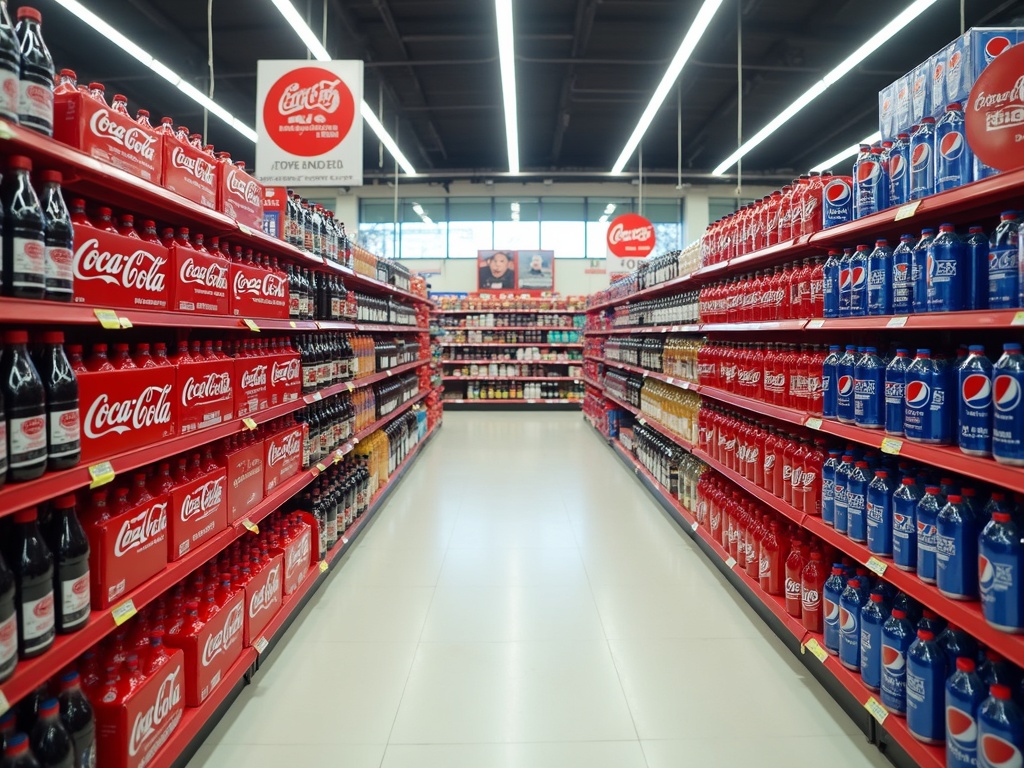
Store shelves tell a story that misleads shoppers every day. When you walk down any beverage aisle, Coca-Cola and Pepsi products sit side by side, often occupying the most prominent display spaces. This co-location strategy benefits retailers who want to maximize category sales, but it reinforces the false impression that these brands belong to the same corporate family.
The visual similarities don’t help either. Both companies use red branding elements, similar bottle shapes, and comparable marketing approaches. Their products compete for identical shelf space in identical coolers, creating an environment where casual observers might assume corporate unity rather than fierce competition.
Historical Rivalry Spans More Than a Century
The confusion becomes more understandable when you consider that the competition between Coca-Cola and PepsiCo has defined the beverage industry for over 120 years. This extended rivalry has created countless direct comparisons, parallel product launches, and mirror-image marketing campaigns that blur the lines between the companies in consumers’ minds.
Both companies have expanded far beyond their original cola formulas, building massive portfolios that often overlap in surprising ways:
- PepsiCo owns Gatorade
- Coca-Cola owns Powerade
- Both produce bottled water brands
- Each has a world-spanning juice and energy drink portfolio
This parallel evolution reinforces the misconception that they might share ownership or strategic coordination.
Media coverage amplifies this confusion by constantly positioning the companies as dueling entities in what journalists call “the cola wars”. Every quarterly earnings report, marketing campaign, or product launch gets framed as another battle in an ongoing corporate conflict. This narrative structure makes it easy to forget that these are independent businesses with separate shareholders, boards, and strategic visions.
Pepsi’s ownership history reveals a completely different corporate structure from Coca-Cola’s development. PepsiCo emerged through strategic acquisitions and mergers that created a diversified food and beverage conglomerate, while Coca-Cola maintained focus primarily on beverages and licensing.
The reality is that these companies operate as distinct entities with fundamentally different business models:
- PepsiCo generates significant revenue from snack foods through brands like Lay’s and Doritos
- Coca-Cola concentrates on beverage innovation and global distribution partnerships
Their corporate cultures, leadership teams, and strategic priorities reflect completely separate organizational identities.
Understanding Pepsi Cola’s global legacy shows how this brand built its own international presence independent of Coca-Cola’s expansion efforts. Each company established unique relationships with bottling partners, developed different flavor profiles for regional markets, and created distinct brand personalities that resonate with specific consumer segments.
The confusion persists because both companies excel at creating emotional connections with consumers while competing for the same occasions and demographics. They sponsor similar events, target comparable age groups, and position their products as lifestyle choices rather than simple refreshments. This parallel positioning strategy creates surface-level similarities that mask fundamental business differences.
I can confirm that Pepsi and Coca-Cola remain fierce competitors operating as completely independent corporations. Their shared category dominance and century-long rivalry create natural comparison points, but these companies pursue separate strategies, answer to different shareholders, and compete aggressively for market share across multiple beverage segments.
Sources:
PepsiCo – Wikipedia
Coca-Cola Company – Wikipedia
Market share analysis – Statista, Visual Capitalist
Corporate ownership data – companieshistory.com, Nasdaq
Beverage industry reports – AmeriBev, CSIMarket, CarbonCredits.com
Global market control insights – The Fifth Person

