
No products in the cart.
Beverages News, Schweppes, Soft Drinks
Who Owns Schweppes? Surprising Facts Revealed
10
Dec
Dec
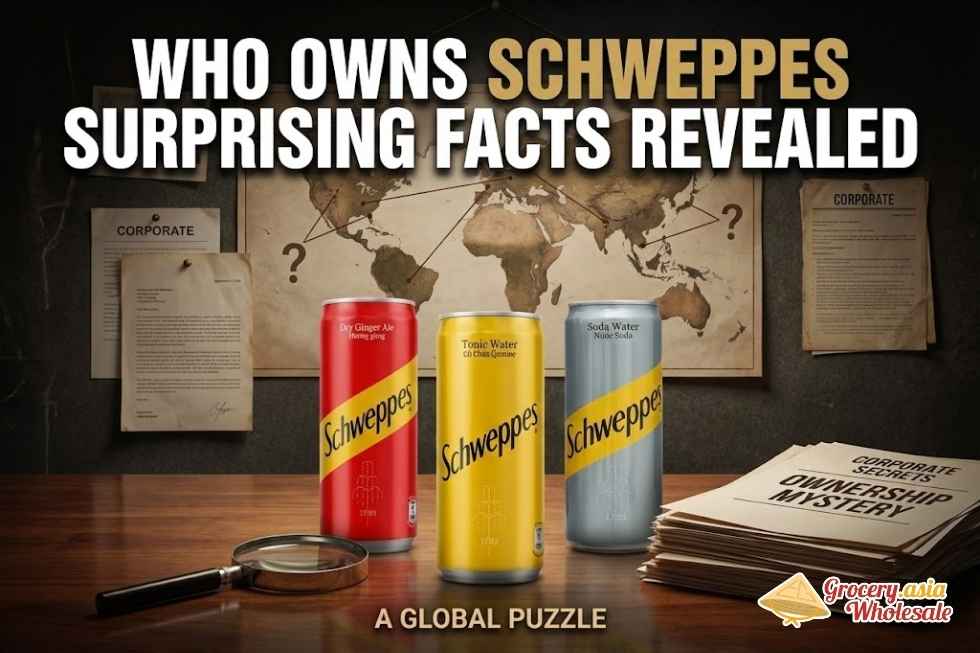
Schweppes operates under a surprising three-way ownership structure that spans different continents, with Keurig Dr Pepper controlling North America, Coca-Cola HBC managing Europe and Africa, and Asahi Beverages owning Australia and New Zealand. This regional licensing model emerged from a 240-year journey that began with German-Swiss watchmaker Johann Jacob Schweppe in 1783 and evolved through strategic mergers, royal endorsements, and corporate restructuring that ultimately created today’s complex global ownership arrangement.
Table of Contents
Key Takeaways
- Three companies control Schweppes globally: Keurig Dr Pepper owns North American rights, Coca-Cola HBC manages Europe, Africa, Middle East, and Asia operations, and Asahi Beverages controls Australia and New Zealand markets.
- Founded by a watchmaker in 1783: Johann Jacob Schweppe established the company in Geneva before relocating to London in 1792, bringing precision manufacturing techniques to carbonated beverage production.
- Nearly 200 years of royal endorsement: Schweppes secured its first Royal Warrant from King William IV in 1836 and maintained royal approval through successive British monarchs, elevating the brand’s premium status.
- Strategic 1969 Cadbury merger reshaped the company: The combination with Cadbury created a diversified powerhouse, though recent corporate splits led to today’s unique ownership arrangement.
- Revolutionary products defined entire beverage categories: Schweppes launched the first commercial tonic water and debuted American Ginger Ale and Indian Tonic Water in 1870, influencing global cocktail culture.
Foundations of Schweppes: Precision Meets Innovation
The origins of Schweppes trace back to an unlikely entrepreneur whose background in precision timekeeping would prove invaluable in perfecting carbonation techniques. Johann Jacob Schweppe didn’t begin as a beverage innovator. He was a skilled German-born Swiss watchmaker, and his meticulous approach served him well when he turned to the science of artificial carbonation.
In 1783, he established his first business in Geneva, Switzerland. Schweppe’s watchmaking experience gave him a unique advantage in developing consistent carbonation. Precise and repeatable manufacturing processes allowed him to succeed where others failed.
His pivotal decision came in 1792, when he relocated to London. Britain’s emerging middle class had a taste for luxury, and carbonated beverages were gaining popularity. Schweppe’s timing was impeccable, and his products quickly gained traction among the city’s elite.
Royal Warrants and Enduring Legacy
The 1830s marked a major milestone. In 1836, King William IV awarded Schweppes a Royal Warrant, officially designating the beverage as fit for royal consumption. This approval deeply influenced public perception, aligning the brand with elite British standards and bolstering its image across Europe and beyond.
Future British monarchs continued this tradition, including Queen Elizabeth II, who maintained the warrant during her reign. The continued royal endorsements reinforced Schweppes’ reputation as a symbol of quality and refinement.
Innovations That Reshaped the Beverage World
Schweppes didn’t stop at carbonated water. In 1870, the company introduced American Ginger Ale and Indian Tonic Water, pioneering new product categories and transforming the mixer and cocktail industries forever.
Indian Tonic Water had an especially significant cultural impact. British colonials in India consumed quinine to prevent malaria, but its bitterness made it difficult to swallow. Schweppes improved palatability by blending quinine with carbonated water and sweeteners—thus giving birth to the gin and tonic, now a worldwide classic.
Cadbury Merger and Ownership Fragmentation
In 1969, Schweppes merged with Cadbury in a strategic union that brought confectionery and drinks under one umbrella. The merger strengthened both brands. However, by 2010, Cadbury’s acquisition by Mondelez International set the stage for the eventual fragmentation of Schweppes’ ownership.
Post-merger restructuring led to Schweppes being divided among three dominant regional owners:
- Keurig Dr Pepper now oversees North American operations, bringing robust distribution and brand knowledge to U.S. markets.
- Coca-Cola HBC manages operations in Europe, Africa, the Middle East, and parts of Asia through licensing deals, leveraging Coca-Cola’s global footprint for regional success.
- Asahi Beverages controls the brand in Australia and New Zealand, applying Japanese efficiency and high standards to local markets.
Opportunities and Challenges of Regional Ownership
This multi-regional ownership structure creates distinct challenges, particularly around maintaining worldwide brand consistency. However, it also allows each owner to tailor strategies specific to local tastes and consumer behaviors.
Maintaining core brand values while supporting regional flexibility is crucial. Schweppes has succeeded in doing this by enforcing consistency in product quality and protecting intellectual property across territories.
The Future of a 240-Year-Old Brand
Schweppes remains a thoroughly modern brand, introducing fresh flavor profiles and innovative packaging to appeal to younger audiences. Despite new trends, it continues to honor its legacy through premium positioning and consistent quality.
For industry professionals and consumers alike, understanding the brand’s ownership helps explain differences in product offerings, pricing, and promotional strategies across regions. It also highlights the importance of regional expertise married to global branding standards.
Conclusion: A Study in Heritage and Adaptation
The story of Schweppes is more than just a historical curiosity. It is a lens through which we can observe industry consolidation, cross-cultural brand management, and the value of maintaining legacy in a changing marketplace.
Schweppes proves that a brand can evolve, diversify, and even split—while maintaining the integrity that made it iconic in the first place. Its story is a testament to the power of strategic partnerships, global outlook, and a relentless focus on quality.
Three Different Companies Control Schweppes Globally
I’ve discovered that Schweppes doesn’t operate under a single global owner, which explains why you’ll find different answers depending on where you look. The brand functions through a regional licensing model that splits control among three major beverage companies across different continents.
Regional Ownership Structure
In the United States and Canada, Keurig Dr Pepper (KDP) owns and produces all Schweppes brand beverages. This arrangement means American consumers purchase Schweppes products manufactured and distributed by KDP’s extensive network. The company handles everything from production to marketing within these North American territories.
Across Europe, Africa, the Middle East, and parts of Asia, Coca-Cola HBC manages the Schweppes portfolio. As one of Coca-Cola’s largest bottling partners, Coca-Cola HBC brings significant distribution muscle to the brand in these regions. This partnership leverages existing Coca-Cola infrastructure while maintaining Schweppes’ distinct identity.
Australia and New Zealand represent the third piece of this global puzzle, where Asahi Beverages controls Schweppes ownership. Asahi Group Holdings acquired these rights as part of their strategic expansion into premium beverage categories across the Pacific region.
How Regional Control Affects the Brand
Each controlling company adapts Schweppes products to match local consumer preferences and market conditions. You’ll notice packaging differences, unique flavor variations, and distinct marketing campaigns depending on your location. This localization strategy allows each regional owner to optimize the brand for their specific market dynamics.
The decentralized structure also explains why Schweppes appears in different corporate portfolios when you research beverage company holdings. KDP includes Schweppes in their North American brand lineup, while Coca-Cola HBC features it prominently in European markets, and Asahi showcases it within their Asia-Pacific portfolio.
This licensing model has proven effective for maintaining Schweppes’ global presence while ensuring strong local market penetration. Each regional owner brings deep understanding of their territory’s distribution channels, consumer behavior, and regulatory requirements. Rather than attempting centralized global management, this approach leverages established regional expertise to maximize the brand’s market potential across diverse geographic markets.
The Watchmaker Who Founded a 240-Year-Old Beverage Empire
I find it fascinating that one of the world’s most recognizable beverage brands started with a watchmaker’s precision and curiosity. Johann Jacob Schweppe, a German-born Swiss watchmaker, established what would become the Schweppes brand story in 1783 in Geneva. His background in watchmaking proved crucial to the early success of carbonated beverages, as the same attention to detail required for timepiece mechanisms translated perfectly to perfecting carbonation techniques.
Schweppe’s breakthrough came from his fascination with Joseph Priestley’s experiments on carbonated water. Unlike others who viewed Priestley’s work as merely scientific curiosity, Schweppe recognized commercial potential. He developed a revolutionary process for bottling carbonated water that maintained consistent quality and fizz – a significant challenge at the time. His watchmaker’s precision enabled him to refine these carbonation techniques until they became reliable and scalable.
From Geneva Workshop to London Empire
The early years saw Schweppe partnering with others in Geneva, but his entrepreneurial vision extended beyond Switzerland’s borders. Recognizing London’s vast market potential, he made the strategic decision to relocate the business there in 1792. This move proved pivotal for the company’s future, establishing the foundation of what would become a global beverage empire.
London offered several advantages that Schweppe quickly exploited:
- Access to a larger, more affluent consumer base
- Better distribution networks throughout the British Empire
- Superior access to raw materials and shipping routes
- A growing appreciation for luxury beverages among the upper classes
The transition wasn’t without challenges. Schweppe had to navigate different business customs, establish new supply chains, and build relationships with British distributors. However, his methodical approach – honed through years of precise watchmaking – served him well in these endeavors.
By 1796, Schweppe had made another crucial business decision. He ended his involvement with the Geneva partners, focusing exclusively on the London operations. This consolidation allowed him to maintain tighter quality control and pursue his vision without compromise. The decision also positioned the company for rapid expansion throughout Britain and eventually the British colonies.
The company’s evolution from simple soda water to flavored fizzy beverages began during these early London years. Schweppe’s commitment to quality and innovation attracted discerning customers who appreciated the consistency of his products. His reputation for precision became synonymous with the brand itself, establishing trust that would carry Schweppes tonic water legacy through centuries of ownership changes.
Schweppe’s watchmaking background influenced more than just production techniques. His systematic approach to business operations, quality control, and customer service set standards that competitors struggled to match. This foundation of excellence became deeply embedded in the company culture, persisting long after Schweppe himself stepped away from daily operations.
The transformation from a small Geneva workshop to a London-based beverage company illustrates Schweppe’s remarkable business acumen. His ability to recognize market opportunities, adapt to new environments, and maintain product quality while scaling operations demonstrates the entrepreneurial spirit that built lasting commercial success.
Understanding who owns Schweppes today requires appreciating how Johann Jacob Schweppe’s foundational principles shaped the company’s trajectory. His emphasis on quality, innovation, and strategic expansion created a template that successive owners would follow, even as the brand changed hands multiple times over the following centuries.
The legacy of a German-born Swiss watchmaker continues to influence how Schweppes products are perceived globally. His commitment to precision and quality remains central to the brand’s identity, proving that foundational values can transcend centuries of corporate evolution.
Royal Endorsement That Lasted Two Centuries
Schweppes secured its first Royal Warrant in 1836 from King William IV, marking the beginning of an extraordinary relationship with the British Crown that would span nearly two centuries. This prestigious recognition established the brand as the official sparkling water supplier to the royal household and set a precedent for future endorsements.
Queen Victoria later granted her own Royal Warrant to Schweppes, and almost every British monarch following her continued this tradition of recognition. Each successive endorsement reinforced the brand’s position as a premium beverage choice worthy of royal consumption. The Schweppes Royal Warrant became more than just an honor—it transformed into a powerful marketing asset that distinguished the brand from competitors.
The company’s prestige reached new heights when it secured a catering concession at the 1851 Great Exhibition in London’s Crystal Palace. This opportunity allowed Schweppes to showcase its products to international visitors and demonstrate its quality standards on a global stage. The association with this landmark event further cemented the brand’s reputation for sophistication and excellence.
Building a Premium Global Identity
These royal honors profoundly strengthened Schweppes’ reputation for quality and refinement across international markets. The consistent endorsements from British royalty provided credibility that money couldn’t buy, especially during an era when royal approval carried significant social weight. Tonic water and ginger ale evolved from simple beverages into symbols of British mixology culture, with Schweppes leading this transformation.
The brand’s story became intertwined with British heritage and tradition, creating a narrative that resonated with consumers worldwide. Colonial administrators, military officers, and expatriates carried Schweppes products to distant corners of the British Empire, spreading the brand’s reputation far beyond its London origins.
Nearly 200 years of royal endorsement helped define Schweppes as a premium global beverage brand that transcended typical product categories. The accumulated prestige from generations of royal warrants created an aura of authenticity and quality that competitors found difficult to replicate. This royal connection influenced everything from packaging design to marketing messages, establishing Schweppes as the definitive choice for discerning consumers who valued tradition and excellence in their beverage selections.
Today, who owns Schweppes continues to benefit from this remarkable legacy of royal endorsement, as the brand maintains its position as a symbol of quality and sophistication in the global beverage market.
The Surprising Cadbury Merger That Changed Everything
The 1969 merger between Schweppes Limited and Cadbury created one of the most significant corporate partnerships in British business history. I find it fascinating that while Schweppes was technically the acquiring company in this deal, the newly formed entity adopted the Cadbury Schweppes PLC name, reflecting the chocolate maker’s stronger brand recognition at the time.
Strategic Leadership and Vision
Lord Watkinson stepped into the chairman role, with Adrian Cadbury serving as deputy chairman. This leadership structure brought together two distinct yet complementary business philosophies. The merger strategically aligned Cadbury’s confectionery expertise with Schweppes’ established beverage strengths, creating a diversified food and drink powerhouse that could compete on multiple fronts.
The Split That Reshaped Ownership
Corporate restructuring in later decades fundamentally altered this partnership. The company eventually divided into two separate entities, with the beverage operations forming the Dr Pepper Snapple Group while the confectionery business became Cadbury plc. This split explains the complex ownership structure that defines Schweppes today, where different regional markets fall under various corporate umbrellas.
The merger’s legacy continues to influence how Schweppes operates across global markets. Different regions now answer to different parent companies, creating a patchwork of ownership that traces back to this pivotal 1969 decision. Understanding this historical context becomes essential when examining current ownership structures and why Schweppes appears under different corporate banners depending on your geographic location.
This corporate evolution demonstrates how strategic mergers can reshape entire industries. The Cadbury-Schweppes partnership proved that combining complementary strengths often yields greater market power than maintaining separate operations. Even though the companies eventually separated, the foundational changes from their merger period continue to influence modern beverage distribution patterns and market strategies that shape today’s competitive landscape.
Australia’s 170-Year Schweppes Journey to Japanese Ownership
Schweppes landed on Australian shores in 1850, marking the beginning of one of the country’s most enduring beverage stories. I find it remarkable that this British brand would eventually establish such deep roots in the Australian market that it would outlast many local competitors.
The company’s commitment to Australian consumers became evident when they built their first local factory in 1878, just 28 years after initial market entry. This wasn’t merely an import operation – Schweppes was investing in local manufacturing infrastructure to serve the growing Australian population.
Expansion continued rapidly with a second factory opening in Melbourne in 1882. By 1952, the operations had grown substantial enough to warrant formal incorporation as Schweppes (Australia) Ltd, establishing a distinct corporate entity for the Australian market.
Corporate Mergers and Strategic Shifts
The landscape changed dramatically in 1971 when Schweppes Australia merged with Cadbury Fry Pascall, becoming part of the larger Cadbury Schweppes conglomerate. This merger created one of the most powerful food and beverage companies globally, combining chocolate expertise with carbonated drink manufacturing.
However, corporate strategies evolved over the decades. The 2008-2009 period brought significant restructuring when Cadbury Schweppes underwent a major demerger. During this split, the beverage operations remained separate from the confectionery business, setting the stage for future ownership changes.
In 2011, Japanese brewing giant Asahi Group Holdings made a strategic acquisition that would reshape Schweppes ownership in the region. Asahi acquired Schweppes Australia along with exclusive rights for both Australia and New Zealand markets. This purchase represented Asahi’s broader expansion strategy into premium beverage categories beyond beer.
Today, Schweppes operates as one of Australia’s longest-running beverage brands under Asahi ownership. The Japanese parent company has maintained the brand’s traditional positioning while leveraging its distribution networks and operational expertise. Asahi’s stewardship has allowed Schweppes to continue its market leadership in premium tonic water and mixer categories throughout Australia and New Zealand.
This ownership structure demonstrates how global beverage companies adapt to local markets while maintaining brand heritage. Asahi has preserved Schweppes’ distinctive identity and product quality standards that Australian consumers have trusted for over 170 years. The brand continues to dominate premium mixer categories, particularly in the growing craft cocktail and premium spirits market.
The evolution from British startup to Japanese ownership illustrates the dynamic nature of international business. Each ownership transition brought new resources and capabilities while respecting the brand’s established market position. Under Asahi’s management, Schweppes Australia benefits from access to Asian supply chains, advanced manufacturing technologies, and broader beverage industry expertise.
This long journey from 1850 to present day showcases how successful brands can transcend national ownership while maintaining consumer loyalty. Schweppes Australia’s story reflects broader trends in global beverage consolidation, where established regional brands become valuable assets for multinational corporations seeking market presence and consumer trust.
The Iconic Products That Built a Global Brand
I’ve watched countless beverage brands come and go, but Schweppes’ story stands out for its revolutionary product innovations that shaped entire drinking cultures. The company didn’t just create beverages—it invented categories that define today’s mixer and soft drink markets.
Revolutionary Tonic Water and Early Innovations
Schweppes Tonic Water holds the distinction of being the first commercial tonic water ever produced. This groundbreaking achievement transformed cocktail culture forever, establishing a foundation that countless bartenders and consumers still rely on today. The brand’s introduction of American Ginger Ale and Indian Tonic Water in 1870 marked a pivotal moment in beverage history, with both products gaining unprecedented global popularity.
Before these iconic mixers dominated bars worldwide, Schweppes had already made waves with fizzy lemonade in the 1830s. This early carbonated fruit drink demonstrated the company’s commitment to innovation and set the stage for an expansive portfolio that would follow. The success of these initial products created momentum for what became a wide range of flavored soft drinks that appealed to diverse international markets.
The signature citrus offering came much later when Schweppes Bitter Lemon launched in 1957. This sophisticated blend captured a unique market position with its distinctive sharp-sweet profile that differentiated it from traditional lemonades and citrus sodas. The product became synonymous with upscale drinking occasions and sophisticated palates across Europe and beyond.
Today’s core product lineup reflects decades of strategic development and market refinement. The essential products include:
- Tonic water – the original flagship product that started it all
- Ginger ale – both traditional and modern variations for different markets
- Soda water – pure carbonated refreshment for mixing and drinking
- Lemonade – classic fizzy citrus that appeals to all ages
- Bitter lemon – the premium citrus mixer with sophisticated appeal
The global rise of gin and tonic culture connects directly to Schweppes’ pioneering tonic water production. I’ve observed how this single product innovation created an entire drinking ritual that spans continents. British colonial officers originally consumed quinine-based tonic water for malaria prevention, but Schweppes transformed this medicinal necessity into a sophisticated social beverage.
The company’s ability to maintain product quality while scaling globally speaks to manufacturing expertise that competitors struggle to match. Each bottle delivers consistent carbonation levels and flavor profiles that consumers expect, regardless of production location. This reliability became crucial as ownership changed hands over the decades, with new corporate structures maintaining these exacting standards.
Modern bartenders and mixologists continue to specify Schweppes products because of their balanced formulations that complement rather than overpower premium spirits. The tonic water’s quinine content and carbonation strength create the perfect foundation for classic gin cocktails, while the ginger ale provides authentic spice notes that enhance whiskey-based drinks.
Product innovation didn’t stop with the classic lineup. The brand has adapted to changing consumer preferences while preserving the essential characteristics that made each product famous. Sugar-free variants, natural flavor options, and premium formulations now serve health-conscious consumers without compromising the distinctive taste profiles that built the brand’s reputation.
The strategic product development approach has influenced how B2B markets view mixer categories. Restaurants, bars, and hotels specify Schweppes products because they understand the brand equity these products bring to their beverage programs. This commercial recognition extends beyond simple product preference to encompass the heritage and quality assurance that comes with every bottle.
Understanding these iconic products helps explain how Schweppes maintained market leadership through multiple ownership transitions and corporate restructuring events. Each product represents not just a beverage formula but a carefully crafted market position that continues to generate value for current stakeholders.
Sources:
Company-Histories.com
Grace’s Guide
History Oasis
Wikipedia (Schweppes, Cadbury Schweppes)
Schweppes Australia / Asahi Beverages
Australian Food Timeline
Difford’s Guide
Swiss National Museum

