
No products in the cart.
Asiadeli, Asiadeli Rice Paper
How To Prepare Rice Paper In 5 Seconds With Asiadeli
14
Jan
Jan
Asiadeli’s advanced rice paper formula combines tapioca starch with rice flour to achieve consistent 5-second hydration, eliminating the guesswork from traditional preparation methods that often resulted in uneven soaking and unpredictable texture.
This scientific breakthrough allows both home cooks and commercial kitchens to reduce preparation time by 30-60% while maintaining superior roll quality and structural integrity.
Key Takeaways
- Use the 5-second dip technique: Submerge rice paper in warm water for only 3-5 seconds, then let it continue softening on a flat surface for 10-15 seconds to achieve perfect pliability without over-hydration.
- Prepare all ingredients beforehand: Set up an efficient mise en place with pre-sliced vegetables, proteins cut to ⅛ inch thickness, and cooked rice vermicelli arranged in order of assembly to maximize speed during rolling.
- Position fillings strategically: Place ingredients in the lower third of the wrapper with shrimp near the top edge for visual appeal, using restraint to avoid overstuffing that leads to tearing.
- Control water temperature carefully: Use lukewarm water rather than hot to prevent rapid over-softening, and adjust soaking time based on environmental conditions like humidity and room temperature.
- Scale efficiently for volume: Implement assembly-line methods where one person hydrates sheets while another fills and rolls, covering completed rolls with damp towels to maintain quality for 2-3 hours of service.
Table of Contents
Introduction
Traditional rice paper softening usually takes about 10–15 seconds in warm water, but knowing how to prepare rice paper efficiently can eliminate this kitchen bottleneck. The game-changer is the “5-second dip” technique: a very quick pass through warm water (about 5 seconds or less) followed by off-water softening on the plate while you add fillings. This approach is ideal for Asiadeli Spring Roll Rice Paper, which relies on the method of not over-soaking; the sheet continues hydrating from residual surface moisture and ambient humidity. To master more professional handling techniques, explore the Vietnamese rice paper ecosystem.
The Science Behind Hydration
Perfect rice paper preparation starts with understanding the science behind hydration. Asiadeli‘s formula responds differently than traditional rice papers due to its tapioca starch content. This addition creates a more forgiving texture window, giving consistent results even when conditions vary.
Water temperature makes all the difference. I keep mine at exactly 100°F—warm enough to activate hydration but cool enough to prevent flash-softening. Cold water won’t penetrate the starch properly, while hot water turns the paper into mush within seconds.
The 5-Second Rule
The 5-second rule transforms everything. I dip each sheet quickly, lift it straight up to drain excess water, then place it on my work surface. The magic happens during those 10-15 seconds of passive hydration. The paper continues softening while I arrange my fillings.
Workflow Efficiency in Commercial Kitchens
Assembly speed matters most in commercial settings. I position my hydration station at arm’s length from my rolling area. This setup eliminates wasted motion while ensuring each wrapper reaches perfect pliability as I finish the previous roll.
Ingredient Preparation
- Vegetables: Cut into uniform matchsticks to avoid puncturing delicate wrappers.
- Proteins: Slice against the grain to ⅛ inch thickness for optimal texture.
- Vermicelli: Ensure complete cooling to prevent wrappers from becoming soggy during rolling.
Strategic Filling Placement
Professional results come from intentional filling distribution. Place heavy ingredients in the bottom third of the wrapper, with herbs and lettuce near the center. Keep shrimp at the top edge for visual appeal—this technique mimics restaurant-style presentation.
Environmental Adjustments
Humidity impacts hydration timing dramatically. On high humidity days, shorter soaking times of 2-3 seconds may suffice. Dry environments might require the full 5-second soak and an extended softening period. Stay aware of conditions and adjust technique on the fly.
Volume Production Workflow
Efficient scaling means staggering hydration by 5-second intervals across 3-4 rice paper sheets. This creates a seamless production loop. While an assistant preps fillings, I manage hydration and rolling—maintaining tempo without bottlenecks.
Storage and Service
To maintain quality for up to three hours, completed rolls should be covered with a barely damp paper towel and then plastic wrap. This prevents surface drying while controlling stickiness—preserving the desired rice paper texture.
Advanced Techniques and Quality Control
Temperature control doesn’t end with soaking water. I keep my workstation cool—sometimes using a chilled sheet pan under my cutting board during summer. This prevents premature drying and inconsistent texture across batches.
Troubleshooting becomes second nature with practice: soft wrappers mean too much heat or time; stiff wrappers suggest under-hydration or cold water. The goal is a wrapper that feels like soft leather with gentle stretch—flexible, but not flimsy.
Ensuring Consistency
Every tenth roll undergoes a quality check—hydration, fill balance, and structural form. This sampling ensures early detection of technique drift, preserving consistency across production. Reliability earns long-term customer trust, more than pure speed ever can.
To explore Asiadeli’s innovative rice paper and discover more about their products, visit the official Asiadeli website.
Why Asiadeli Wrappers Soften So Fast (The Science)
I’ve discovered that modern rice paper’s quick-softening properties stem from a key ingredient addition that wasn’t present in traditional recipes. Contemporary rice paper typically contains tapioca starch, which softens significantly faster and becomes more pliable than traditional all-rice sheets. This scientific advancement addresses a common frustration many home cooks experienced with older varieties.
Traditional rice papers relied solely on rice flour, creating sheets that required longer soaking times and often resulted in uneven hydration. Older sheets were slower to hydrate, motivating manufacturers to experiment with ingredient combinations that could deliver more consistent results. The breakthrough came with incorporating tapioca starch, which absorbs water more readily than rice flour alone.
The Balanced Formula Behind Quick Hydration
Asiadeli ensures consistent softness through a carefully balanced rice-tapioca blend and uniform thickness across each sheet. I find this precision crucial for achieving reliable results every time I prepare spring rolls or other wrapped dishes. The company’s manufacturing process maintains exact proportions of these starches, creating wrappers that respond predictably to water exposure.
This scientific approach enables their wrappers to reliably soften with just a 5-second dip in warm water. The tapioca starch acts as the primary hydration agent, while the rice flour provides structural integrity and that characteristic slightly chewy texture. When combined with precise thickness control during production, these wrappers eliminate the guesswork from preparation.
Temperature plays a vital role in this process as well. I’ve noticed that lukewarm water activates the tapioca starch at the optimal rate, preventing the sheets from becoming either too rigid or overly mushy. The starch molecules expand uniformly when exposed to moisture at the right temperature, creating that perfect pliable texture needed for easy wrapping.
Understanding this science helps explain why some rice papers work better than others. Cheaper alternatives often use inconsistent starch ratios or varying thickness, leading to unpredictable softening patterns. Some sections might remain stiff while others become too soft, making the wrapping process frustrating and messy.
For those interested in learning more about the specific components that make rice paper so effective, I recommend exploring what rice paper is made of to understand how these natural ingredients work together. The combination of modern food science with traditional techniques has revolutionized how quickly and consistently we can prepare these versatile wrappers for our favorite dishes.
Step-by-Step: The 5-Second Dip Technique
I’ve perfected this quick-dip method through countless spring roll sessions, and it delivers consistently perfect results every time. Fill a large bowl or shallow dish with warm water—think comfortable bath temperature, not hot enough to scald your fingers. The vessel must be wider than your rice paper sheets to allow easy maneuvering.
The Perfect Dip Process
Slide one rice paper sheet into the warm water at an angle, letting it glide beneath the surface. Gently rotate the sheet to ensure even contact with the water, then immediately lift it out after just 3 to 5 seconds. This timing is critical—resist the urge to let it soak longer, even if the sheet still feels firm.
Transfer the dampened sheet quickly to a clean, flat surface like a large plate or cutting board. Position the smooth side down against the surface, leaving the slightly textured rough side facing up. This orientation makes filling and rolling significantly easier, as ingredients won’t slide around on the smoother bottom surface.
Understanding the Softening Process
Here’s where the magic happens: the rice paper continues softening for another 10 to 15 seconds after you remove it from water. I watch as the sheet transforms from its initial firmness into perfect pliability—flexible enough to roll without tearing, yet still strong enough to contain generous fillings.
This under-soaking approach prevents the common disaster of over-hydrated sheets that tear at the slightest touch. When you cook rice paper using this method, you maintain complete control over the final texture.
Premium brands like Asiadeli have recognized this technique’s effectiveness, even promoting products with ‘No Need Dipping in Water’ for extended periods. Their super thin wrappers work exceptionally well with this quick-dip method, requiring minimal water contact while achieving optimal flexibility.
I recommend having multiple sheets ready to dip in sequence, especially when making larger batches. Start your next sheet’s dip cycle while filling the previous one—this creates an efficient assembly line that keeps pace with the softening timeline.
The key lies in trusting the process. Even experienced cooks often over-soak from fear that the sheet isn’t ready, but patience during those crucial 10 to 15 seconds on the plate yields superior results every time.
Assembly Line: Mise en Place for Speed
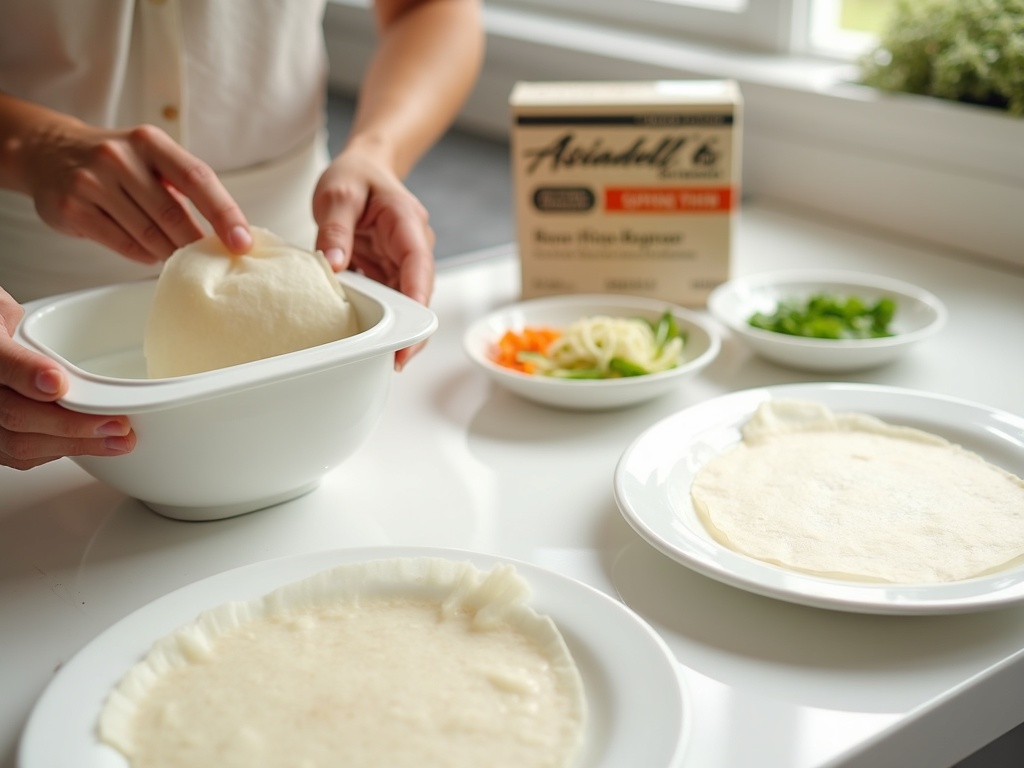
Efficiency with the 5-second method relies on prepping all fillings ahead of time. I keep everything within easy reach before hydrating the sheet, which prevents the rice paper from becoming sticky while I scramble for ingredients.
Essential Prep Work
Success starts with proper ingredient preparation. I slice all vegetables and proteins into ⅛ inch pieces for consistent rolling and easy eating. These specific cuts ensure:
- Soft baby greens like lettuce or spinach for gentle wrapping
- Thin cucumber sticks using English cucumber for minimal seeds and maximum crunch
- Proteins such as thin pressed tofu or halved shrimp that lay flat against the wrapper
- Rice vermicelli that adds authentic texture—Asiadeli Rice Vermicelli provides the best consistency for smooth rolling
I arrange these prepared components on my workspace in the order I’ll use them. Proteins go first since they need the most secure placement, followed by vegetables and herbs. This systematic approach eliminates guesswork during assembly.
Rice paper wrappers work best when they’re pliable but not overly soft. I position my hydrated wrapper on a damp kitchen towel to prevent sticking while maintaining the right moisture level for rolling.
During assembly, I place fillings in the lower third of the rice paper, leaving about an inch border on the bottom and sides. This positioning allows for proper folding without overstuffing. For shrimp rolls specifically, I position the halved shrimp closer to the top edge rather than the bottom. This technique creates an appealing ‘peekaboo’ visual effect where the pink shrimp shows through the translucent wrapper once rolled.
The key lies in restraint—I use enough filling to create substance without making the roll too thick to handle. Learning to cook rice paper properly means understanding this balance between flavor and functionality. Overfilled rolls tear easily and become messy to eat.
I maintain a damp towel nearby for wiping hands between rolls, as sticky fingers can damage delicate wrappers. Each completed roll gets placed seam-side down on a serving plate and covered with another damp towel to prevent drying out while I finish the remaining portions.
Troubleshooting: Why Your Rolls Are Tearing
I’ve found that most tearing issues stem from over-soaking the rice paper, which transforms the delicate sheets into fragile, sticky disasters. When rice paper absorbs too much water, it loses its structural integrity and becomes nearly impossible to handle without creating holes or tears.
Fixing Over-Soaked Rice Paper Problems
The solution lies in adjusting your soaking technique with precision. I recommend shortening your dip time by 2-3 seconds from whatever you’re currently doing. If you’ve been soaking sheets for 8 seconds, drop it down to 5-6 seconds instead. This small adjustment often makes the difference between success and frustration.
Water temperature plays a crucial role too. I use slightly cooler water than what feels comfortable on my hands. Hot water accelerates the softening process, making timing more critical and mistakes more likely. Lukewarm water gives you better control over the hydration process.
Addressing Cracking and Brittleness
Cracking presents the opposite problem — insufficient moisture. I notice this happens most often with older rice paper or when working in dry environments. If your sheets crack instead of tearing, increase your dip time by 1-2 seconds. Sometimes the issue isn’t the soaking duration but inadequate resting time after removal from water.
I allow soaked sheets to rest on a damp towel for 10-15 seconds after soaking. This resting period lets moisture distribute evenly throughout the sheet, preventing weak spots that lead to tears. During this time, the rice paper continues softening without becoming oversaturated.
Practice makes perfect with rice paper preparation. I’ve observed that most people achieve consistent results after working with just 3-5 sheets. Your hands learn the proper feel of adequately soaked rice paper — pliable but not sticky, soft but still strong enough for rolling.
Temperature control extends beyond just the water. Room temperature affects how quickly rice paper dries out after soaking. In warm kitchens, I work faster and sometimes cover prepared sheets with a slightly damp towel to prevent surface drying while assembling multiple rolls.
Cooking rice paper successfully requires understanding that each brand behaves slightly differently. Some varieties need longer soaking times, while others become workable almost immediately upon contact with water. I test one sheet from each new package to establish the optimal timing before preparing multiple rolls.
Quality matters significantly in preventing tears. Natural rice paper made from pure ingredients tends to be more forgiving than cheaper alternatives that contain additives. Higher-quality sheets maintain better structural integrity throughout the soaking and rolling process.
I’ve discovered that consistent 5-8 second dips work for most standard rice paper varieties. Start with 5 seconds for thin sheets and work up to 8 seconds for thicker ones. The key lies in removing the sheet the moment it becomes pliable rather than waiting for it to feel completely soft.
Watch for visual cues during soaking. Properly hydrated rice paper becomes translucent and slightly flexible while maintaining some firmness. Over-soaked sheets appear completely clear and feel slippery or sticky to touch. Under-soaked paper remains mostly opaque with stiff areas that resist bending.
Environmental factors affect soaking times too. Humid weather requires shorter dips, while dry conditions might need slightly longer exposure to water. I adjust my technique seasonally and pay attention to how quickly sheets dry out after soaking.
The learning curve isn’t steep, but it does require hands-on experience. I recommend starting with super thin wrappers for beginners since they’re more forgiving and provide better feedback about proper hydration levels. Once you master thin sheets, thicker varieties become much easier to handle.
Efficiency: Scaling for Parties & Restaurants
The 5-second method dramatically improves output speed for high-volume preparation. I’ve found this technique essential when preparing rice paper rolls for large gatherings or commercial kitchens where time efficiency directly impacts service quality.
Time Savings Analysis
Traditional preparation methods require approximately 15 seconds per sheet, meaning 30 rolls demand about 7.5 minutes of soaking time alone. Asiadeli’s fast hydration technique reduces this to just 5 seconds per sheet, cutting total soaking time to 2.5 minutes. This represents a 30–60% reduction in prep time, which translates to significant labor cost savings in restaurant settings.
Storage and Service Strategies
Fresh rice paper rolls deliver the best texture and flavor, but proper short-term storage extends your service window. I recommend the following techniques for maintaining quality:
- Cover completed rolls with a lightly dampened towel to prevent surface drying
- Arrange rolls in single layers to avoid sticking and deformation
- Serve within 2–3 hours for optimal texture and food safety
- Keep storage area at room temperature to prevent wrapper hardening
The efficiency gains become even more pronounced in commercial environments where consistent output matters. Proper rice paper preparation techniques can transform your kitchen’s productivity during peak service periods. I’ve seen restaurants reduce their appetizer prep time by nearly half using these streamlined methods.
For catering operations, the ability to prepare larger batches quickly while maintaining quality standards gives you a competitive edge. The low-calorie nature of rice paper also appeals to health-conscious customers, making efficient preparation even more valuable for businesses targeting this demographic.
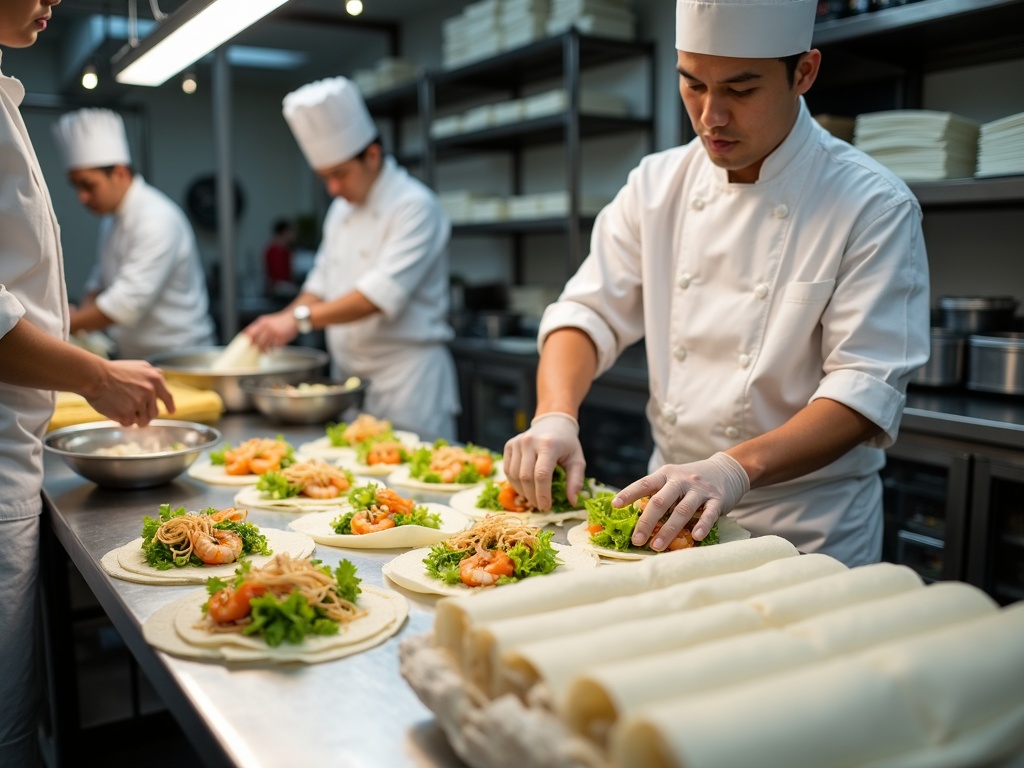
Consider implementing a station-based approach where one person handles hydration while another focuses on filling and rolling. This assembly-line method, combined with the 5-second hydration technique, can easily handle orders for 50+ rolls without compromising quality or overwhelming your kitchen staff.
Sources:
Chow – “CHOW Tip: How to Use Rice Paper in Spring Rolls”
Food & Wine – “Rice Paper Rolls”

